Markets · Analysis
GenIP and Gana Fundraisings Show Why Gross Proceeds Need Unpacking
Two November 27 AIM fundraisings include non-cash components. Their filings distinguish fresh liquidity, obligation settlements and shareholder dilution.
GenIP and Gana Media announced equity fundraisings on November 27 that illustrate an important distinction in small-company financing: headline gross proceeds do not necessarily equal new cash reaching the bank. Both filings include obligations settled or forgone through share subscriptions, alongside deeply discounted issue prices.
What does GenIP’s placing deliver?
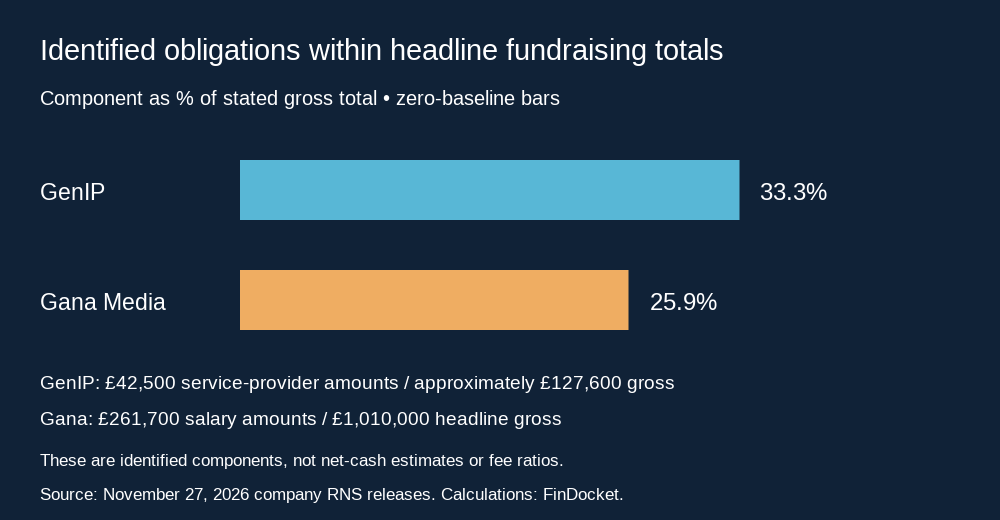
GenIP announced approximately £127,600 gross at 1p per share, including £42,500 for amounts owing or becoming due to service providers. Subtracting that component leaves about £85,100 before expenses as the residual potentially attributable to fresh cash subscriptions. This is a calculation from the disclosed components, not the company’s stated net-cash receipt.
The placing adds 12,758,729 shares to an enlarged total of 38,276,190. New shares therefore account for approximately one-third of the enlarged base. An existing holder who does not participate retains about two-thirds of their previous percentage interest, before any other potential issuance.
How does Gana’s composition differ?
Gana reports £1.01 million gross, issuing approximately 2.02 billion shares at 0.05p. Its director and PDMR subscriptions include £196,200 of net salaries due and £65,500 of future net salary forgone. Together, those identified salary components equal £261,700, approximately 25.9% of the headline total.
Settling an existing payable and avoiding a future salary payment can each strengthen liquidity, but neither is identical to receiving a new bank deposit. Adding them to cash subscriptions without explaining their nature would obscure the financing’s effect on the balance sheet.
Gana also offers a broker option that could raise another £150,000 gross if fully taken up. That is separate potential funding, rather than part of the completed headline amount. Its additional shares would also enlarge the denominator used for ownership calculations.
What do the issue discounts establish?
GenIP cites a 55% discount to its pre-suspension benchmark; Gana cites approximately 33%. Those figures measure the terms offered against earlier trading prices. They do not directly measure percentage dilution, which depends on new shares relative to the enlarged capital base.
The two companies operate different businesses and should not be ranked on discount alone. The useful follow-up is a reconciliation of gross consideration, non-cash settlements, transaction costs and cash received. Subsequent trading updates must then establish whether the funds translate into contracted revenue and reduced cash consumption. That sequence gives investors a firmer basis than treating every pound in a fundraising headline as immediately spendable cash.