Markets · Analysis
BAE Systems Wins $6 Billion CV90 Order from Five European Countries
BAE Systems secured $6 billion in contracts for more than 400 CV90 vehicles ordered jointly by Finland, Lithuania, the Netherlands, Norway and Sweden.
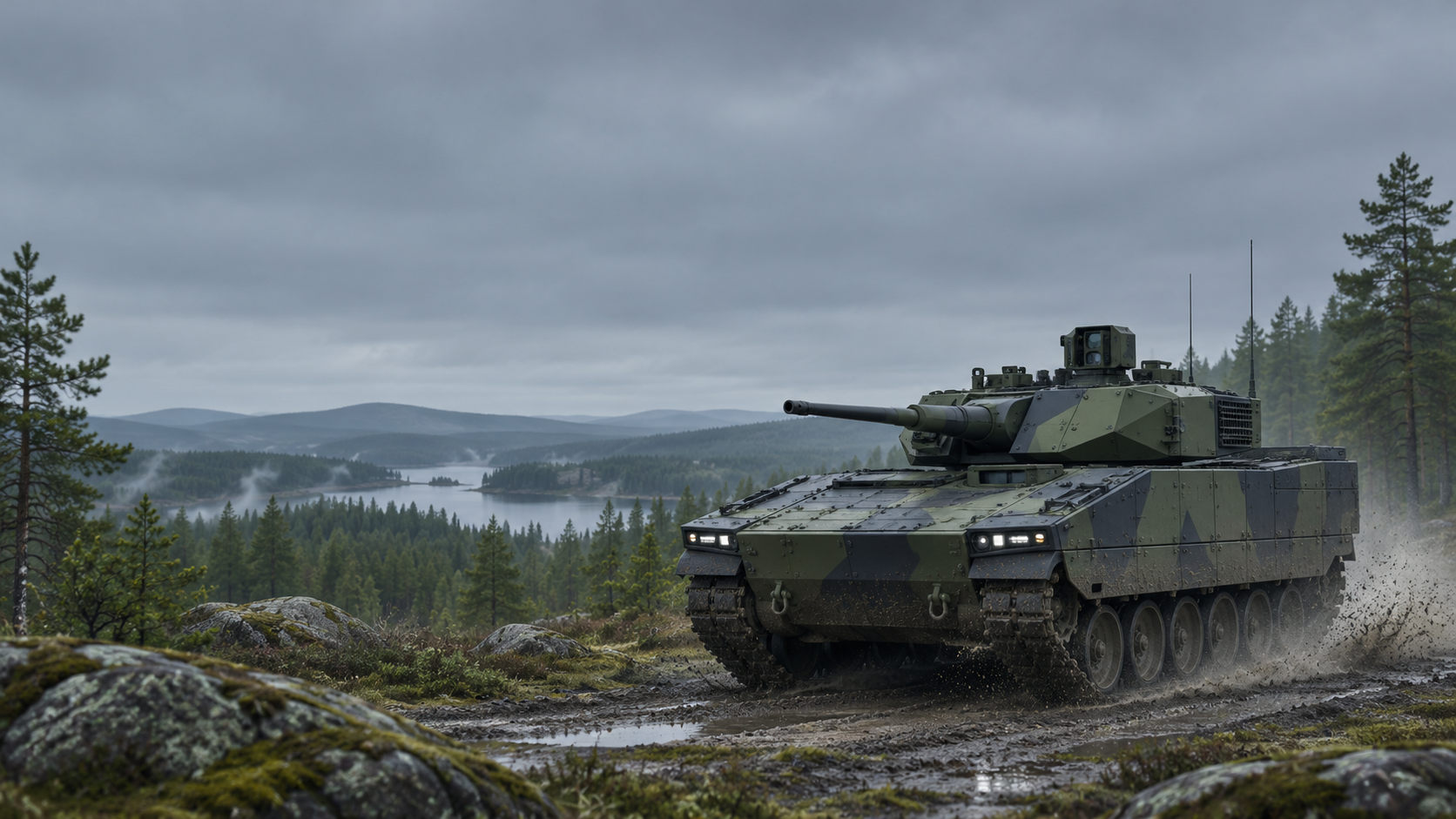
BAE Systems has secured contracts worth $6 billion (€5.5 billion) to deliver more than 400 CV90 infantry fighting vehicles under a joint procurement by Finland, Lithuania, the Netherlands, Norway and Sweden. The agreement is a significant order for BAE’s Hägglunds land-systems business and a test of whether European governments can translate higher defense spending into shared equipment programs. It also brings Lithuania into the CV90 operator group and standardizes the vehicle configuration across five allied militaries.
The financial signal is order visibility and industrial utilization, not a one-quarter earnings windfall. The $6 billion package comprises separate purchase-order agreements under a common framework. BAE has not disclosed the full delivery schedule or how revenue will be recognized by year. Program support—including training, spare parts, tools, test equipment and technical publications—adds work beyond the vehicles themselves, while a distributed supplier network in participating countries broadens the industrial footprint.
What is included in the CV90 deal?
The five countries ordered more than 400 vehicles in the CV9035 MkIV Nordic Edition configuration. BAE said the common platform and equipment setup are intended to improve interoperability, spare-parts availability, training efficiency, maintenance and long-term sustainment. A shared vehicle fleet can reduce the cost and complexity of operating several national variants, although the individual armies will still integrate the vehicles into their own command systems and operating structures.
The joint framework covers separate purchase orders, meaning each national procurement has its own contract basis within a standardized program. BAE said suppliers across the participating countries will produce vehicles and components. That arrangement can distribute economic benefits locally and support supply security, while requiring careful coordination across factories, engineering teams and delivery milestones.
How material is a $6 billion defense order for BAE Systems?
It is strategically important because it extends a major vehicle program across multiple customers and gives the company a multi-country production pipeline. The headline value includes a large fleet plus associated program elements, so dividing $6 billion by 400 vehicles would not produce a valid unit price. BAE did not publish an annual revenue schedule, and investors should not treat the total as immediate sales or profit.
The order’s value will convert into revenue through production and delivery over time. Investors can monitor contract order intake, the group’s backlog, delivery milestones and the contribution of the land segment to sales and margins. Production ramp-up may require working capital and investment before customer payments fully arrive. A stable delivery profile supports capacity planning; rapid changes in national schedules can shift revenue between reporting periods.
Why are the five countries ordering together?
Joint procurement gives the five militaries a common vehicle configuration while aggregating demand into a large program. This can simplify training, maintenance and spare-parts management, and it may improve negotiating leverage compared with separate national purchases. The governments also emphasize regional readiness and interoperability as Northern Europe adjusts its defense posture.
The market implication is broader than a single supplier. European defense companies have faced rising demand, but revenue depends on production capacity, supply-chain depth, customer acceptance and final delivery. BAE’s agreement adds a substantial order line to a sector where investors are increasingly measuring execution alongside budget announcements. That delivery challenge is also central to [Rheinmetall’s revised 2030 sales outlook](/rheinmetall-2030-sales-target-cut-project-delays-2026).
What should investors watch next?
The next useful disclosures are the delivery timeline, production split across participating nations and updates to BAE’s order backlog. Investors should also look for progress on training and support contracts, which can create a longer service tail after vehicle production. The order supports visibility, but margins depend on program pricing, supplier costs and whether production remains on schedule.
For the five governments, execution will determine when the new vehicles strengthen operational readiness. For BAE shareholders, the key evidence will be conversion from signed purchase orders into production revenue and cash flow. The CV90 deal demonstrates that joint procurement can create a sizable industrial program; repeat orders and efficient delivery will determine how much lasting value reaches the company.
### Which countries ordered the CV90 vehicles?
Finland, Lithuania, the Netherlands, Norway and Sweden placed purchase orders under a shared procurement framework.
### How many vehicles are included in the BAE Systems agreement?
BAE Systems says the contracts cover more than 400 CV90 infantry fighting vehicles.
### Does the $6 billion contract become BAE revenue immediately?
No. The contract value will be recognized over the production and delivery schedule; BAE has not disclosed the full timing of that revenue.