Markets · Analysis
China Solar Installations Fall 51% as Grid Economics Reshape Demand
China added 123.7 GW of solar capacity through October, down 51% year over year, even as total capacity rose 16%. Investors are watching project economics, grid constraints and storage.
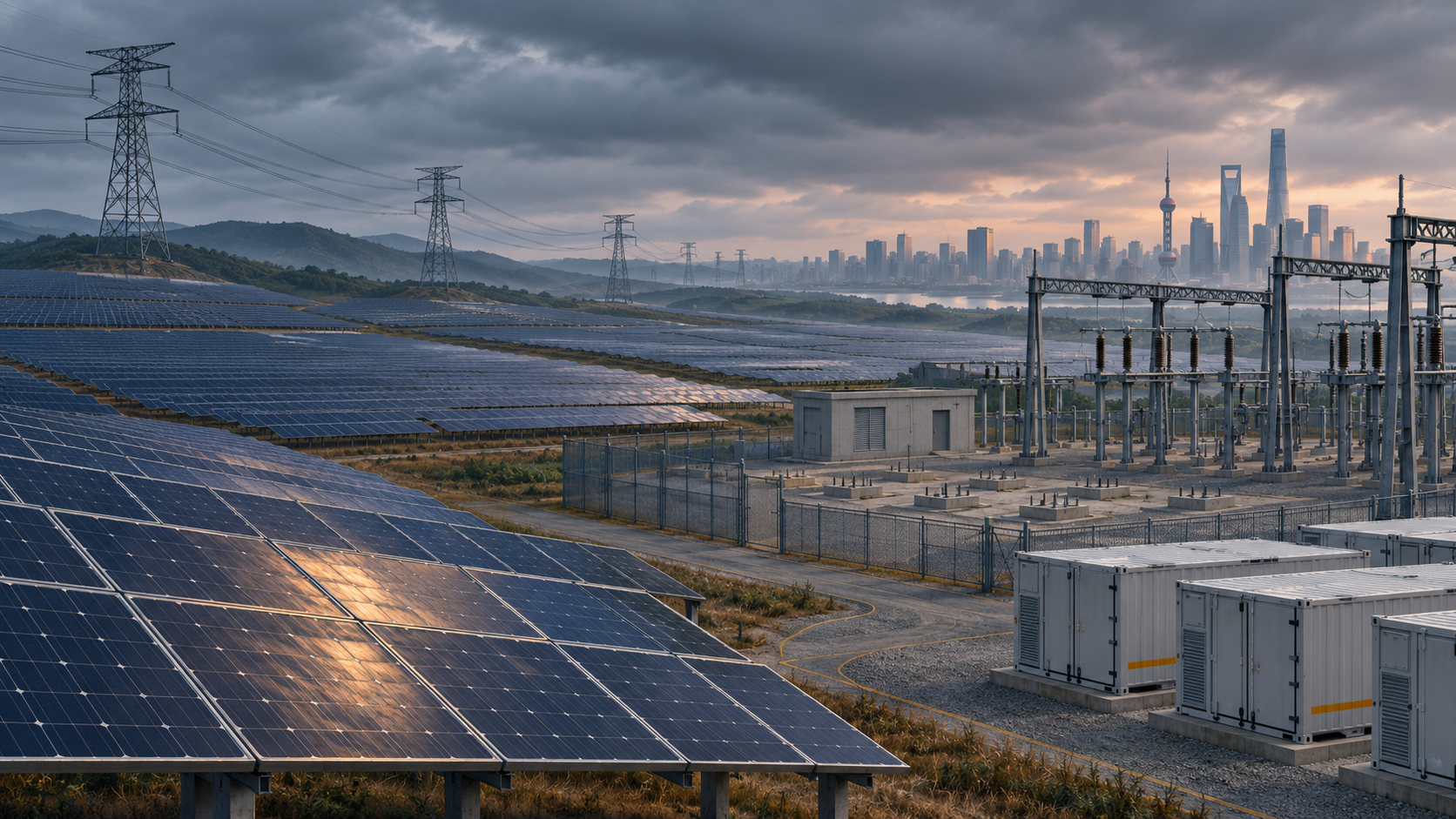
China’s solar market is separating installed capacity from new project demand. The country added 123.69 gigawatts of solar capacity in the first ten months of 2026, about 51% below the same period last year, according to National Energy Administration data. Yet cumulative solar capacity reached 1.33 terawatts at October’s end, up 16.3% year over year. The buildout is still growing; the annual flow of new installations has slowed sharply.
For investors, that distinction changes the question. China remains the world’s largest solar market, but manufacturers and developers cannot value the next year’s business by extrapolating its installed base. The current pause reflects a policy transition toward market-based electricity pricing, a high comparison base after a rush to connect projects in 2025, and challenges in matching new generation with grid capacity and profitable power sales.
Why did China’s solar installations slow?
China added 12.86 GW of solar capacity in October, slightly below September’s 13.64 GW but modestly above October 2025. The steep year-to-date decline is concentrated in the comparison with last year’s installation surge. Developers rushed to connect projects before the shift to more market-based remuneration took effect in June 2025. That front-loading pulled demand into the prior period and left 2026 facing an unusually high base.
The new pricing framework also changes project returns. When generators earn more revenue through market prices rather than fixed tariffs, expected cash flows depend more directly on when electricity is delivered, where it enters the grid and how prices vary across hours. A project can have a strong construction case but a weaker earnings case if local transmission is congested or output coincides with low-price periods.
China’s total electricity consumption rose 3.7% in the first ten months of 2026. Industrial electricity use grew 4.1%, while high-technology and equipment manufacturing consumption increased 8.5%. Demand is expanding, but not fast enough to absorb every new megawatt on the same terms as before. Installed power capacity across all sources reached 4.16 TW, up 10.9% year over year, and the National Energy Administration reported that average utilization hours for power-generation equipment fell by 214 hours from a year earlier.
Who benefits and who faces pressure?
Solar developers face a more demanding project-selection environment. Grid access, curtailment exposure, storage availability, market-price assumptions and financing costs increasingly determine project value. Companies that can build in regions with strong demand, connect efficiently and pair generation with storage or flexible consumption may preserve returns better than those relying on capacity additions alone.
Equipment manufacturers face a different test. Fewer domestic installations can intensify competition among panel, cell and wafer producers already dealing with abundant manufacturing capacity. Exports may absorb some output, but they bring their own tariff, trade-policy and logistics risks. The global consequence is meaningful: the International Energy Agency has warned that a slowdown in China’s deployment can affect worldwide renewable investment because of the country’s scale in both project installation and solar supply chains.
Grid operators, transmission-equipment suppliers and battery-storage developers may gain strategic importance as the system absorbs more variable generation. China’s combined wind and solar capacity exceeded 2 TW by October, making dispatch, transmission expansion and storage more central to the economics of incremental renewable projects. That does not guarantee higher returns for every grid or battery company; regulated revenue frameworks and procurement terms still matter.
What should investors watch next?
The next indicators are monthly additions through year-end, regional power-market prices, curtailment and utilization data, battery installations and changes to project remuneration. For listed manufacturers, investors should track shipment volumes, inventory, utilization rates and cash flow rather than rely on revenue growth alone. For developers, project returns should be tested against merchant-price exposure and connection delays.
China’s solar slowdown is not a retreat from renewable energy: installed capacity is still rising quickly and solar remains a core source of future generation. It is a repricing of the deployment cycle. The market is moving from a race to connect projects toward a harder test of whether each new megawatt can reach the grid and earn an adequate return.