Markets · Analysis
Chinese Carmakers Double Europe Registrations Before EU Hybrid Cap
Chinese-branded car registrations in Europe jumped 103% in October to 151,112 ahead of the EU’s December 1 cap on China-built hybrids, intensifying pressure on automakers and supply chains.
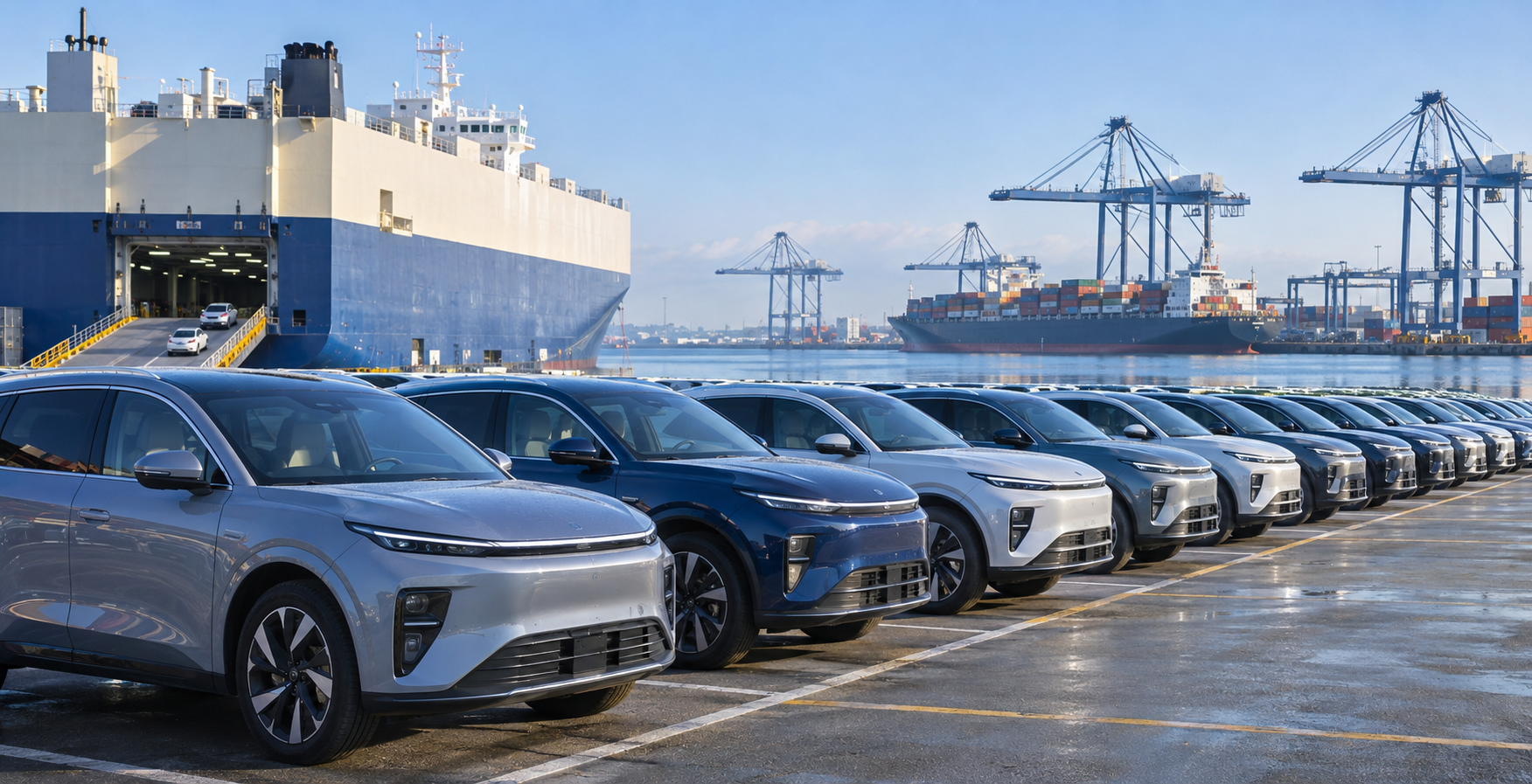
Chinese-branded car registrations in Europe rose 103% year over year to 151,112 in October, according to Dataforce figures reported by Reuters. The brands captured 13.6% of the regional market, their second-highest monthly share after September’s record 14.5%. The surge arrived just before the European Union’s December 1 cap on imports of China-built hybrid vehicles, making October a useful snapshot of both consumer demand and trade-policy timing.
The market signal is bigger than one month’s sales. Europe’s overall car market barely grew, while Chinese manufacturers expanded rapidly with lower-cost electric and hybrid models. In the third quarter, Chinese brands outsold Japanese manufacturers in the region for the first time. Their gains now reach beyond battery-electric vehicles, which already face additional EU tariffs: plug-in hybrids have become an important route into the market.
Why did Chinese car registrations rise in Europe in October?
The increase reflects a combination of competitive pricing, a broader lineup and buyers’ interest in hybrids that do not require full dependence on public charging. It also coincided with the approach of the EU’s new import restriction. The October figure does not prove that buyers or automakers deliberately accelerated purchases to beat the cap, but the timing raises the possibility that importers brought forward shipments or registrations while the rules were about to change.
Seasonality explains part of the month-to-month movement. September typically benefits from quarter-end sales pushes and the United Kingdom’s twice-yearly license-plate change. Chinese brands’ share also fell after a September peak in the prior year before resuming its longer-run rise. That makes the year-over-year gain and the level of market share more informative than a simple comparison with September.
The EU cap applies to China-built hybrids, including plug-in hybrids, and sets an annual quota of 350,000 vehicles. It does not cover cars made in Europe by Chinese companies. Separately, the EU already applies additional tariffs to China-made battery-electric vehicles. Those measures affect different powertrains, so the hybrid cap should not be described as a blanket restriction on every Chinese car sold in Europe.
What does the EU hybrid cap mean for automakers and investors?
The immediate impact depends on how quickly the quota is used, which manufacturers receive access, and whether additional trade rules follow. If imports are constrained, Chinese brands may shift their model mix toward vehicles outside the cap or increase production inside Europe. That second path is already visible in company plans: Reuters reported BYD’s talks over a French factory, Chery’s preparations for production in Barcelona, and Leapmotor’s manufacturing at Stellantis’ Zaragoza plant.
Local production changes the economics. It can reduce exposure to border restrictions and make delivery times more predictable, but it requires capital, local suppliers and successful execution at scale. European manufacturers face a different calculation: cheaper imported competition pressures pricing and capacity utilization, while investment in new platforms and factories strains cash flow. Reuters has reported cost-cutting and manufacturing changes at Volkswagen, Mercedes-Benz and Stellantis as Chinese rivals gain ground.
ACEA’s October data show the wider transition underway. Across the EU, EFTA and United Kingdom, battery-electric registrations rose 43.5% year over year and plug-in hybrids gained 20.9%; total registrations increased 6.0%. This broad electrification trend provides a growing market, but it also raises the cost of being late or uncompetitive in new models. The monthly figures cover all manufacturers and do not isolate the Chinese contribution.
Investors following European automakers should watch registration shares, discounting, factory utilization and capital spending alongside the cap’s implementation. For Chinese manufacturers, the key test is whether sales growth can survive tighter import access without eroding margins through price cuts or expensive localization. October confirms that demand has reached material scale. The next phase will show whether trade barriers redirect that growth or slow it.
### How many Chinese cars were registered in Europe in October 2026?
Dataforce figures reported by Reuters put Chinese-branded registrations at 151,112, up 103% from a year earlier and equal to 13.6% of the regional market.
### When does the EU cap on China-built hybrids begin?
The cap is scheduled to take effect on December 1, 2026. It sets an annual limit of 350,000 imported hybrid vehicles, including plug-in hybrids, and excludes cars made in Europe.
### Does the EU cap apply to all Chinese electric cars?
No. The new quota concerns China-built hybrids. Battery-electric vehicles are subject to separate EU trade measures, including additional tariffs.
Sources
- Reuters via The Business Times — Chinese carmakers double sales in Europe on hybrid demand
- European Automobile Manufacturers’ Association (ACEA) — October 2026 registration data
- Associated Press — China’s carmakers export more as EU caps hybrid vehicle imports