Markets · Analysis
El Niño Puts Palm Oil, Coffee and Cocoa Back in the Inflation Spotlight
The World Bank expects food commodity prices to rise in 2026 and 2027 as El Niño compounds energy and shipping shocks. Palm oil, robusta coffee and cocoa carry the sharpest weather exposure.
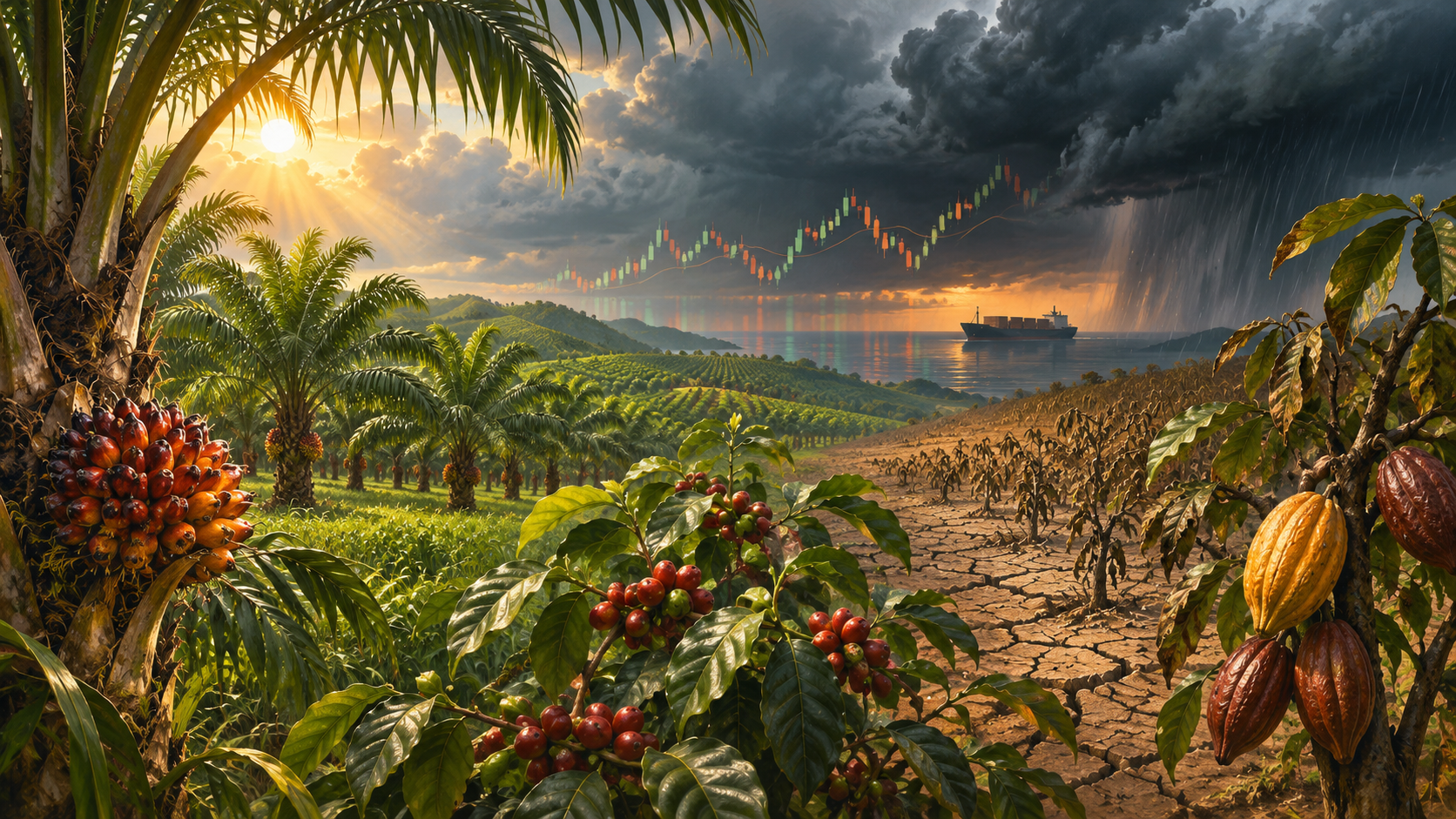
The World Bank expects its food commodity price index to rise 10% in 2026 and a further 7% in 2027, with El Niño-related weather disruptions adding pressure to palm oil, rice, sugar and cocoa. The current episode is classified as very strong, and the Bank says it could become the strongest since comparable records began in 1950. The market impact is likely to vary sharply by crop: tropical commodities with concentrated production face the clearest weather exposure, while well-supplied grain markets have more room to absorb a shock.
For investors, the key distinction is between a broad agricultural rally and targeted supply stress. Palm oil, robusta coffee and cocoa have shown larger average price responses after El Niño episodes than most grains. Producers, food manufacturers and consumer companies with exposure to these inputs face different earnings paths depending on sourcing, inventories, hedging and their ability to pass higher costs to customers.
Which commodities are most exposed to El Niño?
The World Bank’s historical analysis finds the largest average price increases after El Niño for cocoa, coffee and palm oil. In its chart, six-month-lagged year-over-year price changes average about 20% for cocoa, 15.5% for robusta coffee and 14% for palm oil during El Niño periods, compared with approximately 6%, 6% and 3% in neutral periods. The Bank says the differences are statistically significant for most commodities in the analysis, including these tropical crops.
The exposure comes from where production is concentrated. Around 96% of cocoa exports and 69% of coffee exports originate in countries classified as highly exposed to El Niño, while about 97% of palm oil exports come from highly exposed countries. Drought, excess rain and flooding can affect yields or disrupt harvesting, storage and transport. The price response often peaks six to nine months after weather disruptions as the effect reaches harvests and export availability.
The pattern differs for grains. The World Bank’s historical averages show a smaller El Niño response for maize and wheat than for tropical commodities. Grain markets also entered the current episode with stronger inventories than during earlier price spikes. That supply buffer does not eliminate weather risk, but it helps explain why the report sees a more pronounced tightening in edible oils than in grains.
Why does this matter for inflation and company earnings?
Edible oil markets are comparatively tight. The World Bank expects its oils and meals price index to rise 17% in 2026 and another 8% in 2027, reaching the second-highest level on record. Stocks-to-use ratios for edible oils are approaching levels last seen around 2007–08, partly because of strong biofuel demand. Weather pressure on palm oil production arrives against that thinner cushion.
Food manufacturers that rely on palm oil, cocoa or coffee face input-cost pressure that can arrive before retail prices adjust. Companies with long-term supplier contracts or effective hedges may protect margins in the short run, while businesses that buy at spot prices feel the shock sooner. The next earnings signal is whether firms can pass costs through without losing sales volumes, particularly in price-sensitive markets.
The inflation channel also matters for central banks and bond markets. The World Bank found that median food inflation from 1996 to 2024 was 5.5% during El Niño periods in highly exposed economies, versus 3.4% in low-exposure economies. Higher food inflation can narrow the space for rate cuts in countries where price pressures are already elevated, while also reducing household purchasing power and consumer-facing company volumes.
A global food-price spike is not required for the effect to matter. Local harvest losses can lift domestic prices in exposed economies even when global benchmarks move modestly. This creates a split between commodity producers that may benefit from higher export prices and import-dependent consumers or food businesses that absorb higher bills.
What should commodity investors monitor?
The most useful indicators are weather conditions in major producing regions, crop forecasts, export volumes, inventories and futures-market spreads. For palm oil, monitor production and stock data from Southeast Asia. For cocoa and coffee, focus on harvest updates and shipment availability in West Africa and other major origins. In grains, watch Black Sea shipping conditions, energy and fertilizer prices, and stock-to-use estimates.
The World Bank’s outlook combines several forces: El Niño, conflict-related disruption to Black Sea grain shipments, and higher energy and fertilizer costs linked to the Middle East conflict. Weather is one catalyst among several. If adverse conditions persist through harvest windows while edible-oil inventories remain tight, input-cost pressure could last into 2027. If production and shipping recover, the impact may remain concentrated in individual crops rather than spill into the whole food complex.
The market signal is clear: weather risk is becoming an input-cost and inflation variable again. The greatest pricing sensitivity sits in tropical crops whose export base overlaps with El Niño exposure, while grains have a better inventory buffer. Investors should distinguish those commodity-specific supply chains when evaluating food producers, retailers and inflation-sensitive assets.
Frequently asked questions
### Which foods are most affected by El Niño?
The World Bank’s historical analysis finds the largest average price responses in cocoa, robusta coffee and palm oil. The scale of the effect varies by episode and depends on inventories, demand and trade conditions.
### How long after weather disruption do commodity prices respond?
The price effect often peaks around six to nine months after weather disruptions, when reduced yields or interrupted harvests affect available supply.
### Are grain markets as vulnerable as edible oils?
The World Bank describes grain markets as better supplied than edible-oil markets entering the current episode. It forecasts grain prices to rise, but expects edible oils and meals to reach the second-highest level on record by 2027 amid tighter stocks and palm oil weather exposure.