Markets · Analysis
India’s RBI Decision: Why a 50-Basis-Point Hike Is in Play
India’s October inflation topped the RBI’s 6% ceiling, and Nomura now sees a 60% chance of a 50-basis-point hike on December 4. Here is what bond and currency markets are pricing.
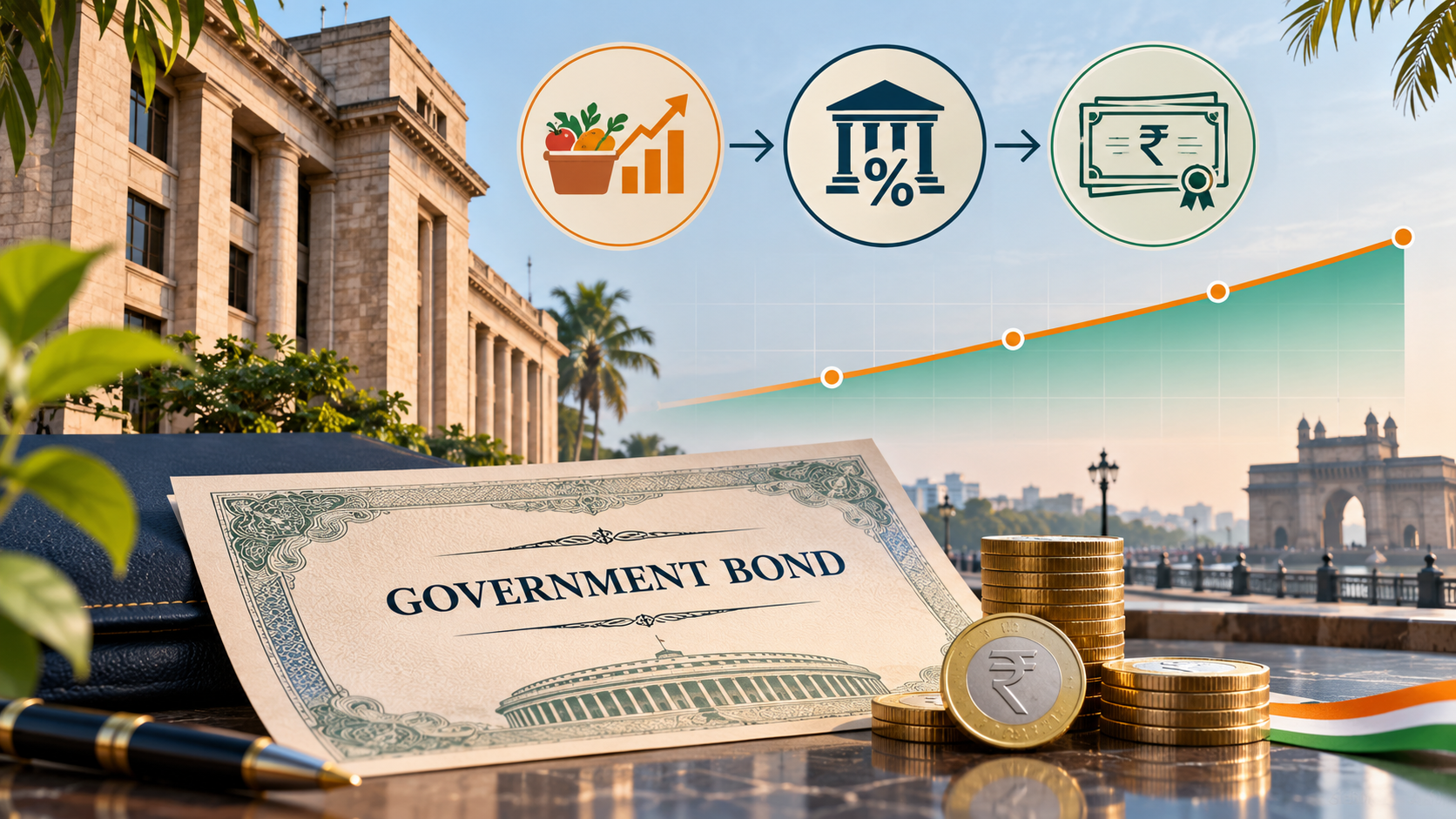
India’s Reserve Bank meets December 2–4 after October consumer inflation rose to 6.09%, above the central bank’s 6% upper tolerance level. Nomura assigns a 60% probability to a 50-basis-point hike, while Bank of Baroda expects a 25-point increase that it says is largely reflected in bond prices. The split makes the December 4 decision a test for government bonds and the rupee.
The repo rate is 5.50% after a 25-point increase in October. A quarter-point hike would take it to 5.75%; a half-point move would lift it to 6.00%. Nomura’s view is a forecast, not the RBI’s announced decision.
Why is a larger rate hike in play?
Food prices are the main pressure. Government data put food inflation at 8.94% in October against headline CPI of 6.09%. Nomura’s trackers point to further rises in cereals and pulses and its estimate for November inflation is about 6.4%. November’s official CPI reading will come after the RBI meeting.
Nomura also points to stronger core-price momentum and resilient demand. India’s second-quarter GDP data are due November 30; Nomura expects growth above 7.5%, compared with the RBI’s 7.2% forecast. A strong release would support front-loaded tightening. The RBI has said supply-driven inflation can become persistent if it spreads into expectations and firms’ pricing.
India’s inflation target is 4%, with a 2%–6% tolerance band through March 2031. One month above the ceiling raises the cost of waiting, but the policy decision turns on whether food inflation is spreading into broader prices. That is why a 50-point move is possible while 25 points remains the competing forecast.
What are bond and currency markets pricing?
The 10-year government yield has traded around 7.20%–7.25%. Bank of Baroda sees that range as consistent with a 25-point hike. If the RBI delivers 50 points, shorter-dated yields could rise as investors move expected rates higher; bond prices fall when yields increase.
The rupee strengthened to about ₹92.50 per dollar from ₹94.87 at the start of November. Bank of Baroda figures reported by Business Standard showed $16.4 billion of foreign portfolio inflows during the month. A bigger hike can improve rupee carry returns, but global dollar moves, oil prices and capital flows also affect the exchange rate.
Why does liquidity guidance matter?
Nomura expects the RBI to consider liquidity support alongside a rate increase, potentially through a lower daily cash-reserve maintenance requirement or foreign-exchange swaps. The repo rate sets the policy signal; liquidity operations influence the availability of short-term bank funding. Investors should read the rate, vote split, inflation projections and liquidity guidance together.
A 25-point hike with data-dependent guidance is closest to the existing bond-market pricing. A 50-point move would be more hawkish; a pause would be a surprise that requires the committee to argue that the food shock will fade without becoming entrenched.
### When is the RBI’s next rate decision?
The Monetary Policy Committee meets December 2–4, 2026, and is scheduled to announce its decision on December 4.
### What is India’s current repo rate?
The repo rate is 5.50% after the October 25-basis-point increase.
### Why does October inflation matter?
Headline CPI reached 6.09%, above the RBI’s 6% ceiling, and food inflation was 8.94%. The RBI must judge whether food costs will spread into broader inflation.