Markets · Analysis
Rupee Rally Hits an Oil Test as $16 Billion Inflows Meet RBI Decision
India’s rupee fell 0.6% to 92.99 per dollar on Nov. 27 as crude rose and AI-linked stocks rebounded. Foreign inflows and the RBI’s Dec. 4 decision are key.
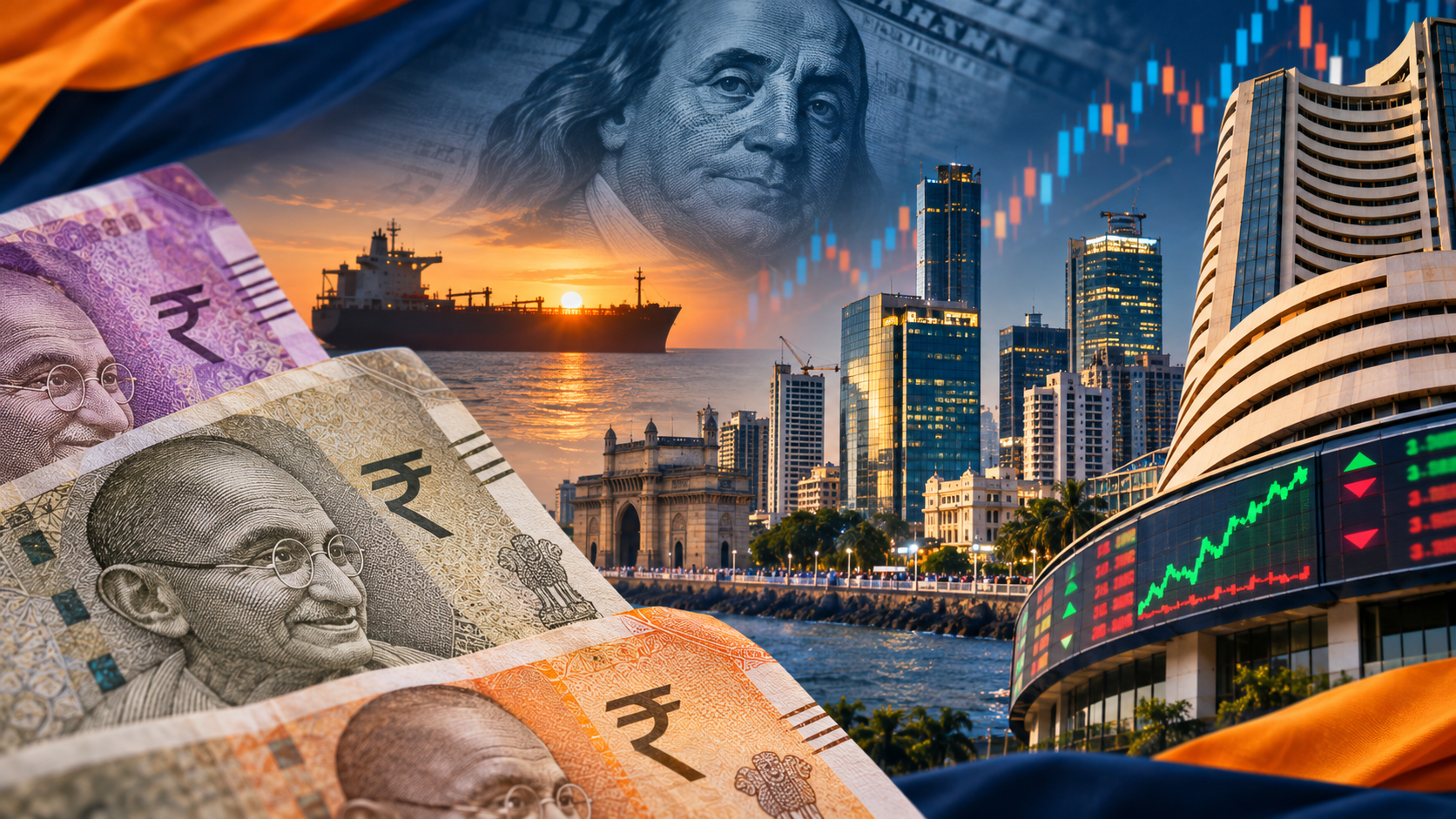
India’s rupee weakened sharply on Friday as rising oil prices and a renewed appetite for AI-linked equities challenged the forces behind its November rebound. The currency closed at 92.99 per U.S. dollar, down 0.6% on the day and 0.3% for the week, after gaining 1.7% the previous week. The pullback shows how quickly foreign portfolio flows can change direction when global investors rotate back toward technology-heavy markets and crude prices rise.
The counterweight is substantial: foreign investors bought roughly $16 billion of Indian equities in November, reversing a significant share of the outflows recorded during the first ten months of the year. Those purchases helped the rupee outperform many Asian peers even as the dollar index remained near a two-year high. Whether those flows persist matters for the currency because they supply dollars to the market and reflect international demand for Indian assets.
Why did the rupee fall on November 27?
The immediate pressure came from weaker Indian equities and higher oil. The Sensex and Nifty fell as a tentative revival in the AI trade drew attention back to markets with larger semiconductor exposure. That rotation can pull capital away from Indian shares, threatening a key source of foreign-currency support. Brent crude also traded above $96.50 a barrel in Asian hours amid supply concerns, raising the prospect of a larger import bill for an economy that buys much of its energy abroad.
Higher crude prices affect the rupee through both trade and expectations. Importers need more dollars to purchase the same volume of oil when prices rise. If that pushes the current-account deficit wider, sustained foreign investment becomes more important to balance external financing. Currency markets can react before the trade data arrive because traders price the likely direction of those flows.
Can foreign inflows keep supporting the currency?
November’s $16 billion equity inflow is a powerful short-term buffer, but it is sensitive to global risk appetite. The contrast between the first ten months’ outflows and November’s reversal shows the rupee’s dependence on shifting portfolio demand. A stable domestic growth outlook and attractive valuations may continue to draw money, while an AI-led rally in other markets or further oil spikes could reduce that support.
The dollar’s broad strength adds another hurdle. A currency can weaken even when its domestic outlook is steady if global investors favor dollar assets or expect U.S. interest rates to remain high. For the rupee, the combination of dollar demand, oil import costs and foreign-equity flows matters more than any single daily stock-market move.
What to watch before the RBI decision?
The Reserve Bank of India’s policy decision on December 4 is the next major domestic catalyst. Reuters reported that markets widely expected a 25-basis-point rate increase, with some economists seeing scope for a larger move. Higher rates can support the rupee by improving the return on local assets, but the effect depends on what investors already expect and whether inflation and growth justify the move.
The more durable test is whether the November inflow trend survives the month-end and whether crude stabilizes. Renewed equity purchases alongside easing oil prices would improve the currency’s external balance and investor-flow outlook. Continued inflows could cushion further volatility, but they do not remove the rupee’s exposure to energy prices or global portfolio rotations.
### Frequently asked questions
#### Why did the Indian rupee weaken on November 27, 2026?
The rupee fell 0.6% to 92.99 per dollar as Indian stocks declined, oil traded above $96.50 a barrel and renewed interest in AI-heavy markets threatened to divert foreign investment.
#### How much foreign money flowed into Indian stocks in November?
Foreign investors bought about $16 billion of Indian equities during November, according to Reuters. Those purchases reversed a significant portion of the outflows seen during the first ten months of 2026.
#### When is India’s next RBI rate decision?
The Reserve Bank of India’s next policy decision is scheduled for December 4, 2026. Reuters reported that a 25-basis-point rate increase was widely expected, although some economists anticipated a larger move.