Markets · Analysis
Indonesia Fuel Subsidies Put the Rupiah and 2027 Budget in Focus
Indonesia is weighing a 2027 subsidised fuel price increase as the rupiah weakens and energy support overshoots budget. No price decision has been made.
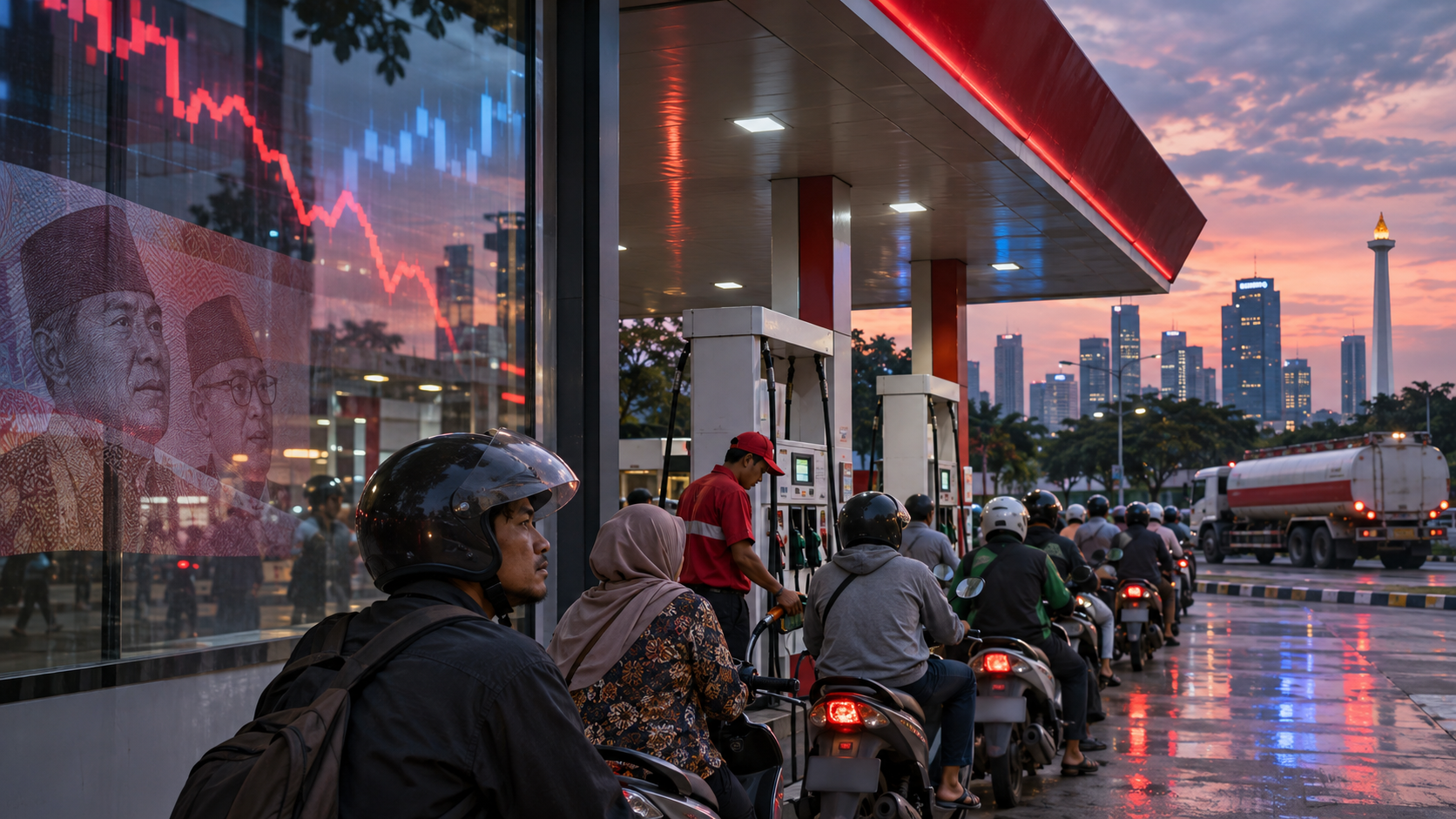
Indonesia is weighing a subsidised fuel price increase in early 2027 as higher oil costs and a weaker rupiah push up the state’s energy bill. Reuters reported that four people familiar with discussions said officials had considered a change; they also said no decision or increase amount had been agreed. The government has pledged to keep subsidised prices unchanged through 2026, and its communications agency said President Prabowo had not issued a directive for next year.
Why is Indonesia reconsidering fuel subsidies?
Indonesia caps its annual budget deficit at 3% of GDP. Its official 2026 deficit estimate is 2.85%, leaving little room for a large additional subsidy bill. Reuters reported the energy subsidy budget could reach 500 trillion rupiah ($27.2 billion) this year, around 30% above its original allocation. In the first ten months, spending on fuel, electricity, fertiliser, and micro-loan subsidies totaled 415.8 trillion rupiah, up 32% year over year.
The currency amplifies the pressure. Indonesia imports oil, so a weaker rupiah raises the local-currency cost of energy even when the dollar price is unchanged. The rupiah touched a record low of 18,395 per dollar on November 26, Reuters reported. That exchange-rate channel links the fuel debate directly to fiscal credibility and foreign-exchange sentiment.
What would a fuel price increase change for markets?
A higher administered price would reduce the gap between pump prices and the government’s estimated economic cost. That could ease budget and reimbursement pressure on Pertamina, the state energy company, while transferring more of the import-cost increase to households and businesses. The near-term trade-off is fiscal relief against higher measured inflation and lower consumer purchasing power.
The OECD estimates higher oil prices could widen Indonesia’s 2026 deficit by 0.6% of GDP relative to the budget target, largely through energy subsidies. Its November survey says frozen retail prices shield households in the short term but expose the budget to oil and exchange-rate shocks. A price adjustment would alter that transmission; it would not remove exposure to global oil prices or currency volatility.
For bonds and the rupiah, the market question is whether subsidy spending stays within the legal deficit ceiling and whether the government announces a credible funding path. For consumer-facing companies, any change would matter through household budgets, transport costs, and inflation expectations. Investors should also track whether Pertamina receives subsidy reimbursements on time and whether policy targets assistance more narrowly. This fiscal channel is distinct from the foreign-investor access issue in our [Indonesia MSCI market-access brief](/indonesia-msci-standalone-downgrade-consultation-market-access).
### Has Indonesia decided to raise subsidised fuel prices?
No. Reuters reported that officials discussed a possible increase for early 2027, but no decision or amount had been set. The government says subsidised prices will remain unchanged through 2026.
### Why does a weaker rupiah increase fuel subsidy costs?
Oil is priced internationally in dollars. When the rupiah weakens, the government needs more rupiah to cover the same dollar-linked import cost if domestic pump prices stay fixed.
### How large is Indonesia’s 2026 energy subsidy allocation?
The energy subsidy budget is expected to reach 500 trillion rupiah, about 30% above the original allocation, according to Reuters.
Sources
- Reuters — Indonesia considers subsidised fuel price increase as fiscal pressure mounts
- Reuters — Indonesia budget deficit and subsidies, January–October 2026
- OECD — Economic Surveys: Indonesia 2026
- ANTARA — Indonesia says stable fuel prices protect purchasing power