Markets · Analysis
JERA’s Tokyo Data-Center Talks Put Japan’s AI Power Bottleneck in Focus
JERA is discussing Tokyo-area data centers with Anthropic, Meta and other U.S. technology groups. The talks highlight how direct access to generation could reshape Japan’s AI infrastructure economics.
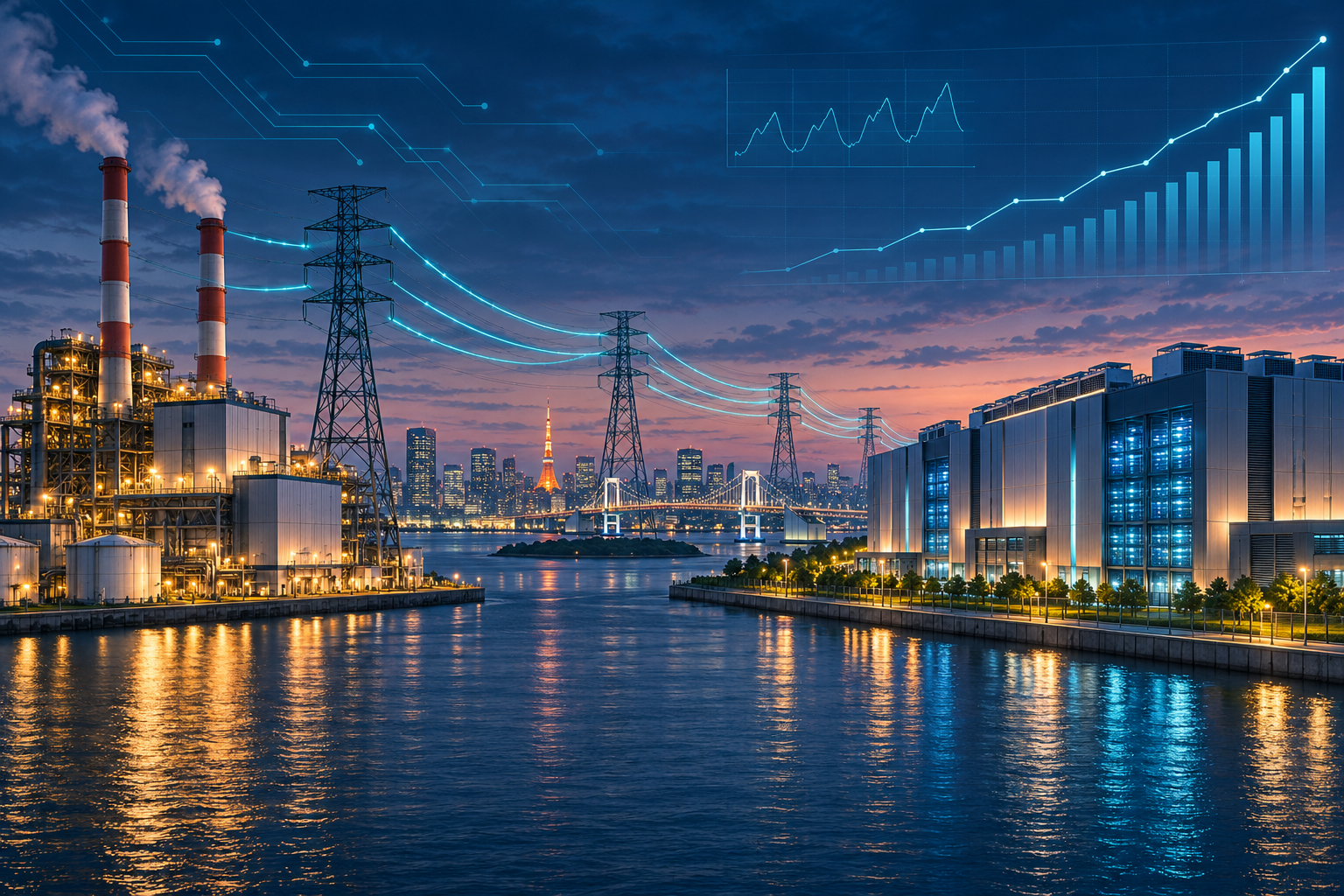
Japan’s largest power generator is testing whether control of electricity can become its fastest route into the artificial-intelligence infrastructure boom. JERA is in discussions with Anthropic, Meta, Amazon, Microsoft and Google about building data centers near its power plants in the Tokyo area, according to a November 27 Nikkei report cited by Reuters. The discussions are preliminary: the reporting disclosed no named customer agreement, project capacity, site list, financing package or construction timetable.
The market question is whether proximity to generation can solve a bottleneck that conventional data-center developers increasingly face: securing reliable power on a schedule that matches rapidly expanding AI workloads. If JERA turns talks into contracted projects, it could reposition a utility as an infrastructure partner to cloud and AI companies, while creating a large new source of electricity demand. For now, the opportunity is strategic rather than booked revenue.
Why co-locating compute and generation matters
Large AI campuses draw power continuously and require dependable connections, cooling and backup systems. A project beside a power station may reduce dependence on constrained transmission routes and offer developers a clearer path to capacity. A behind-the-meter arrangement can also link the data center more directly to generation, although grid connections, balancing, backup supply and regulation still shape the economics.
JERA already has a separate framework with Dell Technologies and British data-center developer RHAELM to explore AI infrastructure at its facilities. The companies announced a project at the Chiba thermal power station with a potential initial scale of up to 400 megawatts and a target to begin operations around 2028. That project is a useful reference point for the model, but it does not establish that Anthropic, Meta or the other companies named in the latest report are customers for Chiba or any other site.
What the talks could mean for JERA
For JERA, the upside is a longer-term demand anchor for generation assets and a potential expansion beyond selling electricity into wholesale and retail markets. A hyperscale tenant could support investment in generation, connection equipment and site infrastructure, while long-duration supply arrangements could make project cash flows more predictable. Data centers may also raise utilization of existing assets and increase the value of locations where power can be delivered quickly.
The commercial structure will determine how much value accrues to the generator. A utility could sell power under a contract, co-develop the site, provide a direct supply arrangement or partner with a technology firm and infrastructure investor. Each structure allocates construction risk, fuel exposure, electricity-price risk and capital requirements differently. Headline investment figures for the sector should not be confused with JERA’s own spending or committed earnings.
The constraints investors should watch
Talks with multiple technology companies do not guarantee any deal will close. Hyperscalers will compare Japan with competing locations, and a suitable site must meet requirements for network access, land, water, cooling, resilience and permitting. Thermal generation can provide dispatchable power, but it also creates fuel-price and emissions considerations that could shape customer demand and financing costs. JERA’s balance sheet and investment priorities matter if the model requires substantial new generation or grid infrastructure.
Investors should look for signed power-purchase or development agreements, disclosed capacity, construction milestones and an identified allocation of capital. Confirmation that a tenant will pay for firm supply—and clarity on how power is priced—would turn the story from a set of strategic conversations into a forecastable project pipeline. Until then, the talks are evidence of demand for power-secured sites, not proof of incremental earnings.
The wider market signal is clear: electricity access is becoming a decisive input to AI capacity. Japan’s generators hold an asset that data-center developers need, and JERA is actively testing whether that relationship can support a new infrastructure business. The next catalyst is not another list of prospective partners; it is a contract that specifies megawatts, timing and who carries the cost of delivery.
### What is JERA discussing with Anthropic and Meta?
JERA is reportedly discussing the possibility of building data centers near its Tokyo-area power plants with Anthropic, Meta and other U.S. technology companies. No project commitment or customer agreement has been disclosed.
### Has JERA announced a data center with Anthropic or Meta?
No. The November report described discussions. JERA’s previously announced Chiba project is a separate collaboration with Dell Technologies and RHAELM.
### Why build a data center beside a power plant?
Co-location may help developers secure large, reliable electricity supplies and reduce dependence on congested transmission routes. Project economics still depend on grid access, backup arrangements, fuel costs, permitting and contract terms.