Markets · Analysis
KOSPI Jumps 4.3% as Foreign Buyers Return, but Flow Reversal Is Unproven
South Korea’s KOSPI rose 4.34% on Nov. 27 and foreigners bought about 1.1 trillion won. Stabilization-fund hopes lifted shares after months of AI-driven outflows.
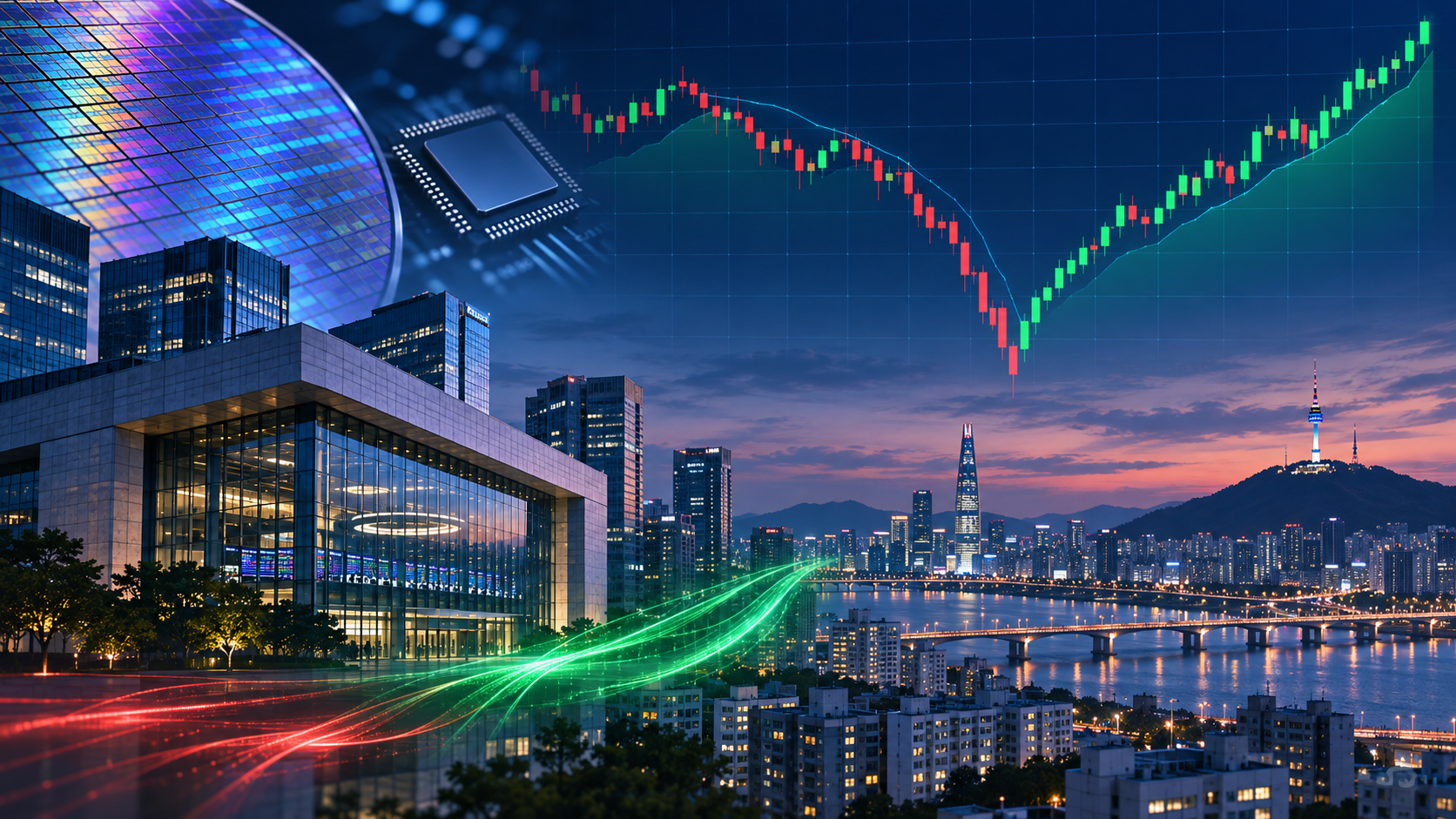
South Korean stocks staged a powerful rebound on Friday, November 27, as expectations of a government market-stabilization fund drew buyers back into a market battered by the global retreat from artificial-intelligence shares. The KOSPI climbed 4.34% to 4,915.68, while the KOSDAQ surged 8.13% to 708.99. Foreign investors bought roughly 1.1 trillion won of KOSPI shares, according to local market reports. The rally is a sharp change in daily positioning, but it does not yet establish that overseas investors have reversed their broader retreat.
The policy signal mattered because it arrived during a volatile period for Korean chip stocks. Samsung Electronics and SK Hynix dominate the country’s equity benchmark and have been central to the AI memory-chip trade. Doubts about the pace and profitability of data-center investment helped drive a November selloff. A stabilization fund can improve confidence in market liquidity and limit forced selling; it cannot by itself resolve concerns about semiconductor valuations or future AI spending.
What triggered the KOSPI rally?
Investors responded to indications that Korean authorities were considering additional stabilization measures, including possible deployment of a market fund. The Korea Times reported that foreign buyers led gains on the main board, while domestic retail investors sold shares after the sharp rebound. The KOSDAQ’s larger percentage move reflects its different composition and heightened sensitivity to risk appetite; it should not be read as equivalent to a broad improvement in corporate earnings.
The change in flows is notable against recent history. Reuters reported that overseas investors were on course for a seventh consecutive month of net selling in November, with cumulative outflows of $115.2 billion through the period it examined. Foreigners had also sold 25.98 trillion won of Korean listed shares in October, according to South Korea’s Financial Supervisory Service data reported by KBS. Those figures cover different periods and measures, but both show how large the preceding selling wave had become.
Can policy support reverse the foreign outflow?
A stabilization fund can help by adding a potential buyer when market liquidity deteriorates and by signaling that authorities are monitoring disorderly price moves. That may reduce the risk of a feedback loop in which falling share prices trigger more selling, widen volatility and push investors to cut exposure further. The fund’s actual size, mandate and deployment remain crucial: a policy announcement can shift sentiment quickly, while sustained purchases require concrete implementation.
Foreign allocation decisions will also depend on whether earnings justify valuations. Reuters’ November analysis highlighted the tension: Samsung and SK Hynix were reporting record AI-driven profits, yet investors questioned whether chipmakers’ future results could support prices after the rapid rise. Strong demand and tight memory supply are positive for earnings, but semiconductor profits are cyclical and markets discount expected growth well before quarterly results arrive.
Why does the Bank of Korea’s rate decision add complexity?
The Bank of Korea raised its benchmark rate by 25 basis points to 3.25% on November 26, its third increase since July, citing inflation pressure. It also raised its 2026 and 2027 growth forecasts, reflecting strong semiconductor exports. This puts policymakers in a two-sided position: robust chip-led growth can support corporate profits, while higher rates increase financing costs for households and businesses and can weigh on equity valuations.
Investors should watch whether foreign buying continues beyond a single session, whether the KOSPI holds the 4,900 level, and how Samsung and SK Hynix trade as global AI sentiment changes. A sustained recovery would need both improving risk appetite and evidence that profits and capital returns can absorb the market’s valuation concerns. The November 27 rally provided relief and demonstrated that buyers remain willing to return when policy support appears credible. The next flow data will show whether that demand is durable.
### Frequently asked questions
#### Why did South Korea’s KOSPI rise on November 27, 2026?
The KOSPI gained 4.34% as investors anticipated government steps to stabilize the stock market. Foreign investors returned as net buyers, adding roughly 1.1 trillion won to KOSPI shares, while AI-linked technology stocks rebounded.
#### Does the rally mean foreign investors have stopped selling Korean shares?
Not yet. The one-day buying followed months of outflows. Reuters reported that overseas investors were on course for a seventh consecutive month of net sales in November, so follow-through in coming sessions and official flow data are needed to confirm a trend reversal.
#### What is a market-stabilization fund?
It is a pool of capital that authorities can deploy to support orderly trading during severe volatility. Its practical effect depends on its size, rules and actual purchases; expectations alone can lift sentiment but do not guarantee a lasting market recovery.