Markets · Analysis
LME Aluminum Squeeze Shows Why Available Inventory Matters More Than the Headline Price
The LME aluminum cash premium hit $405 a ton before rule changes narrowed the squeeze. Low deliverable stocks and new Indonesian supply remain key.

The London Metal Exchange’s aluminum market has shown that a commodity can have tight immediate supply even as investors question the broader price outlook. On November 23, the LME cash contract traded at a record $405-per-ton premium to the three-month contract, a backwardation not seen since 1988. The exchange then widened the trigger for its short-term lending rules, and the spread narrowed sharply over the following sessions. That eased the squeeze in nearby contracts; it did not instantly put more metal in warehouses.
Available LME aluminum stocks had fallen by more than half during 2026 to 205,300 tons by November 24, according to Reuters. Most of the remaining exchange inventory was Russian metal, which faces U.S. restrictions, a coming European ban and reluctance from some Asian manufacturers. The concentration of deliverable stock magnified the effect of position holders: exchange data showed one entity controlling 50% to 79% of LME aluminum warrants, and another holding 40% to 49% of warrants and nearby futures.
What does the record aluminum backwardation mean?
A backwardated market means metal for immediate delivery costs more than metal promised for a later date. The cash-to-three-month spread reflects the value of prompt availability, financing and inventory; it is not the same as a simple forecast that aluminum prices will rise over the coming year.
In this episode, the nearby premium reflected a narrow pool of exchange-available metal and concentrated positions. Consumers seeking immediate aluminum could face tighter terms even if the three-month benchmark price did not rise by the same amount. For manufacturers, the cash spread can influence procurement timing and the cost of covering short-term supply gaps. For traders, it can make rolling a short position expensive when the contract nears delivery.
This distinction helps explain why the flat price and the spread can send different signals. Analysts cited by Fastmarkets said outright aluminum prices remained constrained even as prompt spreads surged. The premium showed that the market was paying for nearby metal under pressure; it did not prove a durable demand boom across the entire aluminum supply chain.
How did the LME intervention change the market?
The exchange temporarily reduced the threshold for its aluminum tom-next lending rules from positions equal to 50% of available on-warrant stock to 30%, effective November 25. Those rules require certain large position holders to lend metal at specified rates, reducing the ability of a concentrated holder to dominate the overnight roll market. The LME said it would continue monitoring the market and could take further action.
After the intervention, the cash-to-three-month spread retreated from more than $400 per ton to roughly $67.53 by November 25, according to ING’s market note. The fast move shows how a market structure change can unwind the price of immediate scarcity before physical supply shifts. It also means the squeeze premium can be volatile: regulatory action, delivery plans and large-position changes can alter the spread quickly.
The LME’s intervention was targeted at orderly trading and nearby lending conditions. It did not increase mine, refinery or smelter output, and it does not remove the need to monitor stock levels and warrant ownership. If prompt inventories remain concentrated, the market can remain vulnerable to a renewed squeeze even after the first episode eases.
Can Indonesian aluminum ease the physical tightness?
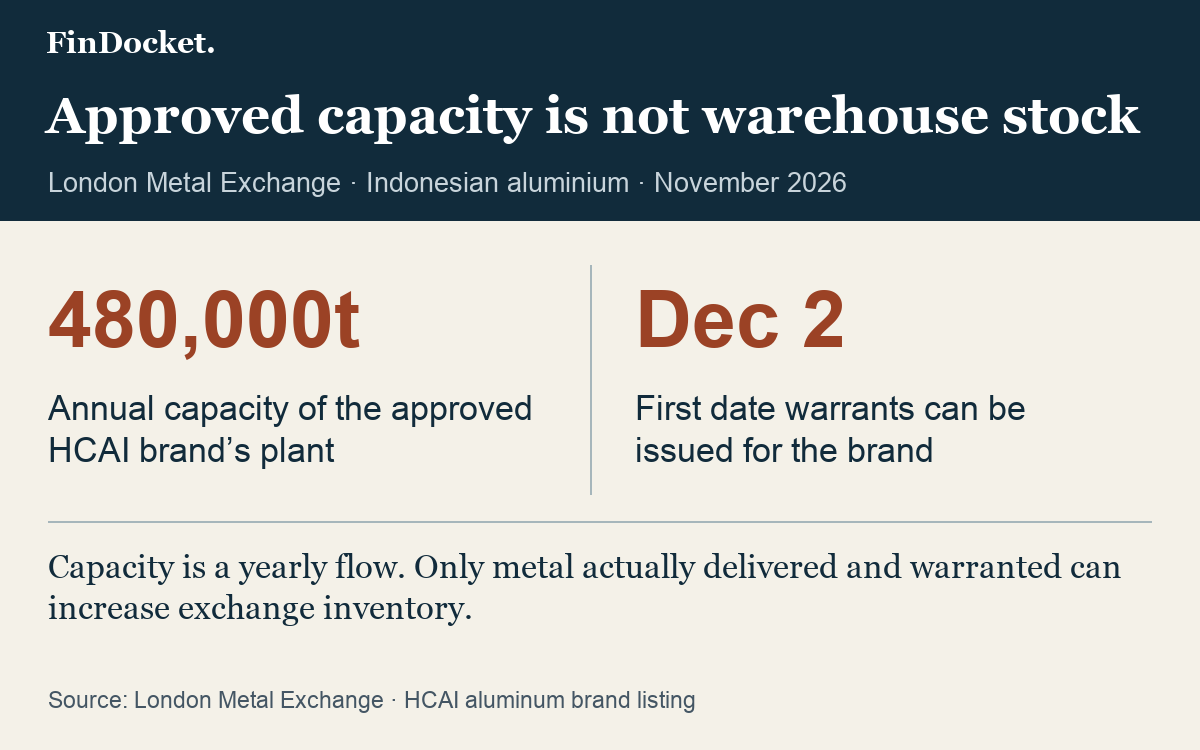
The LME approved the HCAI brand produced by PT Hua Chin Aluminum Indonesia for delivery against its high-grade primary aluminum contract. The producer’s smelter has annual capacity of 480,000 tons, but warrants for the brand can only be issued from December 2, 2026. Approval expands the pool of metal eligible for LME delivery; it is not a guarantee that 480,000 tons will immediately reach exchange warehouses.
For the squeeze to ease structurally, newly eligible production must be available, commercially attractive to deliver and located where it can reach LME-approved warehouses. The timing matters because the market’s sharpest constraint is accessible prompt inventory. New capacity can improve availability over time, while logistics, financing, regional premiums and competing end-user demand influence whether that metal becomes visible in the exchange system.
Indonesia’s expanding smelting capacity is a longer-term supply factor. It may increase deliverable metal and reduce vulnerability to concentrated inventories, but a production capacity figure should not be treated as a near-term warehouse stock forecast. The LME listing and December warrant date are concrete steps; arrival volumes and stock data will confirm the actual effect.
What aluminum indicators should investors monitor?
The cash-to-three-month spread is the clearest indicator of prompt tightness, while on-warrant and available inventory reveal how much metal can be delivered. Track the distribution of warrants across position holders, new HCAI warrants after December 2, regional physical premiums and changes to the LME’s lending rules. The outright benchmark price remains important, but it should be read alongside those market-structure measures.
The near-term squeeze and the 2027 supply outlook are separate questions. If low exchange stocks persist, nearby spreads can remain volatile even if producers plan to add capacity. If Indonesian and other new supply enters deliverable warehouses while positions become less concentrated, the immediate premium can fade even with steady end-user demand. The recent episode is a reminder that the price of aluminum today reflects both metal demand and access to a specific deliverable inventory pool.
### Why did LME aluminum cash trade at a record premium?
Available exchange stocks were low and concentrated among a small number of holders, increasing the value of immediate delivery relative to three-month supply.
### What did the LME change in November 2026?
The exchange temporarily lowered the aluminum tom-next lending-rule threshold from 50% to 30% of available on-warrant stock, effective November 25.
### Will Indonesian aluminum eliminate the squeeze?
The LME approved the HCAI brand for delivery, with warrants available from December 2. The listing adds potential deliverable supply, but actual warehouse inflows will determine its near-term effect.
### Does the cash premium mean aluminum prices will rise?
Not by itself. The cash-to-three-month premium measures prompt tightness, while the outright benchmark price also reflects expected future supply, demand, inventories and broader market conditions.
Sources and further reading
- London Metal Exchange — Amendment to aluminium tom-next lending rules
- London Metal Exchange — HCAI aluminum brand listing
- Reuters — LME tightens rules in response to aluminium squeeze
- Fastmarkets — LME base metals erase Nvidia-driven gains as spreads widen
- ING Think — Aluminium squeeze eases after LME intervention