Markets · Analysis
Simandou Sends First Iron Ore Cargo to Europe: A New Route for Global Supply
A 79,081-tonne SimFer shipment from Guinea is headed to Dunkirk, marking Simandou’s first reported Europe-bound cargo and widening the market reach of a major new iron ore project.
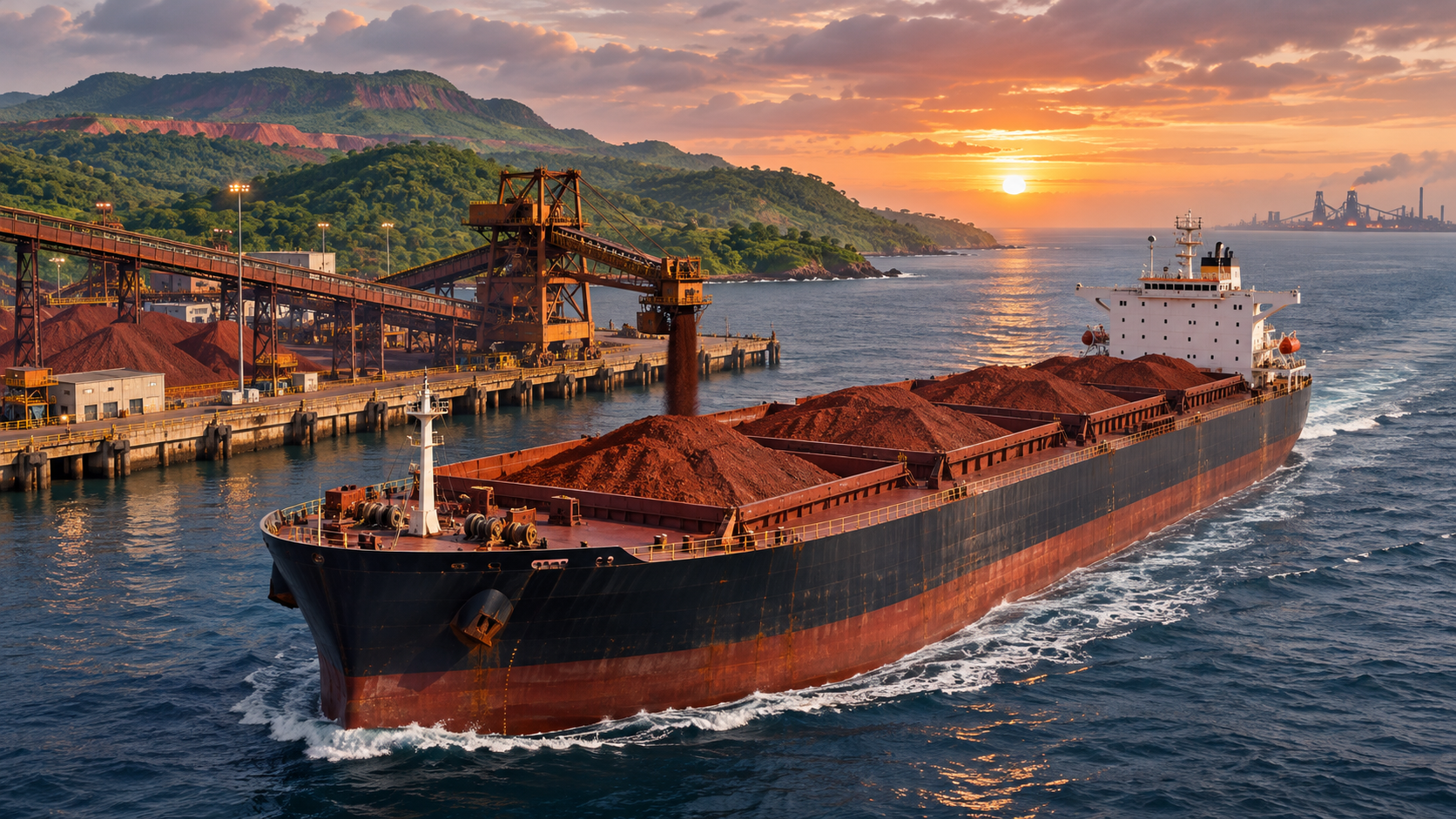
A bulk carrier carrying 79,081 tonnes of iron ore from Guinea’s Simandou project has departed for Dunkirk, France, marking the project’s first reported Europe-bound shipment. Shipping data cited by industry publications show the vessel left Morebaya port on November 23. The cargo was produced by SimFer, a joint venture involving Rio Tinto and Chinalco. The shipment is small relative to the project’s eventual scale, but it demonstrates that Simandou is beginning to reach customers beyond China.
Why does the Europe-bound cargo matter?
Simandou is a major new source of high-grade iron ore in Guinea. Its deposits are being developed by two consortia, with shared rail and port infrastructure designed to support exports of up to 120 million tonnes a year once the broader project reaches full capacity. Rio Tinto’s SimFer operation is designed for 60 million tonnes annually, subject to a staged ramp-up and completion of its mine and logistics systems. The first Europe-bound cargo is a route-development milestone, not evidence that the project is already operating near capacity.
A European destination broadens the potential customer base for ore from the Atlantic coast. Steelmakers may value additional sourcing options as they manage input quality, freight routes and decarbonization investment. More importantly for the global market, a large project capable of ramping output adds future supply competition to a seaborne trade historically dominated by Australia and Brazil. The timing and reliability of that supply will matter more to iron ore prices than the destination of any single cargo.
What is the market impact for iron ore prices?
The shipment alone is too small to reset the market balance. A 79,081-tonne cargo is a fraction of the project’s planned annual throughput and is not equivalent to sustained commercial-scale deliveries. Prices will continue to respond to Chinese steel demand, inventories, output from established producers, shipping costs and the pace at which Guinea’s rail and port capacity expands.
The longer-term supply question is more consequential. If Simandou’s multiple mining blocks and shared infrastructure scale as planned, additional high-grade ore could alter trade flows and increase competition for steel mill contracts. A slower ramp, infrastructure bottlenecks or operating disruptions would delay that impact. Rio Tinto’s latest operations review said SimFer’s mine construction was progressing and targeted production growth through 2028, underscoring that the scale-up remains a multiyear execution story.
For Rio Tinto, the European shipment adds commercial reach to a project that already began sending ore to China. It may widen the pool of potential buyers and reduce dependence on a single destination over time. The financial contribution to Rio’s near-term results will depend on production volumes, realized prices, logistics costs and its attributable share of SimFer output; the inaugural cargo does not establish those economics on its own.
What should steel and mining investors watch next?
The next useful signals are repeat shipments to European ports, monthly Guinean exports, progress on rail and port commissioning, and separate production updates from SimFer and the other consortium. Buyers will also watch the ore’s quality and how it performs in steelmaking blends. Consistent deliveries would turn a symbolic first voyage into evidence of a viable new sales channel. Until then, the event is best read as an expansion of market access within a project that could become a significant source of future supply.
### Frequently asked questions
#### How much iron ore was in Simandou’s first reported Europe-bound cargo?
The vessel carried 79,081 tonnes of iron ore fines from Morebaya port in Guinea to Dunkirk, France, according to shipping data cited by industry publications.
#### Who produces the Simandou cargo headed to Europe?
The shipment was attributed to SimFer, the joint venture involving Rio Tinto and Chinalco that is developing part of the Simandou project.
#### Will the first Europe shipment lower iron ore prices?
Not by itself. The cargo is small compared with the project’s planned capacity and global seaborne trade. Price effects depend on sustained production growth, logistics performance and steel demand, particularly in China.