Markets · Analysis
Singapore Factory Output Rises 6.1%, but AI Equipment Carries the Upside
Singapore manufacturing output grew 6.1% year over year in October and 7.1% month over month. Precision engineering surged 54.1%, while biomedical and transport output fell, leaving growth exposed to the AI investment cycle.
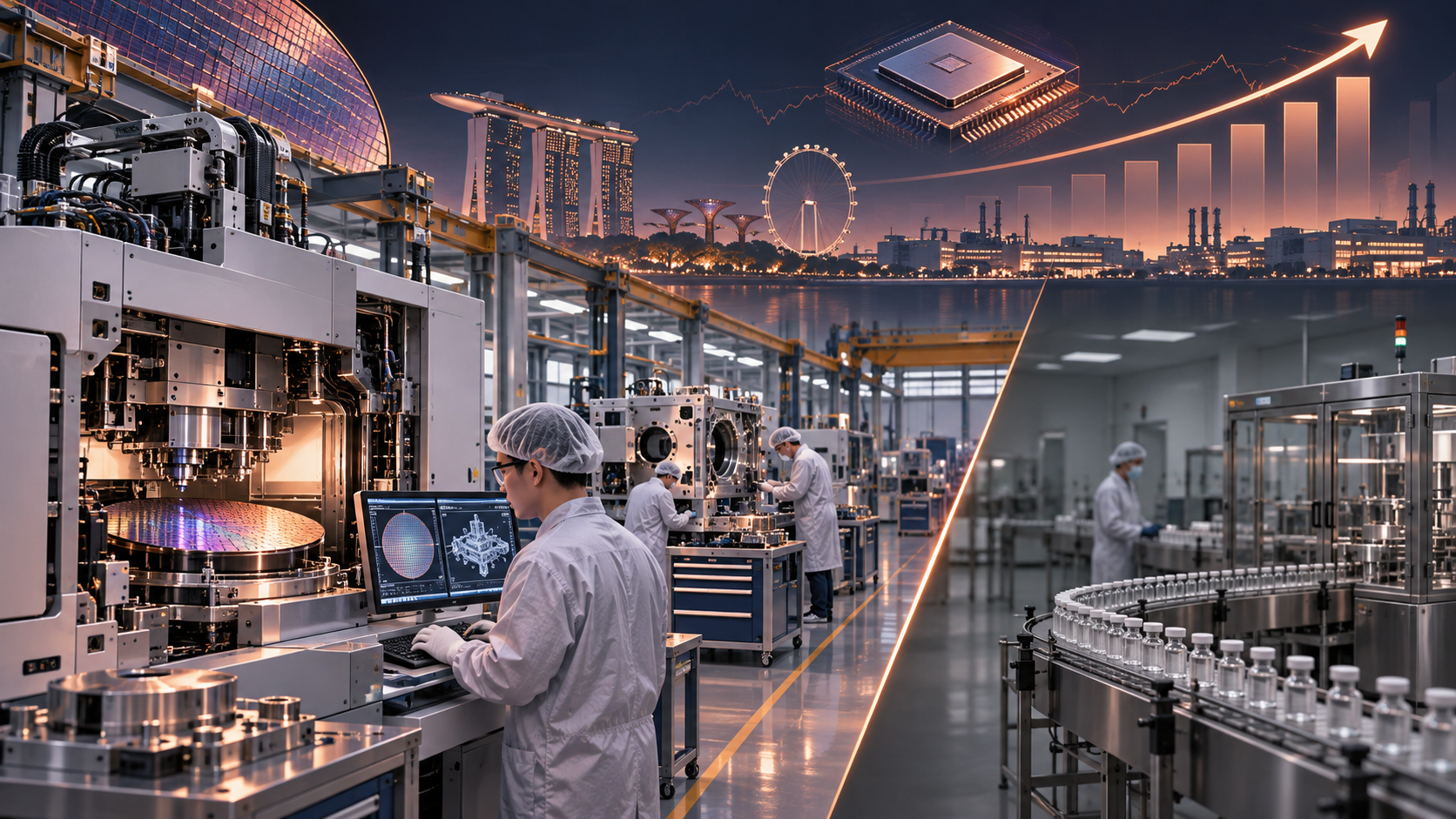
Singapore’s manufacturing output rose 6.1% year over year in October, accelerating from 5.0% in September. Seasonally adjusted production increased 7.1% from the prior month, reversing September’s decline. The headline rebound, reported by the Singapore Economic Development Board, was powered by precision engineering and electronics as demand for semiconductor and AI infrastructure equipment stayed strong.
The sector split is more revealing than the national total. Precision engineering output jumped 54.1% year over year, led by machinery and systems used to make semiconductor equipment. Electronics grew 6.6%, with all of its sub-segments expanding. By contrast, biomedical manufacturing fell 35.8% and transport engineering declined 5.3%. Excluding the volatile biomedical cluster, manufacturing output rose 12.1% from a year earlier and 7.3% month over month.
What drove Singapore’s October factory growth?
The sharpest gains came from industrial tools linked to chip production. Higher semiconductor equipment output lifted the machinery-and-systems segment inside precision engineering. Electronics growth remained positive, while chemicals returned to expansion at 4.4% after falling in September. The data show that Singapore’s manufacturing cycle is benefiting from the global build-out of data centers and advanced computing supply chains.
The weakness was concentrated elsewhere. Biomedical output fell as biologics production declined and the mix of active pharmaceutical ingredients changed. Transport engineering contracted because shipyard activity and oil-and-gas equipment production were weak, even though land and aerospace segments expanded. The pattern is not a broad-based factory boom: growth is uneven across clusters and unusually dependent on technology investment.
Does the 7.1% monthly increase signal a durable acceleration?
It signals a strong October rebound, but one monthly increase cannot establish a durable trend. The seasonally adjusted index compares October with September; the annual rate compares production with October 2025. Both help, but neither removes exposure to the timing of high-value semiconductor equipment orders or volatility in pharmaceuticals. The latest revision to September also matters: the reported September year-on-year rate was revised to 5.0% from 3.4%.
Investors should read the manufacturing report alongside Singapore’s trade, business surveys and growth outlook. October exports across the region have also shown strong AI-electronics momentum, while the official outlook expects Singapore’s growth to cool in 2027. Our [inflation analysis](/singapore-inflation-october-2026-mas-policy) details the separate price signal: core inflation eased in October, even as factory activity rebounded.
Which listed companies and sectors are most exposed?
The clearest operational link is to semiconductor equipment, precision components and electronics suppliers serving global chipmakers. Their order books can benefit as hyperscalers and chip producers expand capacity. Logistics, industrial property and business services may gain from higher factory throughput, although listed-company revenue exposure varies by customer mix and contract structure.
The risk is concentration. If AI data-center capital spending slows, chip-equipment orders can weaken before the broader economy does. Export controls and tariffs can also change where equipment is assembled, shipped or installed. Meanwhile, deep declines in biomedical production and weakness in marine engineering show that demand outside the AI-linked cluster is not keeping pace. The next releases should reveal whether October was the start of a broader recovery or another month in a narrow technology-led cycle.
### How fast did Singapore manufacturing grow in October 2026?
Manufacturing output increased 6.1% year over year and 7.1% month over month on a seasonally adjusted basis.
### Which Singapore manufacturing cluster grew fastest?
Precision engineering led with 54.1% year-over-year growth, mainly because of higher semiconductor equipment production.
### Was October growth broad across Singapore factories?
No. Electronics, precision engineering and chemicals grew, but biomedical manufacturing fell 35.8% and transport engineering declined 5.3% year over year.
Sources
- Singapore Economic Development Board — October manufacturing performance
- Singapore Department of Statistics — manufacturing data
- AsiaOne — reported details by industrial cluster