Markets · Analysis
SNB December Decision: Swiss Inflation Jumps, but the Franc Holds the Key
The SNB decides Dec. 10 after Swiss inflation rose to 1.5%. November CPI arrives Dec. 2, sharpening the rate and franc outlook.
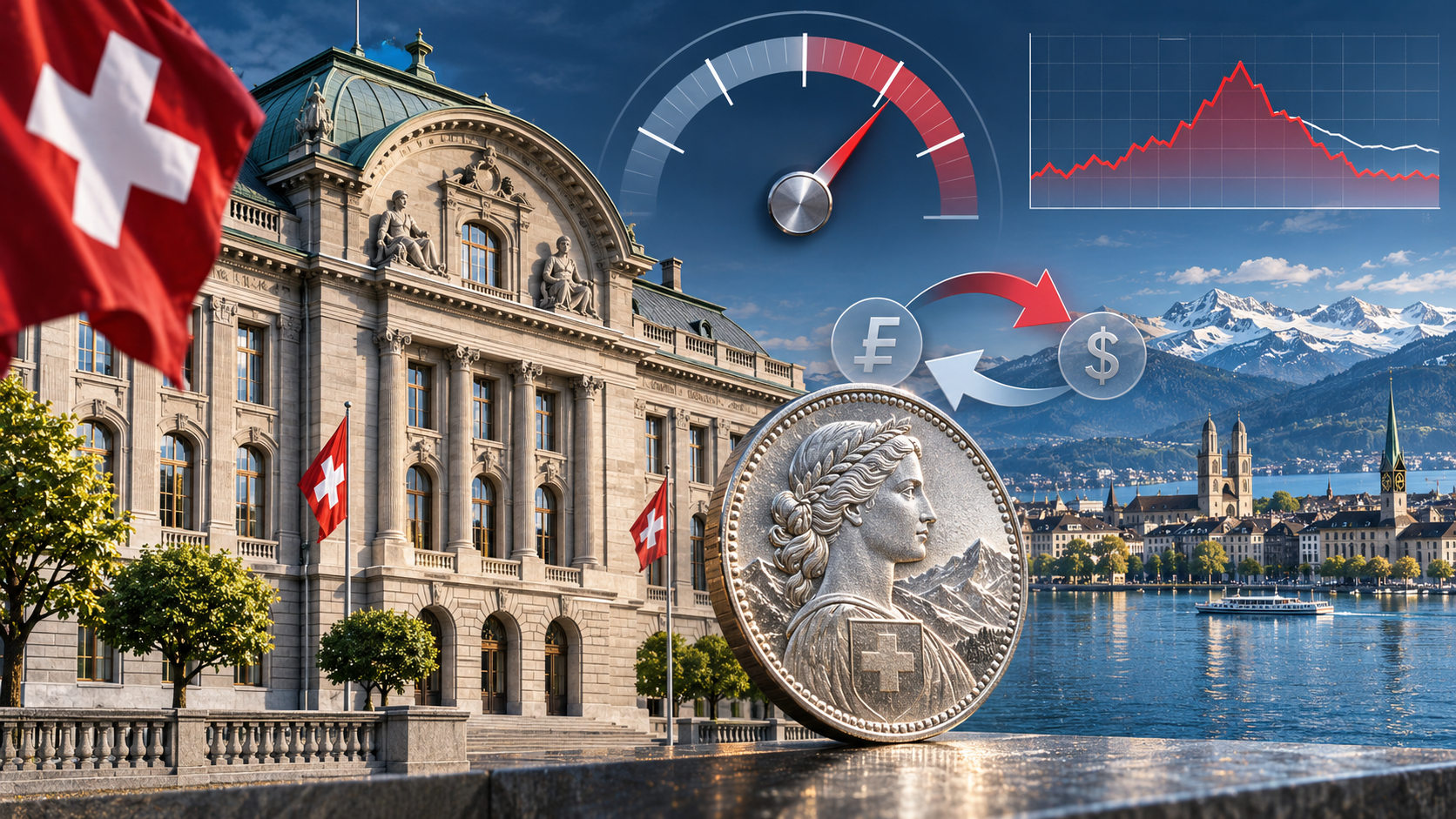
The Swiss National Bank’s December 10 decision arrives after Swiss consumer inflation accelerated to 1.5% in October from 1.0% in September. That increase raises the chance of a policy shift, but Switzerland’s inflation remains low by international standards, and core prices were nearly flat. The Swiss franc’s exchange rate is the hinge: a stronger franc restrains import prices, while depreciation can keep inflation pressure alive even with the policy rate at zero.
When is the next SNB rate decision?
The SNB will publish its monetary policy assessment on Thursday, December 10, at 9:30 a.m. Swiss time, followed by a news conference at 10 a.m. The decision is one of the bank’s four scheduled quarterly assessments. Switzerland’s November CPI release is due December 2, giving policymakers a fresh inflation reading just over a week before the announcement.
Why did Swiss inflation accelerate?
The Federal Statistical Office reported that CPI rose 0.2% month over month in October and 1.5% year over year. The monthly increase reflected higher heating oil, petrol and diesel prices, among other items. Imported goods inflation was 3.7% year over year, compared with 0.8% for domestic goods. Core inflation, which strips out fresh and seasonal products, energy and fuel, was 0.5% year over year and unchanged from September.
That composition matters for the SNB. A higher headline driven by energy and imported products can fade if commodity prices fall or the franc strengthens. A rise in underlying domestic prices, wages or inflation expectations would suggest the pressure is spreading and would make a response more compelling.
Is a December rate increase likely?
The policy rate remained at 0% after the SNB’s September assessment. Vice Chairman Antoine Martin said in November that the bank was watching for second-round effects from accelerating inflation. That comment puts the focus on whether higher energy costs lead to broader price increases rather than on one month’s headline alone.
The SNB faces a two-sided choice. A rate increase would reinforce price stability and support the franc, but it could also lift borrowing costs and intensify currency appreciation, lowering imported inflation. Holding at zero would preserve accommodative financing while the bank assesses the inflation mix. The November CPI report on December 2 should help clarify whether October’s acceleration is continuing.
How could the franc shape Swiss assets?
The franc operates as both a policy channel and a safe-haven asset. When global uncertainty rises, investors often seek CHF exposure, which can make imports cheaper and dampen inflation. When interest-rate differentials widen against Switzerland, the currency can weaken, increasing the price of imported energy and goods. SNB officials have identified exchange-rate fluctuations as a key source of uncertainty.
For bond markets, a surprise rate increase would likely push short Swiss yields higher and could support the franc. A hold paired with concern about imported inflation could leave the currency sensitive to global rate differentials and risk sentiment. Swiss equities may respond differently by sector: exporters can benefit from a softer currency, while domestically financed firms may prefer low borrowing costs.
The decisive signals are the December CPI release, the SNB’s new conditional inflation forecast, any change in its description of the franc and whether officials see evidence of second-round effects. The October headline has lifted the stakes; the underlying data and exchange-rate outlook will determine whether that move becomes a sustained policy shift.
### What is Switzerland’s current policy rate?
The SNB policy rate is 0% following the bank’s September 2026 decision.
### When is November 2026 Swiss CPI released?
The Federal Statistical Office scheduled the November CPI release for December 2, 2026, at 8:30 a.m. Swiss time.