Markets · Analysis
Taiwan Lifts 2026 Growth Forecast to 13.28% on AI Exports
Taiwan now expects 13.28% growth in 2026 as AI exports surge. The 2027 outlook cools to 6.51%, putting chip demand and capacity execution in focus.
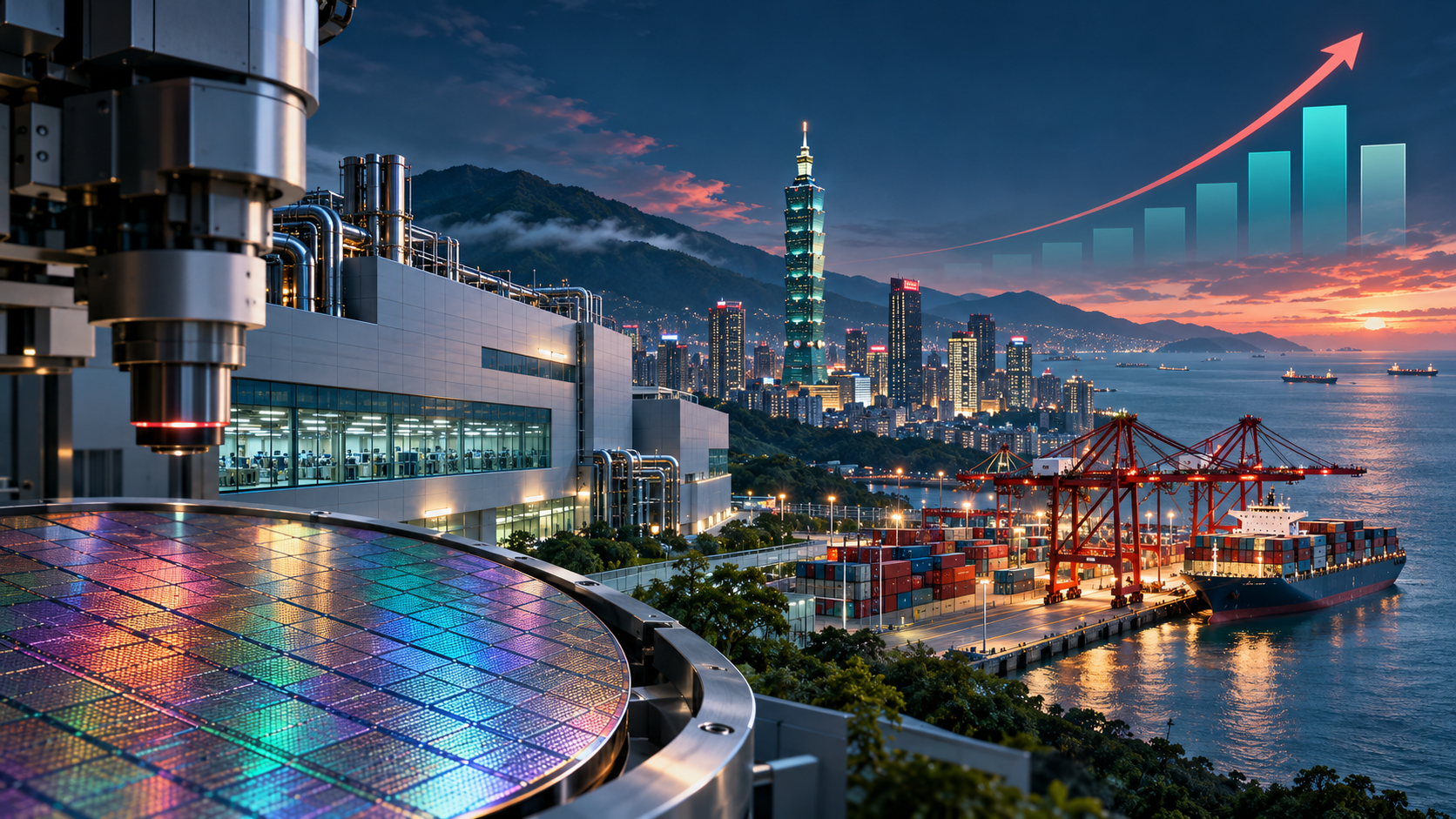
Taiwan’s statistics agency raised its 2026 growth forecast to 13.28% on November 27 as AI exports and investment surged. Third-quarter real GDP grew 14.39% year over year. The agency projects 6.51% growth in 2027, making the market story both the scale of the current boom and the normalization ahead.
What drove Taiwan’s third-quarter growth?
Real exports of goods and services rose 21.65% in Q3, led by AI hardware demand. Imports climbed 21.10%, reflecting components and equipment needed for export production. Gross capital formation, including inventory changes, expanded 26.74%; manufacturing output grew 21.39%, driven by semiconductors, computers and related electronics.
GDP rose 11.94% on a seasonally adjusted annualized quarterly basis, a measure of the latest pace; the 14.39% year-over-year figure compares with Q3 2025.
Why did the agency raise its 2026 forecast?
The DGBAS expects real exports of goods and services to rise 23.96% this year. Cloud providers are expanding AI infrastructure, and Taiwanese semiconductor, packaging, testing, memory and IC-substrate suppliers are adding capacity. Private fixed capital formation is forecast to rise 14.90% as firms invest in plants, equipment and research.
The DGBAS lifted its Q4 growth forecast to 10.42%, 5.05 percentage points above August’s projection. Private consumption is forecast to grow 4.74% for the year and rose 5.50% in Q3. Domestic demand is contributing, although export and investment growth are much faster.
What does the 2027 slowdown mean for chip stocks?
The 6.51% growth forecast for 2027 is strong, but less than half the 2026 projection. Suppliers expanding capacity need AI orders to convert into shipments and margins. A record GDP print confirms current strength; it does not guarantee further share gains if expectations already reflect rapid growth.
Advanced chips, packaging and server components benefit from sustained demand and constrained supply. But DGBAS flags wider U.S. AI export controls and local opposition to data-centre construction as risks to project costs and timing. The outlook depends on overseas investment plans, Taiwan’s capacity ramp and market access.
How could Taiwan’s growth outlook affect currencies and inflation?
Export receipts can support the trade balance and New Taiwan dollar, while imported equipment and inputs absorb some of the flow. FX will also track the U.S. dollar and foreign portfolio demand for Taiwanese equities. DGBAS forecasts inflation of 2.07% in 2026 and 1.96% in 2027, pairing very strong output with moderate price growth.
The next tests are export orders, supplier capacity expansion and whether wage and consumption gains spread beyond technology. Taiwan’s growth upgrade shows the AI cycle’s economic reach; the 2027 outlook makes execution and demand durability the next test.
What is Taiwan’s GDP growth forecast for 2026?
Taiwan’s DGBAS forecasts real GDP growth of 13.28% in 2026, up 2.23 percentage points from its August forecast. It expects growth of 6.51% in 2027.
How fast did Taiwan’s economy grow in Q3 2026?
Real GDP increased 14.39% year over year and 11.94% at a seasonally adjusted annualized quarterly rate. Exports rose 21.65% and gross capital formation increased 26.74% year over year.
Why is AI driving Taiwan’s economic growth?
AI infrastructure demand is boosting exports of semiconductors, computers and related electronics. Taiwanese suppliers are also increasing investment in chipmaking, packaging, memory and equipment capacity.
Is Taiwan’s 2027 growth forecast a contraction?
No. The DGBAS forecasts 6.51% real growth in 2027. That is slower than the exceptional 13.28% expected in 2026, but remains a strong expansion.