Markets · Analysis
UK–EU Partnership Bill: Food Trade Savings and a Linked Carbon Market
The UK’s European Partnership Bill enables lower-friction food trade and a linked UK–EU carbon market, but benefits are projected for 2028 and depend on legislation and implementation.
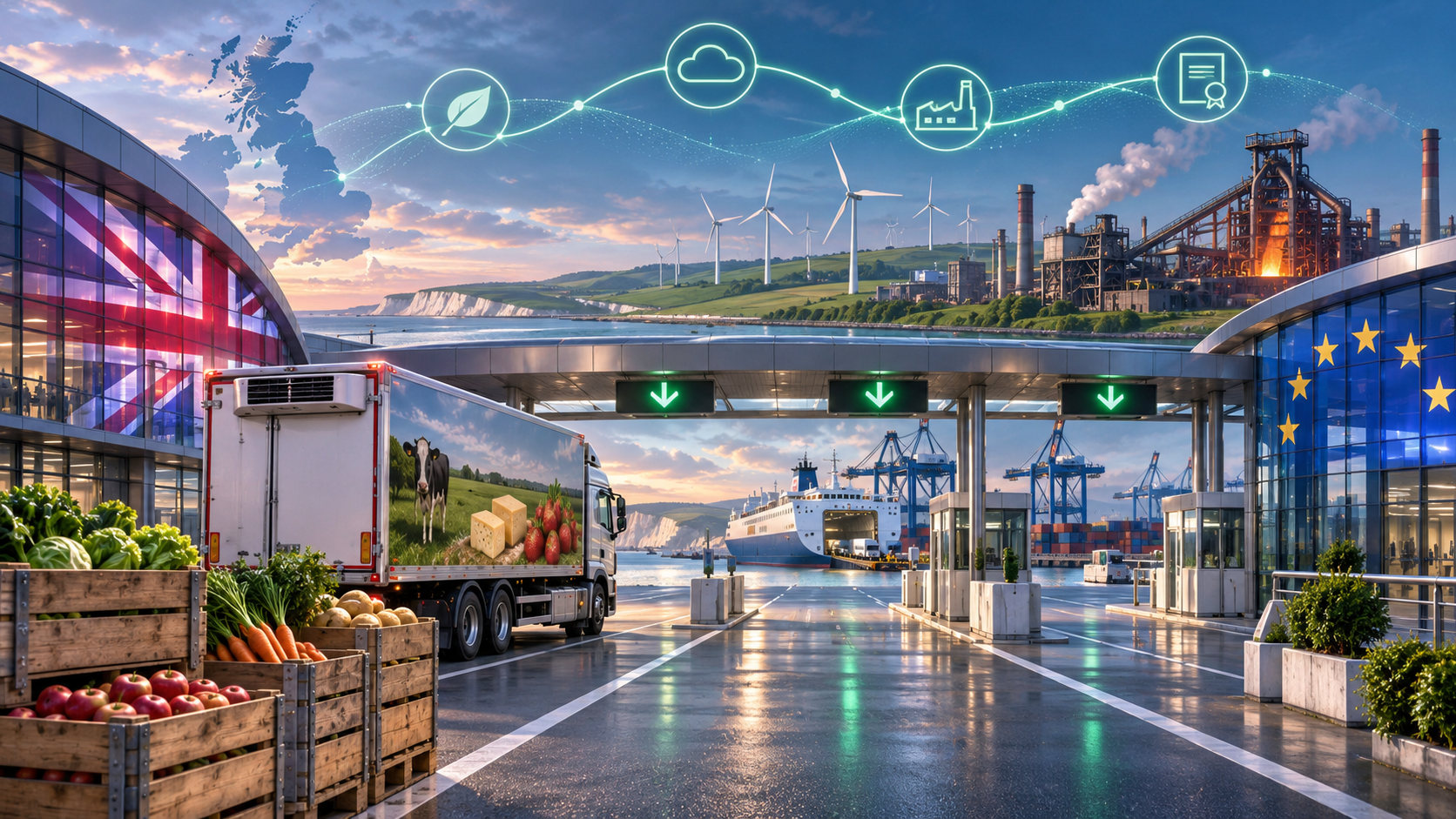
The UK’s European Partnership Bill, introduced on November 26, would create the legal route for two agreements with the European Union: a common food and plant-health area and a link between the UK and EU emissions trading systems. The government expects the carbon-market link to begin on January 1, 2028, and the sanitary and phytosanitary (SPS) area on March 1, 2028, subject to parliamentary approval and EU procedures.
The commercial case rests on lower border costs and reduced exposure to carbon border charges. The government estimates the SPS agreement could raise UK agricultural exports to the EU by 16% and add up to £5.1 billion a year to the UK economy by 2040. It estimates ETS linking could add up to £3.8 billion annually by 2040 and create conditions for carbon-border exemptions on nearly £6.5 billion of UK exports. These are modeled future benefits, not savings businesses are already booking.
What does the European Partnership Bill do?
The bill gives UK ministers powers to implement the SPS and ETS agreements in domestic law. The SPS agreement would align rules for food, farming, animal health and plant health within its scope, removing most routine certification and border inspection requirements for covered trade. The ETS agreement would link carbon allowance markets, creating a larger pool of permits and a common framework for covered emissions.
The UK government says Europe buys 58% of British food and drink exports, making border friction commercially relevant to producers, processors, retailers and logistics companies. The government’s impact assessment also says 45% of total UK trade was with the EU in 2025, valued at more than £830 billion. Even small reductions in clearance time or paperwork can matter for perishable products and firms shipping frequently.
The bill is enabling legislation. It does not itself remove every check immediately or set the final administrative rules for every product. It gives the government authority to implement the treaties through secondary legislation, and the agreements have separate start dates. Parliamentary passage, EU procedures, implementation decisions and transition arrangements determine when businesses can rely on the new terms.
How could the SPS agreement change food trade?
The agreement is intended to remove most routine SPS certificates, pre-notifications and border checks on covered goods. The government says export health certificates can cost up to £200 per consignment; border sampling can add further costs and delays for products such as salmon, cheese and apples. Removing repetitive processes could improve shipment speed and reduce spoilage, working-capital requirements and compliance expense.
Those gains are likely to be most valuable to exporters with frequent shipments, perishable inventory or smaller batches. Larger firms may already spread compliance costs across high volumes; smaller producers can face a greater per-unit burden from certificates and inspection delays. A more consistent process could therefore widen the range of British suppliers able to serve EU customers, provided they meet the agreed standards and retain the capability to export.
The government estimates agricultural exports to the EU could increase 16%. That projection depends on more than lower border friction. Export volumes will also reflect price competitiveness, production capacity, buyer relationships, exchange rates and demand. The agreement removes one barrier; it does not assure a corresponding jump in orders or margins for every exporter.
What does ETS linking mean for industrial companies?
Linking the two emissions trading systems would allow carbon allowances to be recognized across a broader market. According to the government’s assessment, a larger and more liquid carbon market could support more stable pricing and reduce regulatory barriers for covered industries. It also creates the conditions for mutual exemptions from UK and EU carbon border adjustment mechanisms, with nearly £6.5 billion of UK exports identified as potentially benefiting.
Steel and aluminium are among the industries exposed to carbon border rules and cross-border competitiveness pressures. An exemption can alter the relative cost of exporting, but businesses will still face carbon costs under the linked system and need to manage emissions, allowances and reporting obligations. The policy changes where carbon pricing applies and how markets interact; it does not make industrial emissions free.
The government projects the ETS link could add up to £3.8 billion a year to the UK economy by 2040. The impact assessment describes benefits accruing over time, so investors should assess the projection against implementation costs, allowance prices, sector coverage and actual trade flows as the agreement approaches.
What should businesses and investors monitor?
The first test is the bill’s passage through Parliament and the completion of EU procedures. Next come detailed regulations, product coverage, transition periods and the final administrative systems businesses must use. The agreement spans distinct areas: SPS rules apply in Great Britain, with benefits extended to Northern Ireland through the Windsor Framework; ETS linking applies across the UK.
For food producers and retailers, useful indicators include certificate and inspection requirements, clearance times, product eligibility and shipment volumes. For industrial exporters, monitor the legal treatment of carbon border mechanisms, allowance-market rules and carbon-cost disclosures. Companies with cross-border operations should identify which products and facilities fall inside the agreement before incorporating savings into forecasts.
The bill is economically significant because it targets trade costs in two concrete channels: food-border administration and carbon pricing. But the market value will depend on delivery. The headline estimates establish the government’s projected scale; realized value will be measured in fewer checks, lower compliance costs, eligible exports and firms converting smoother access into sales.
### UK–EU Partnership Bill: frequently asked questions
#### When do the UK–EU food and carbon agreements take effect?
The government expects the linked emissions trading systems to begin on January 1, 2028, and the common SPS area on March 1, 2028. Both dates are subject to parliamentary passage and EU procedures.
#### How much could the food agreement add to UK exports?
The UK government estimates the SPS agreement could increase UK agricultural exports to the EU by 16% and add up to £5.1 billion a year to the UK economy by 2040. These are projections, not realized results.
#### Which UK exports could benefit from linked carbon markets?
The government says ETS linking would create conditions for mutual carbon-border exemptions covering nearly £6.5 billion of UK exports, including carbon-intensive industrial goods. The precise benefit depends on final legal implementation and product eligibility.