Markets · Analysis
Yen Near ¥160: Intervention Risk Meets Fed Rate Support
The yen weakened to ¥159.51 per dollar on November 27. A wide policy-rate gap supports the dollar, while Japan’s intervention history and rising inflation raise reversal risk.
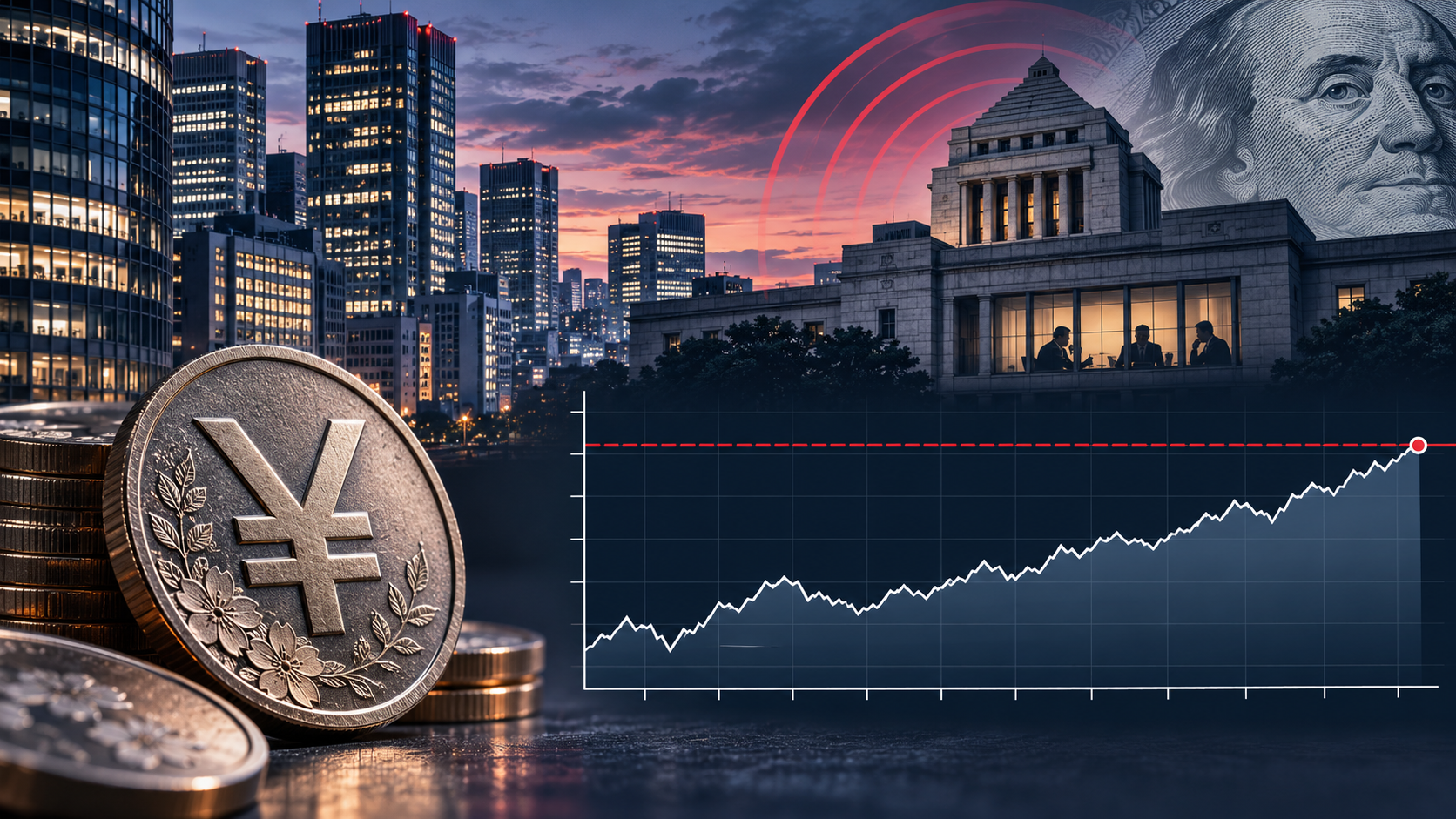
The yen weakened to ¥159.51 per dollar on November 27, putting the closely watched ¥160 level back in view. The dollar is supported by rising U.S. rate expectations and Treasury yields, while faster Tokyo inflation has strengthened expectations for another Bank of Japan increase. This leaves USD/JPY caught between an interest-rate gap favoring the dollar and the risk of Japanese intervention.
¥160 is not a formal intervention trigger. Japanese officials have warned against excessive volatility and disorderly moves, so the pace of depreciation matters alongside the level. Traders must weigh rate differentials against the possibility Tokyo sells dollars to buy yen.
Why is the yen near ¥160?
Markets anticipate further Federal Reserve tightening after strong U.S. activity and persistent inflation. Reuters reported futures implied a 99% probability of a December Fed hike on November 27, as Treasury yields rose. Higher expected U.S. returns support the dollar against currencies whose central banks are moving more cautiously.
Japan’s inflation is changing the other side of the trade. November Tokyo core inflation rose at its fastest pace in 16 months, adding to the case for a BOJ increase at its December 17–18 meeting. A small hike with cautious guidance may not narrow the rate gap enough to reverse yen weakness; the expected policy path matters as much as the first move.
Can intervention change the yen’s direction?
Japan’s Ministry of Finance reported ¥15.399 trillion of yen-buying intervention across three operations from July 30 through August 3. The dollar fell from around ¥164 to ¥155 over the period, showing intervention can force a sharp short-term adjustment. It does not erase the rate differential on its own.
A Federal Reserve Bank of New York report said the U.S. Treasury participated in July’s operation, the first U.S. yen-buying intervention since 1998. That coordination raised the cost of one-way positioning, but another joint intervention is not assured. The immediate signal is that Tokyo is willing to act if it judges moves disorderly.
What could change the USD/JPY outlook?
Japan’s next monthly intervention report is due November 30 and covers activity through November 26. It will show whether officials acted during the latest approach to ¥160. The BOJ meets December 17–18 and the Fed December 8–9; U.S. jobs and inflation releases before those decisions can shift the expected rate gap.
For now, U.S. rate expectations support the dollar, while Japanese inflation and intervention risk support the yen. A break above ¥160 would draw attention, but policy guidance and the pace of any move determine whether it lasts. Watch official language, Treasury yields and central-bank signals together.
### What is the dollar-yen exchange rate?
Reuters reported the dollar at ¥159.51 on November 27, 2026. Foreign-exchange quotes move continuously while markets are open.
### Is ¥160 a guaranteed intervention level?
No. It is a closely watched level, not an announced trigger. Japanese officials have focused on excessive volatility and disorderly moves.
### How much did Japan spend on yen intervention in 2026?
The Ministry of Finance reported ¥15.399 trillion of yen-buying intervention from July through September, across operations on July 30, July 31 and August 3.
### When are the next BOJ and Fed meetings?
The BOJ meets December 17–18 and the Federal Reserve meets December 8–9, 2026.
Sources and further reading
- Reuters — Dollar set for weekly gain as risk appetite returns
- Japan Ministry of Finance — July–September 2026 FX intervention
- Japan Ministry of Finance — Monthly FX intervention release schedule
- Bank of Japan — December 2026 release schedule
- Federal Reserve — December 2026 calendar
- Reuters — Japan warns intervention remains possible as yen nears 160