Business · Analysis
DCC Energy’s 26% EPS Rise Includes a 13% Smaller Share Count
DCC Energy’s interim EPS grew faster than total adjusted earnings. Its December tender and lower weighted share count explain the gap ahead of the proposed takeover.
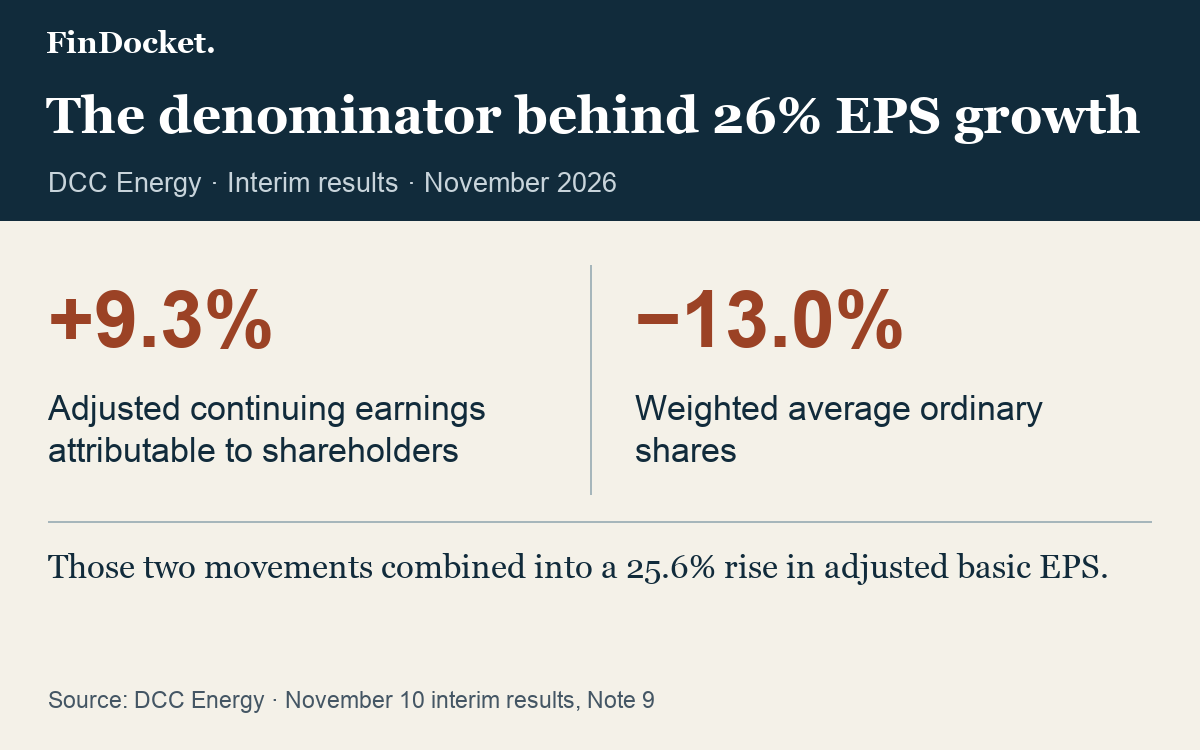
DCC Energy’s November interim results report a 25.6% rise in adjusted continuing earnings per share, but the underlying earnings pool grew more slowly. A substantially smaller share count amplified the per-share result after capital returned to shareholders in the previous financial year.
What explains the EPS increase?
Note 9 records adjusted continuing earnings attributable to shareholders of £102.900 million, against £94.154 million a year earlier. Weighted average ordinary shares declined from 98.208 million to 85.424 million.
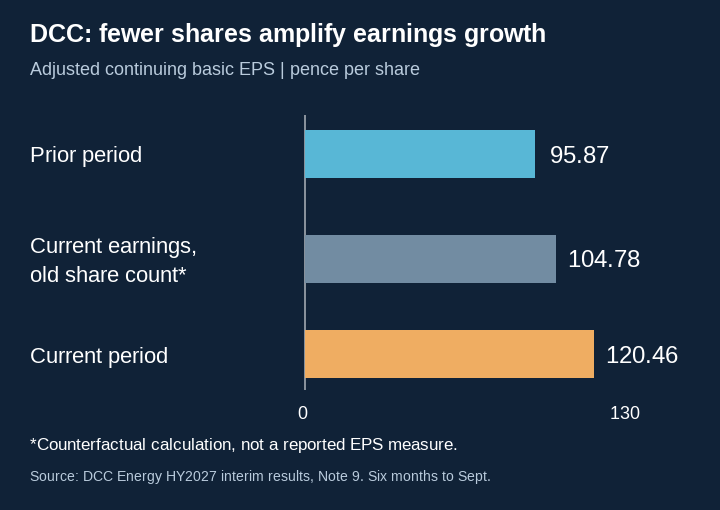
Those figures imply earnings growth of approximately 9.3% and a share-count reduction of 13.0%. Together they produce adjusted basic EPS of 120.46p, against 95.87p. These calculations use continuing operations and the basic share count consistently.
Holding the old share count constant would produce approximately 104.78p of current-period EPS. The difference between that figure and 120.46p shows the denominator’s effect; it is not additional operating profit.
What happened in the tender offer?
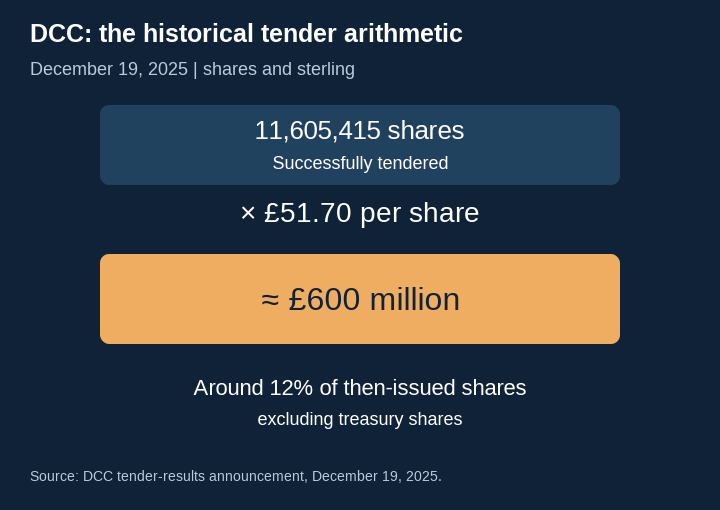
The December 19, 2025 tender-results announcement said 11,605,415 shares were successfully tendered at £51.70 each, representing around 12% of shares then in issue excluding treasury stock. The tender was fully subscribed against the £600 million return.
Multiplying the disclosed share count by the strike price gives approximately £600 million, matching the announced scale. That return removed a large block of shares before the latest reporting period, making the subsequent per-share comparison structurally different.
The tender’s 12% figure and the interim weighted-share-count reduction are not identical measures. One describes a transaction against shares outstanding at a point in time; the other compares average denominators across two reporting periods. Other buybacks and timing also belong in that reconciliation.
What changes under the proposed acquisition?
The September 18 scheme meeting approved the proposed acquisition by Dragon Bidco, indirectly owned by funds advised by Energy Capital Partners and KKR. The scheme resolution received 78.09% of votes cast. That approval was a transaction milestone, with court sanction and other conditions still required.
The November results continued to expect completion in the first quarter of 2027 and confirmed no November interim dividend under the transaction terms. That separates the current shareholder-return timetable from the earlier tender.
The operating assessment and the transaction assessment therefore require different evidence. The EPS calculation measures earnings allocated across fewer shares; the takeover’s value and timing depend on its disclosed consideration, conditions and completion process. A faster per-share growth rate alone establishes neither faster operating growth nor a completed acquisition.