Business · Analysis
Ingles Markets FY2026: Sales Growth Meets Fourth-Quarter Margin Pressure
Ingles Markets grew fiscal 2026 sales and annual earnings, but Q4 gross margin narrowed and net income fell. Here is what IMKTA's results say about grocery profitability.
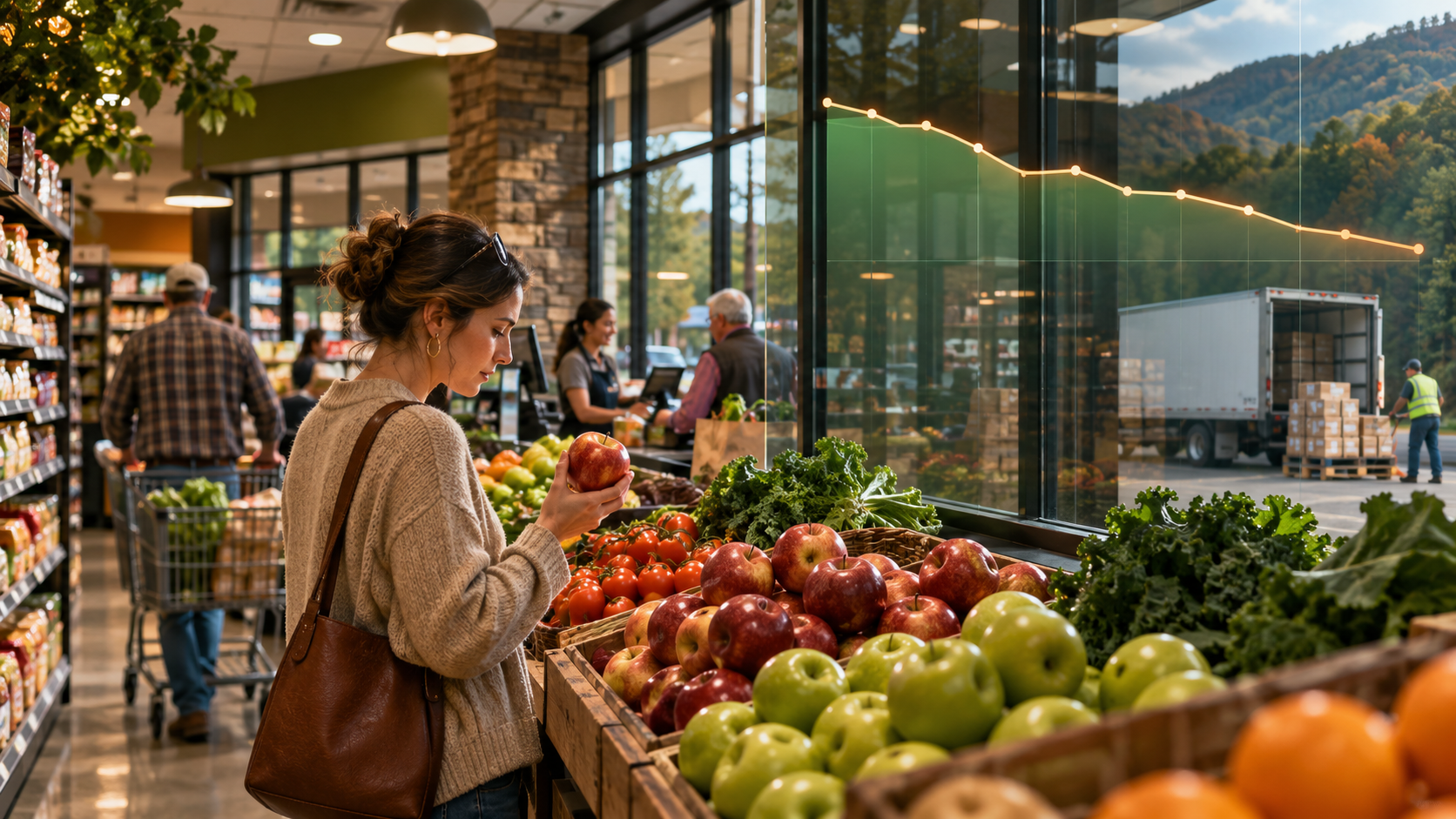
Ingles Markets' fiscal 2026 results show a regional grocer growing annual sales and earnings while its latest quarter faced a tougher margin mix. The Asheville-based chain reported fiscal-year sales of $5.42 billion, up 1.7%, and net income of $96.8 million, up 15.8%. In the fourth quarter, however, sales increased only 0.4% while gross margin contracted 60 basis points and net income declined 28.0%.
That gap is the key signal for investors assessing Ingles Markets (NASDAQ: IMKTA). The annual figures show recovery and cost control across the full year; the quarter indicates that sales growth alone did not protect profitability as operating costs rose faster than revenue.
What drove the divergence between annual and quarterly earnings?
For the 13 weeks ended September 26, Ingles generated $1.374 billion in net sales, compared with $1.368 billion in the prior-year quarter. Gross profit fell to $328.5 million from $334.7 million. Gross margin therefore slipped to 23.9% from 24.5%, a 60-basis-point decline.
Meanwhile, operating and administrative expenses rose to $303.9 million from $299.0 million, up about 1.6%. That increase was larger than the 0.4% rise in quarterly sales. Lower gross profit combined with higher operating expense left less room for earnings: net income decreased to $18.5 million from $25.7 million.
The Class A diluted earnings per share comparison tells the same story, falling to $0.97 from $1.35. This decline came despite slightly higher sales, highlighting how thin grocery economics can make margin and expense changes more consequential than modest top-line growth.
Does the full year look healthier?
Yes. Fiscal 2026 comprised 52 weeks, as did fiscal 2025, making the annual comparison straightforward. Sales climbed to $5.42 billion from $5.33 billion, while gross profit rose to $1.32 billion from $1.27 billion. Annual gross margin expanded to 24.4% from 23.9%.
Operating and administrative expense increased by approximately $30 million, from $1.16 billion to $1.19 billion. But the roughly $50 million increase in gross profit more than covered the higher operating base. Net income consequently advanced to $96.8 million from $83.6 million. Class A diluted EPS rose to $5.10 from $4.40.
The apparent contradiction between stronger annual margins and weaker fourth-quarter margins is not unusual: a full-year result can conceal a change in momentum near period-end. For investors, the next question is whether Q4's margin compression was temporary or carries into the new fiscal year. The company did not provide a forward earnings forecast in the release, so subsequent quarterly figures will be needed to establish the direction.
What do debt and capital spending say about financial flexibility?
Ingles ended the fiscal year with $497.3 million of total debt, down from $514.8 million a year earlier. Interest expense also declined to $18.6 million for the year from $19.7 million. The company reported no borrowings outstanding under its $150 million line of credit, apart from a $900,000 letter of credit.
Capital expenditures totaled $100.6 million, below the $114.5 million spent in fiscal 2025. Lower capex and lower debt can support balance-sheet flexibility, although reduced investment is not automatically positive: the level must be judged against store maintenance, distribution needs and planned growth. Ingles operates 194 supermarkets across six Southeastern states and also owns a dairy facility and neighborhood shopping centers, according to the company.
Three stores that were temporarily closed after Hurricane Helene remained closed at September 26. Ingles said it expects them to reopen at various points in 2027 or 2028. Restoring those locations could eventually recover sales capacity, but the staggered timetable means they are not an immediate offset to weaker comparable-quarter profitability.
What should investors watch in the next IMKTA report?
The most useful indicators are gross margin, operating expense growth and comparable sales detail when available. If sales growth accelerates but margin remains near 23.9%, investors will want to know whether pricing, product mix, promotions, shrink or procurement costs explain the difference. If margin rebounds while expense growth moderates, the annual earnings trend may prove more representative than Q4.
Debt remains manageable relative to the company's earnings base, but grocery retailers operate with limited room for execution errors. Higher labor, distribution or food costs can consume incremental sales quickly. The annual improvement is real; the fourth-quarter decline is also real. A balanced reading gives neither period exclusive control over the outlook.
### Ingles Markets FY2026 results: frequently asked questions
#### Did Ingles Markets increase annual sales in fiscal 2026?
Yes. Sales rose to $5.42 billion from $5.33 billion, an increase of about 1.7% over a 52-week comparison.
#### Why did Ingles Markets' fourth-quarter profit fall?
Sales increased 0.4%, while gross margin fell from 24.5% to 23.9% and operating and administrative expenses increased 1.6%. Net income fell to $18.5 million from $25.7 million.
#### How much debt did Ingles Markets report at fiscal year-end?
Ingles reported $497.3 million of total debt at September 26, 2026, down from $514.8 million a year earlier.