Business · Analysis
James Latham’s Margin Recovery Comes With a Distribution-Centre Cash Bill
James Latham’s November interim results improve on last year’s margins. Its £45 million distribution centre puts cash returns and the 2027 transition in focus.
James Latham’s November 26 interim results show a stronger trading margin, but the timber distributor’s investment cycle is absorbing cash. The useful question is whether better trading can translate into returns from its new National Distribution Centre once the transition finishes.
Has the margin trend improved?
The six months to September produced revenue of £219.3 million and operating profit of £13.9 million, compared with £196.8 million and £11.1 million a year earlier. Gross margin, including warehouse costs, rose from 16.2% to 16.8%.
That reverses the direction recorded in the 2026 annual report. For the year to March, gross margin had declined from 16.8% to 16.5%. Management linked that decline to competition and growth in lower-margin timber-pack sales, while noting that this business also carries lower overheads.
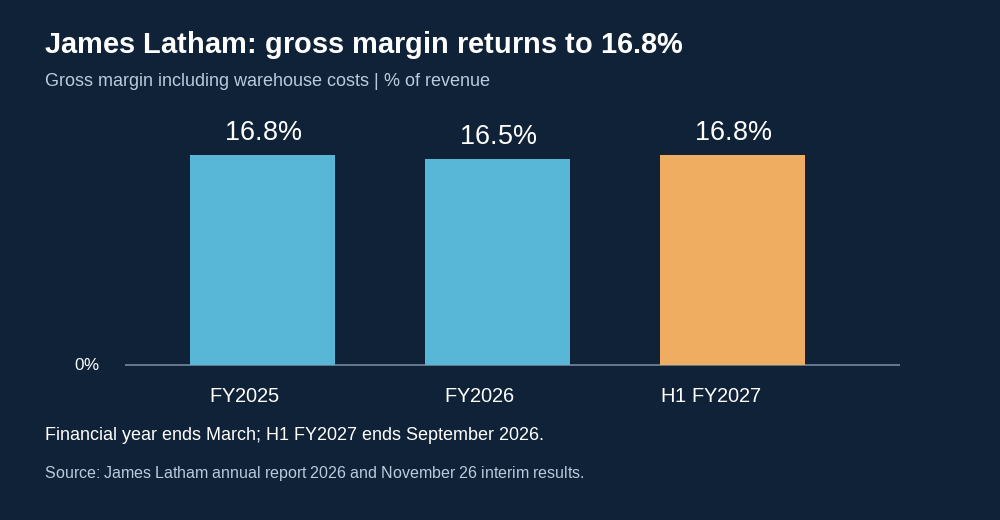
The annual report recorded 7.7% growth in like-for-like volumes adjusted for working days, alongside 7.2% revenue growth. Supplier product costs had been broadly stable over that financial year. It then flagged energy, oil and freight-related supplier price increases entering the new year.
That earlier warning gives context to the latest sales figure. A larger revenue total cannot be treated as an equivalent increase in physical demand. Product mix, selling prices and costs must be assessed alongside the volume measure.
Where is the cash going?
September cash was £36.8 million, against £51.2 million at March. Investment in the distribution centre had reached £35.6 million of its £45 million budget. Construction is expected to finish by year-end 2026, with full trading targeted by end-2027 and transitional costs during the stock move.
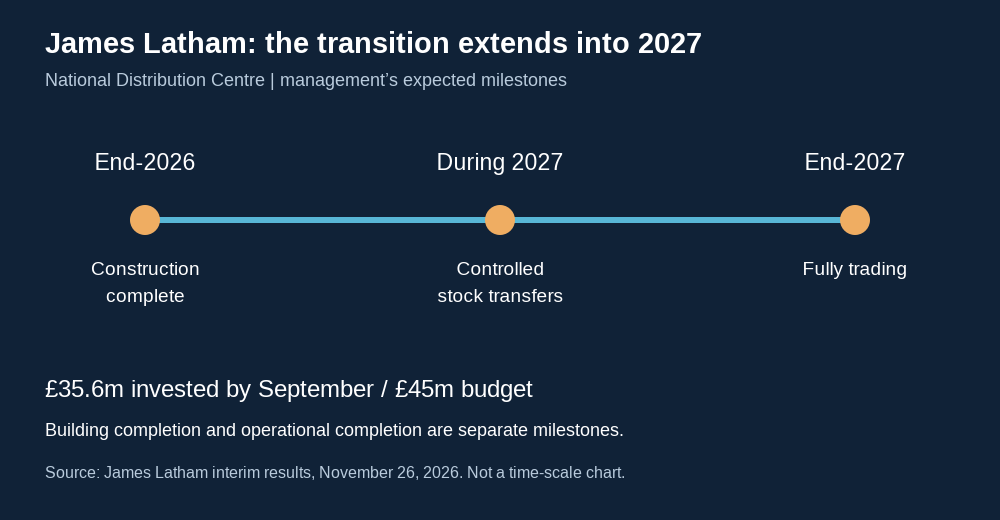
The annual report already set end-2027 as the operational target. Completion of the building therefore should not be mistaken for completion of the business transition. Stock handling, systems and the migration from existing facilities determine when the investment can support normal operations.
The annual strategy also puts bedding in existing activities before pursuing new opportunities at the centre. That sequencing matters: a new property adds capacity, while incremental profit depends on how that capacity is used.
What will establish the return?
The immediate assessment has two parts: whether gross-profit improvement survives changing product costs, and whether the distribution-centre transition produces measurable operating benefits. The remaining construction spend alone cannot describe the full execution task.
The company’s next annual results, scheduled for July 1, 2027, should give a fuller view of margins, cash deployment and transition progress. Comparing those outcomes with the pre-project operating base will be more informative than treating construction completion as an earnings catalyst on its own.