Business · Analysis
Severn Trent Raises Its Investment Floor as Net Debt Reaches £10.8 Billion
Severn Trent lifted FY2027 investment guidance to £2.3–£2.5 billion. Its first-half spending and debt figures show the delivery and financing work still ahead.
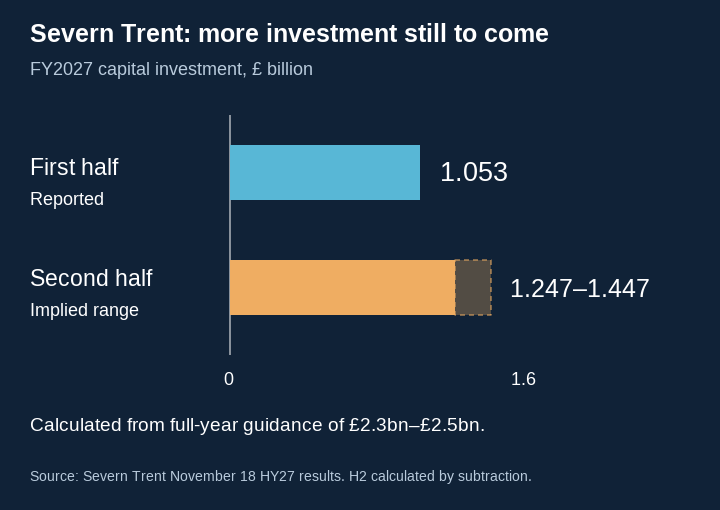
Severn Trent’s November 18 results lift the floor of FY2027 capital-investment guidance by £100 million to £2.3 billion, while retaining the £2.5 billion upper end. With £1.053 billion invested in the first half, the updated range requires an even larger second-half delivery programme as adjusted net debt reaches £10.812 billion.
How much spending remains?
Subtracting first-half investment from the new full-year range implies £1.247 billion–£1.447 billion of second-half capital investment. That is approximately 18%–37% more than the first-half amount. These are FinDocket calculations from the reported investment measure and guidance, rather than a separate spending forecast.
The lower bound’s increase is meaningful, but the announcement does not raise the upper bound. Describing the revision as a £100 million increase across the entire range would overstate the change.
July’s trading update recorded around £440 million of first-quarter investment, up 22% year on year, and a £2.2 billion–£2.5 billion full-year range. It also confirmed refinancing of core bank facilities in June, increasing committed facilities to £1.65 billion across Severn Trent Water and the parent.
The November revision therefore builds on an accelerated programme already underway. The remaining task is delivery through the second half, rather than simply announcing more projects.
What has happened to the financing position?
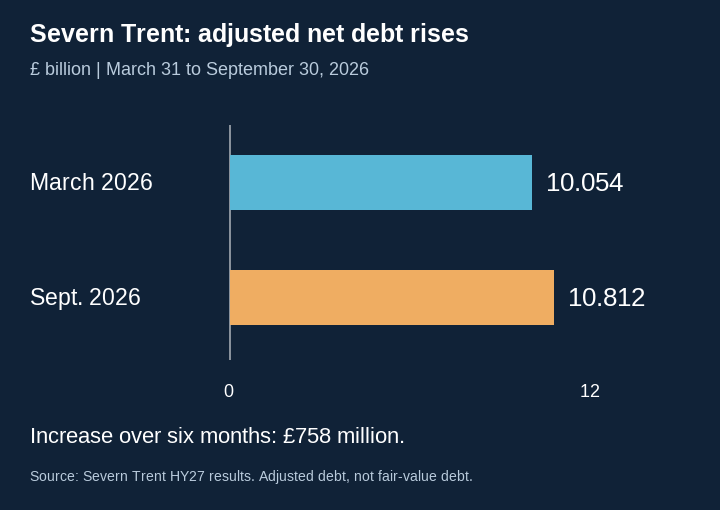
Adjusted net debt increased from £10.054 billion at March to £10.812 billion at September, a £758 million rise. The presentation places regulated gearing at 63.8% and reports approximately £2 billion of cash and undrawn credit facilities.
The slides describe an expected 14% FY2027 increase in the regulated asset base to £17.6 billion, incorporating the year-one reopener draft determination and the specified inflation assumption. That is a forward regulatory asset measure, not current-period cash income.
Investing today can expand future allowed returns while increasing financing requirements now. The appropriate comparison therefore includes the growth in the asset base, the price of funding and the efficiency of delivery, rather than treating higher investment as immediate profit.
What should the next results establish?
The presentation maintains a 60%–65% regulated-gearing outlook for FY2030. The latest 63.8% figure is already within that range, but it does not establish the future path while spending and the regulatory asset base continue to change.
The next reporting period needs to demonstrate the second-half investment pace and how it is funded. Matching those outcomes with assets brought into service and regulatory incentives will show whether the enlarged programme is translating capital deployment into the returns anticipated by the investment case.