Markets · Analysis
Why borrowing dollars against an issuer’s own token can tighten quickly
Friday’s reported loan balance and token collateral imply a trigger near 2.11 cents. A subsequent repayment changed the relevant numbers.
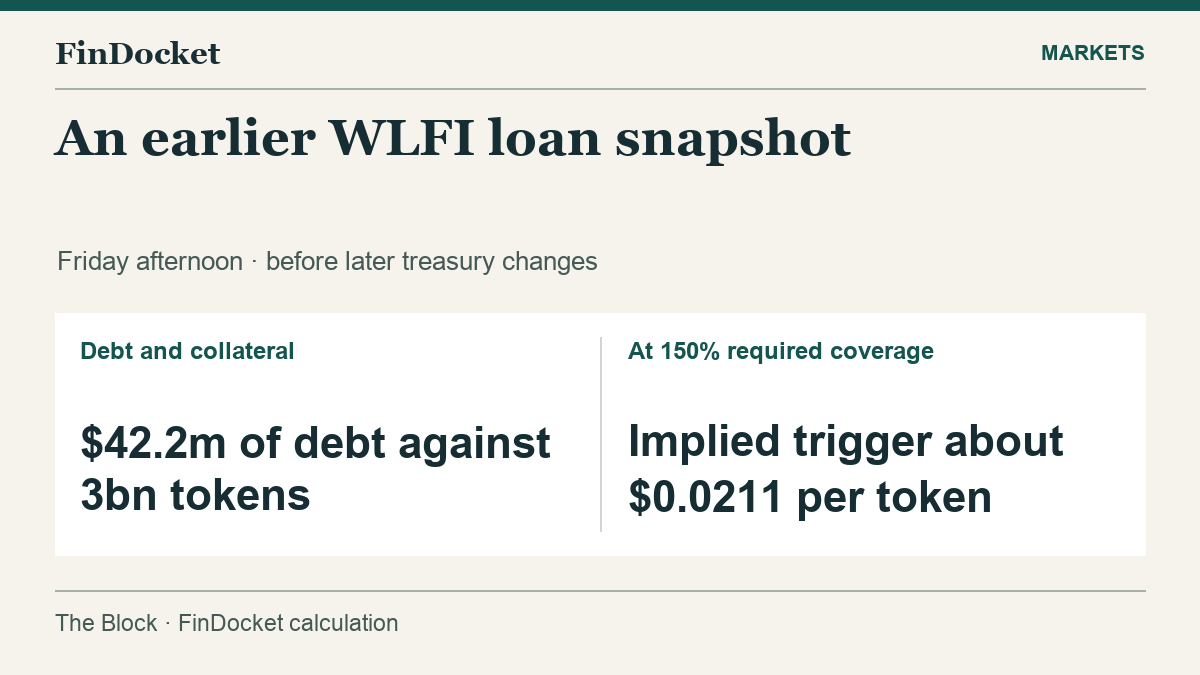
Borrowing stablecoins against a token issued by the borrower links two risks. Bad news about the borrower can lower the market price of the collateral at exactly the time the borrower most needs to raise cash. The arithmetic from one reported World Liberty position shows how quickly available headroom can change.
The Block reported that on Friday afternoon the wallet held roughly three billion WLFI against $42.2 million of stablecoin debt. At a collateral requirement of about 1.5 times the debt, that position needed approximately $63.3 million in collateral value. Dividing by three billion tokens gives about $0.0211 per token. A tenth of a cent move on three billion units changes their marked value by $3 million. The numbers describe that particular snapshot. World Liberty subsequently reported repaying debt and changing its collateral.
For a lender who wants cash back, there is another question. A lending pool can have claims on borrowers yet have few immediately withdrawable coins if much of its inventory is already lent. A temporary shortage of available cash, a collateral shortfall and a stablecoin trading away from its target price are separate observations. Each requires its own balance or market price at a stated time.
That separation is important in a fast market. Comparing Saturday’s token price with an unchanged Friday loan balance can create a fictional liquidation. Pair each price with the collateral units, debt and terms actually in force at that moment.