Markets · Analysis
What World Liberty bought by selling ether to repay debt
Repaying debt moved the reported liquidation threshold lower and used up treasury assets. Both changes matter to the project’s financial position.
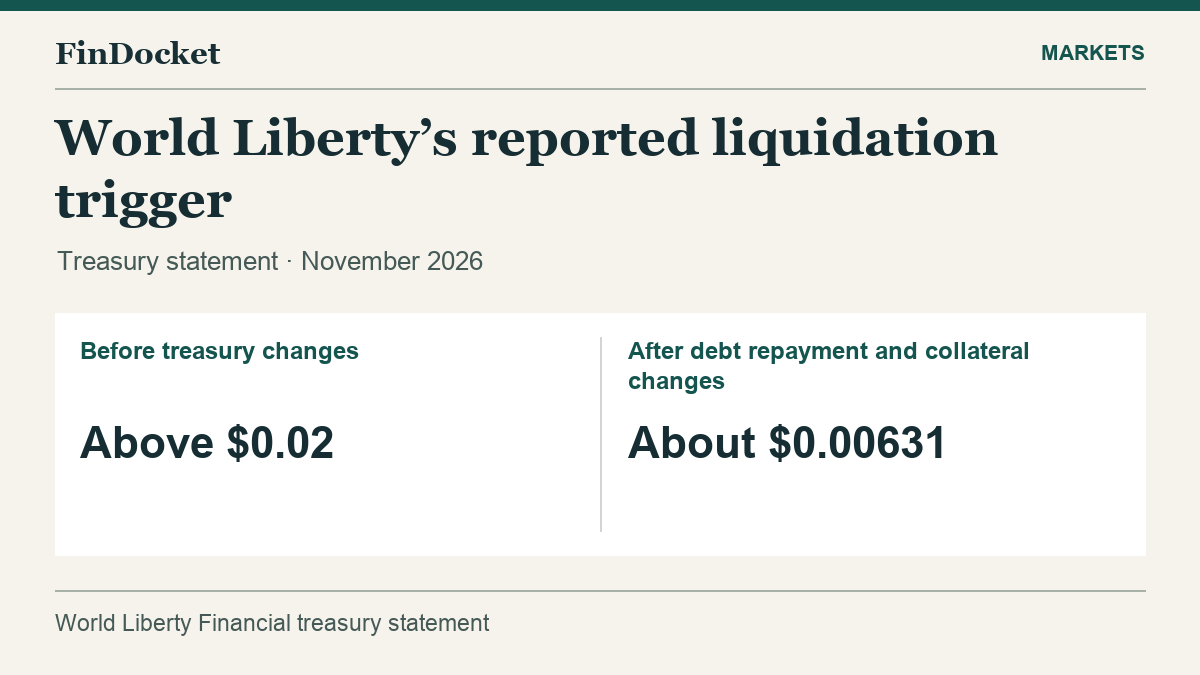
World Liberty Financial said on Saturday that it sold some treasury-owned ETH and mETH, used the proceeds to repay debt and consolidated collateral. It put the new WLFI liquidation price near $0.00631, down from above $0.02. Using exactly two cents as a reference yields a reduction of about 68.5%. The earlier threshold was approximate, so greater precision would be misleading.
A liquidation price describes the level at which collateral coverage can become insufficient under a lending position’s terms. Repaying debt reduces the amount creditors have a claim on. Posting more collateral also increases coverage. Both can lower the trigger even if the collateral token itself continues to lose market value.
There is a cost. The treasury no longer owns the assets it sold and no longer participates in their future gains or losses. Using $10 million of cash to repay $10 million of principal would shrink assets and liabilities by equal amounts before expenses. Any gain or loss on selling the ether depends on its acquisition cost and sale proceeds. The percentage change in a liquidation trigger tells a reader nothing about that gain or loss.
A final distinction matters for holders of the project’s stablecoin. The borrowing position, the treasury's broader balance sheet and the reserves supporting redemption are separate questions. Evaluating them requires the position terms, treasury balances and reserve records respectively. The company's statement supplies a number for the first question.