Technology · Analysis
How X could measure the value of an Undo Refresh button
Restoring a lost post may help a publisher even if overall time on the platform stays flat. A holdout test could measure incremental visits.
Anyone who has refreshed a feed just as an interesting post came into view knows the problem an undo button could solve. Watcher.Guru reported that X was testing such a feature. The report describes a product idea. It does not provide rollout figures, advertiser revenue or evidence that people stayed longer.
Counting taps would be the easiest way to measure uptake and a poor way to measure value. Imagine 1,000 people restore a post. Some would have found it again through the author's profile. Others would have clicked a different post or left the app. The financial question is what changed relative to those alternatives.
A publisher could gain even when total time on X stays flat. If a reader recovers a post, opens its source and spends time with the article, the referral has value to that publisher. X faces a different calculation. Its advertising documentation describes campaign objectives, billable actions and auction pricing. An extra interaction with an ordinary post need not correspond to an extra paid action.
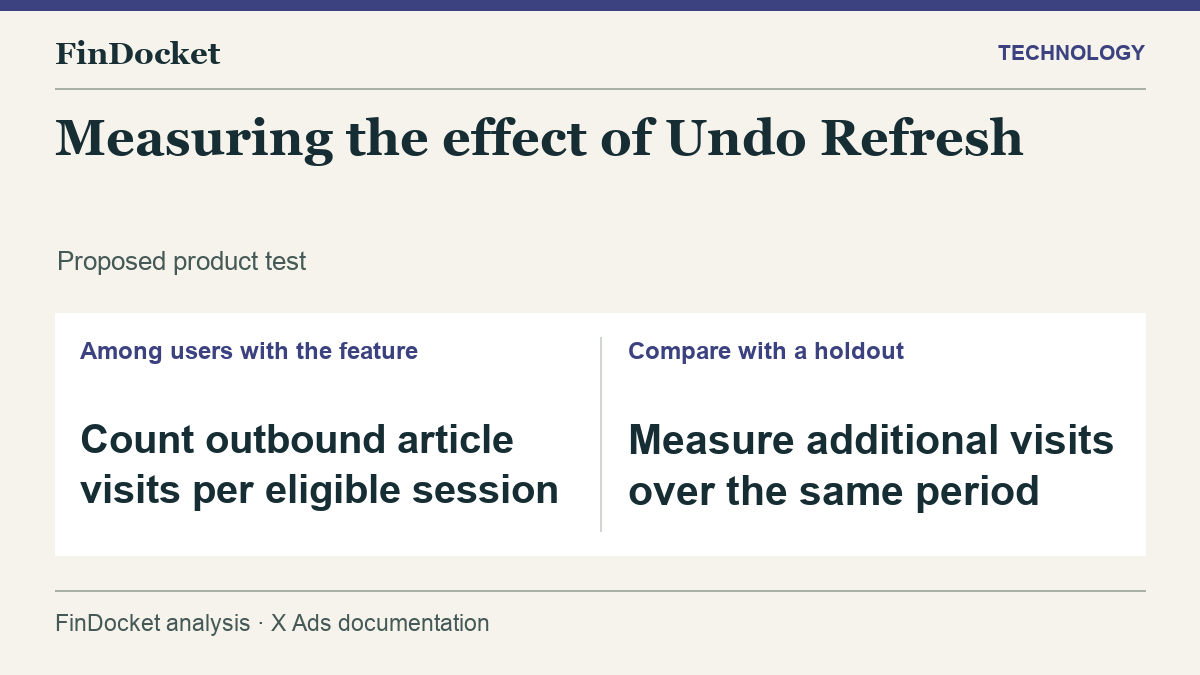
A practical product test would compare similar randomly assigned users who did and did not receive the feature. Measure recovered outbound visits, subsequent use and paid impressions per eligible session. Also count accidental refreshes and people who leave immediately. That combination would show whether the option rescued something readers valued and whether the benefit extended beyond the tap.