Technology · Analysis
Google’s Belgian delay shows how a cooling change can hold up an entire asset
A dispute over cooling changes in Belgium illustrates how a nearly complete building can remain months away from generating revenue.
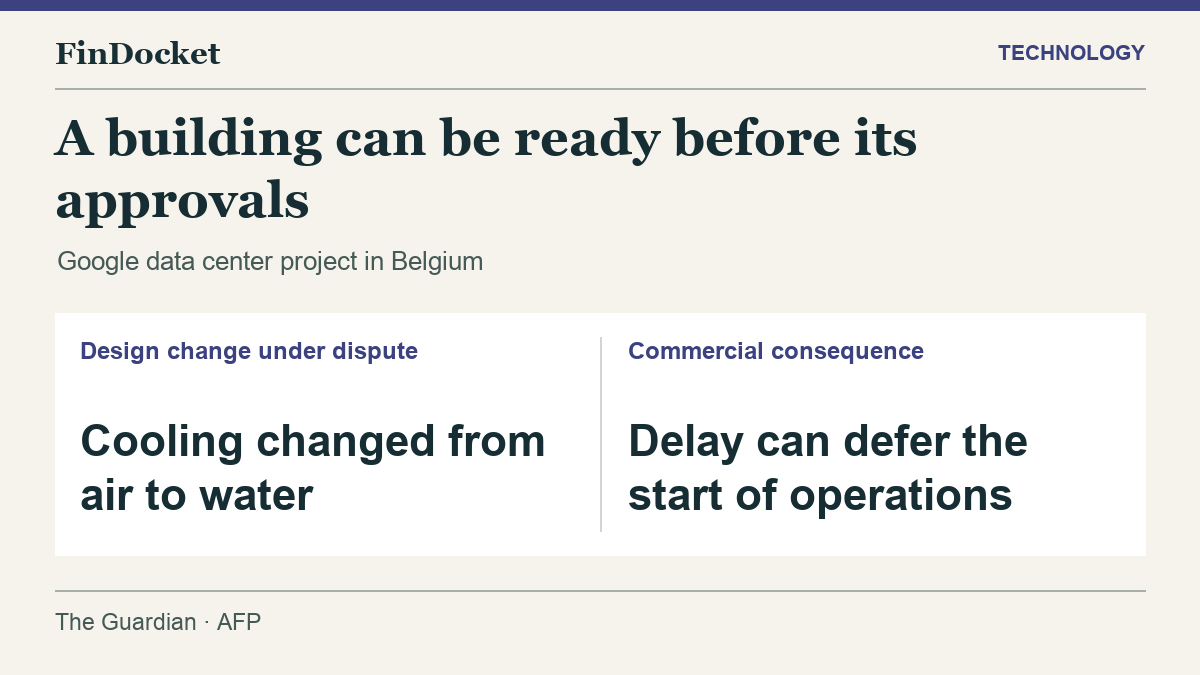
A nearly finished data-centre building can still be a long way from productive capacity. In Wallonia, regional authorities ordered a stop to construction at Google’s project after changes to its original plans lacked the required approval, according to the Guardian’s reporting. An official described the structural work as complete. The disputed modifications included a switch from air cooling to water cooling.
The distinction matters financially. A building shell, cooling plant, grid connection and installed computing equipment have to work together. If one essential system cannot operate under the proposed design, progress on the other elements does not automatically bring forward the date at which customers can use the facility. Google has appealed. Neither the site’s visible condition nor the existence of that appeal establishes its eventual operating date.
Which cost does a delay create?
Consider a purely illustrative €100 million already committed to an asset earning no return until commissioning. At an annual financing cost of 5%, a six-month delay corresponds to roughly €2.5 million of simple carrying cost, before contractor remobilization or potential lost revenue. There is no basis in the reported figures to assign that hypothetical amount to Google.
The useful questions are how much capital has actually been committed, whether the equipment can be deployed elsewhere, and which work can lawfully resume under each outcome. A blanket estimate based on the advertised value of a much larger investment program would obscure the specific asset and permit at issue.