Markets · Analysis
Why a distressed bond’s last trade may be a poor exit price
The date and size of a reported bond trade determine how informative its price is for somebody trying to sell today.
An exchange can add seven hours to its trading day by changing a timetable. It cannot make a dealer stand ready to purchase a distressed company’s bonds at yesterday’s price. A recent comparison between near-continuous stock trading and bonds traded by appointment points to two dimensions of liquidity. One is the time a market is accessible. The other is the price and size available when someone wants to trade.
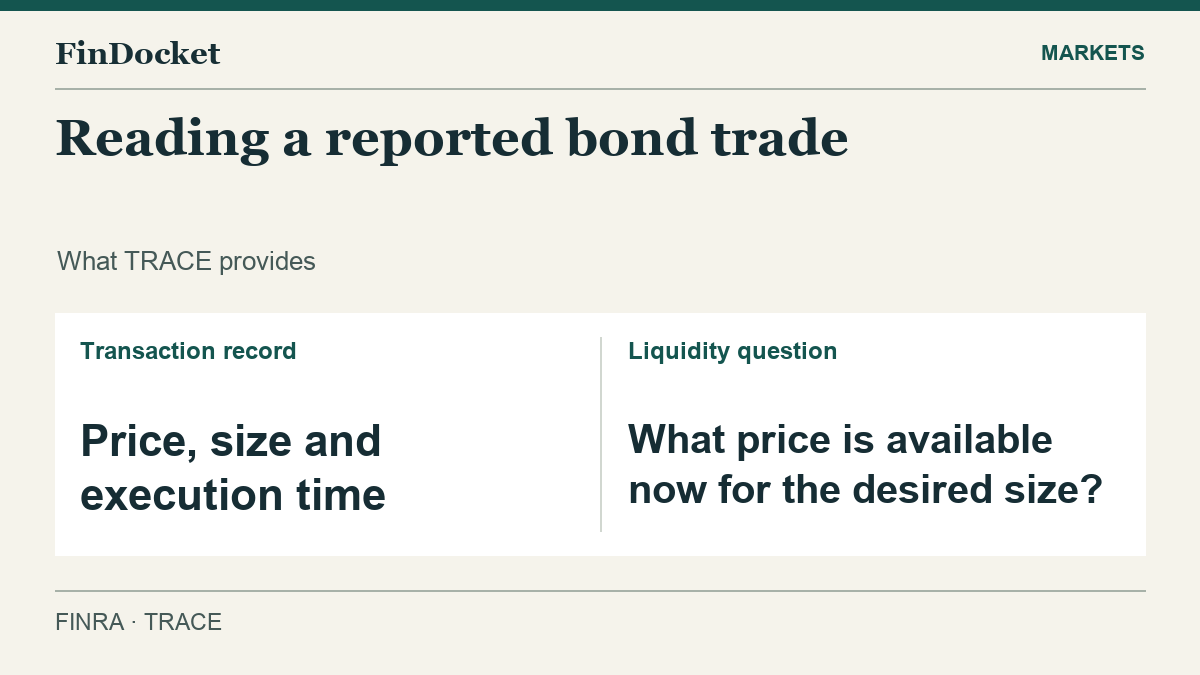
FINRA’s TRACE system publishes information on completed transactions in eligible corporate bonds, including execution time, price, yield and volume. Suppose a bond last traded at 60 cents on the dollar in a $25,000 face-value transaction. Marking a $1 million face-value holding at that price produces a $600,000 valuation. The calculation says what the position would be worth at the historical print. It does not produce a buyer for the larger block.
Which details improve the comparison?
Look up the exact issue. Two bonds from the same company can have different collateral, maturity dates and priority in a restructuring. Then check the size and age of recent prints and whether new information arrived since they traded. A dealer’s current executable bid for the relevant amount answers a different question from the last publicly reported transaction.
Nasdaq’s December session expansion changes when investors may send certain equity orders. TRACE improves visibility into debt transactions that did happen. Neither promises a particular investor the ability to sell a particular position at its displayed historical price.