Markets · Analysis
Why India’s options traders can buy protection during a stock-market rally
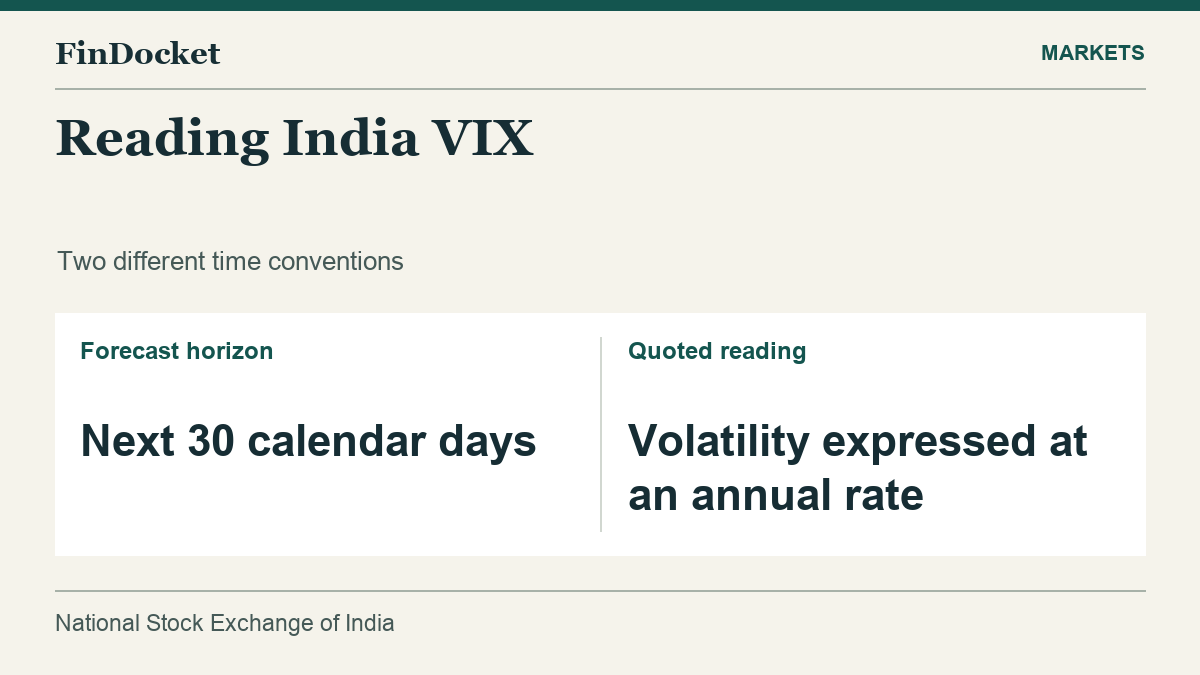
India VIX reflects expected fluctuations over 30 days. Interpreting its annualized reading explains why it can rise alongside stock prices.
Indian equities can rally while investors pay more to insure a portfolio against a sharp fall. A rising stock index tells us where a basket of shares traded. An option premium puts a price on a specified future payoff. Investors who own more equities after a rally may have more value to protect, even if they intend to keep every share.
NSE’s India VIX uses Nifty index option prices to estimate expected volatility over the next 30 calendar days, expressed at an annualized rate. A reading of 20, used here only as an example, corresponds to a rough 30-day volatility scale of 20% multiplied by the square root of 30/365, or about 5.7%. The calculation assumes variance scales with time. It supplies neither a forecast of a 5.7% fall nor a boundary that the market must stay within.
Where a directional claim needs more evidence
To assess demand specifically for downside protection, look at put prices relative to comparable calls, their strikes and maturities, and whether the imbalance persists across trading days. A large option trade can also be one leg of a combined position. The public print alone does not reveal the investor’s entire exposure.
The useful observation in a rally is which kind of risk became more expensive. A broad rise in implied volatility, a premium concentrated in downside strikes and a large trade in one individual option are three different pieces of evidence.