Markets · Analysis
The denominator problem in comparing Injective’s stablecoin supply
Total stablecoin supply, native USDC and transfer volume measure different things. Matching the token basket is the first step in a fair comparison.
A blockchain can have more stablecoins of all types than another chain has of one particular token. That comparison is mathematically valid and economically narrow. A post about Injective compares its total stablecoin supply with USDC alone on several other networks. It leaves unanswered which network has more stablecoin liquidity overall.
A like-for-like table would use one observation time and put total stablecoin supply alongside total stablecoin supply. A second table could compare only native USDC across the same networks. Circle distinguishes third-party bridged versions from native issuance, so the treatment of bridged tokens needs to be explicit. An asset backed by tokens locked elsewhere can create double-counting if both representations are added indiscriminately in a cross-chain total.
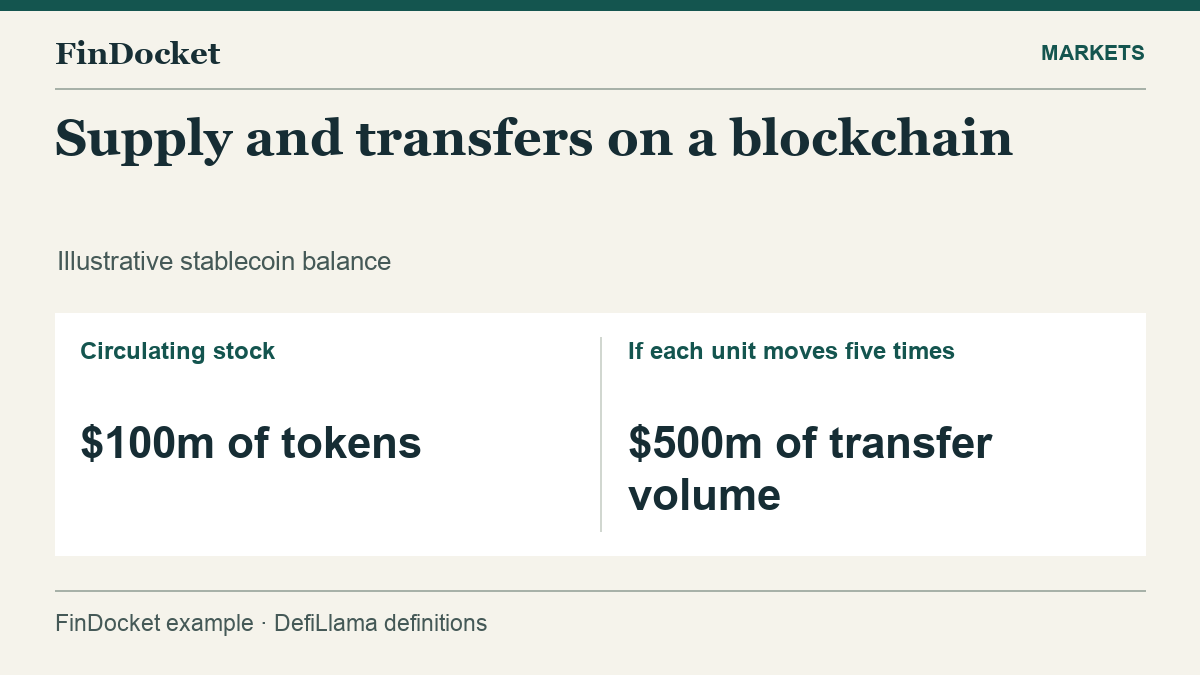
Supply also describes a stock at a point in time. Transfer or trading volume measures activity over a period. A chain carrying $100 million of stablecoins could record $500 million of transfers if each unit moved five times. The transfers do not create $400 million of new deposits. Conversely, a large balance sitting still contributes to supply even when there is little trading.
To test a growth claim, compare same-definition balances at two dates and report the absolute change alongside the percentage. Then look separately at users, transfer activity and liquidity available at quoted prices. Those observations can show whether a larger token stock is accompanying economically meaningful use.