Markets · Analysis
Why foreign selling and a Korean stock rally can happen in the same week
A single session of net buying can coexist with months of selling. Gross trades, net flows and index returns each measure something different.
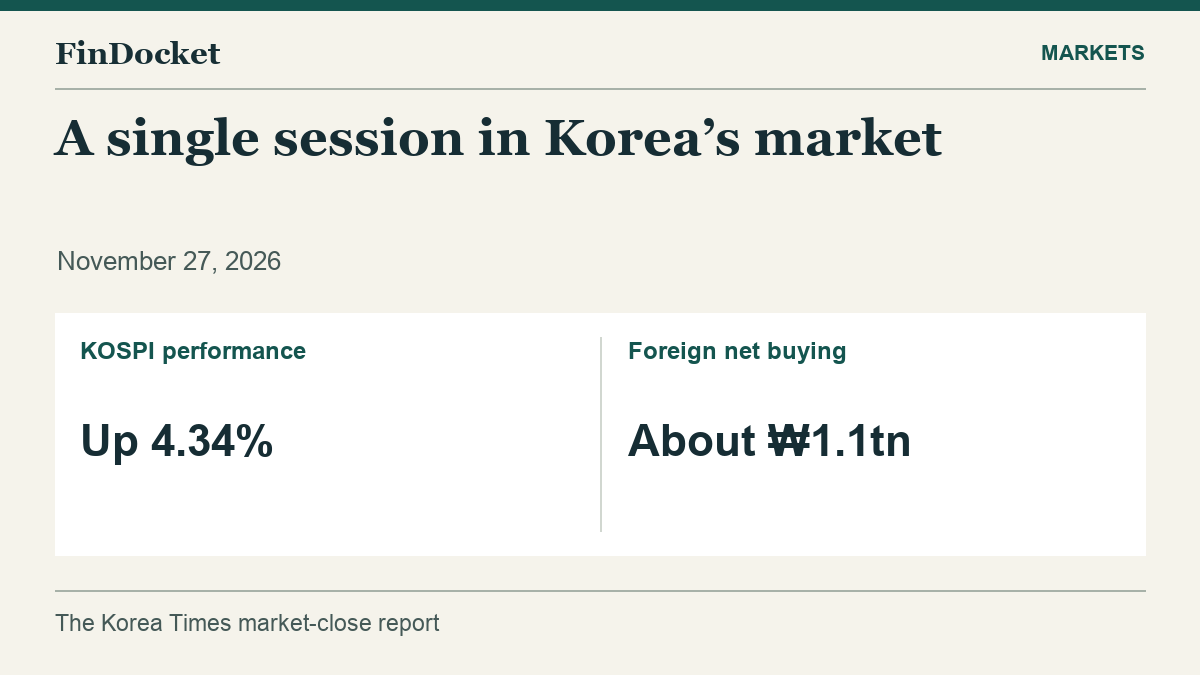
On November 27, the KOSPI rose 4.34% and foreign investors bought roughly 1.1 trillion won of shares on the main board, according to the Korea Times. Earlier reporting from Reuters documented a sustained stretch of foreign selling. Both accounts can describe the same market accurately because one measures a session and the other accumulates transactions over months.
Net purchases are the value bought minus the value sold by a defined investor group. They are distinct from turnover, which can be enormous when buyers and sellers are both active. They are also distinct from the market value of the group’s holdings. A portfolio can shrink in value because share prices fall even if its owner does not sell a single share.
Align the figures before drawing a conclusion
A reconciliation needs the same exchange, instrument set, investor definition and reporting currency. An offshore fund-flow estimate, a Korean exchange’s foreign-investor transaction tally and a change in the dollar value of foreign holdings can all carry the label “outflows.” Exchange rates and price changes can enter the third calculation without appearing in the second.
A practical follow-up to Friday’s buying is to add the subsequent daily net figures on the same basis. Check whether the purchases span many companies or concentrate in a few index heavyweights. A broad and sustained reversal would support a different conclusion from one strong trading session during a much longer withdrawal.