Markets · Analysis
How a fund can pay 12% and leave its investors with a much smaller gain
A worked example shows how a 12% distribution can leave a shareholder with a much smaller gain once the change in price is included.
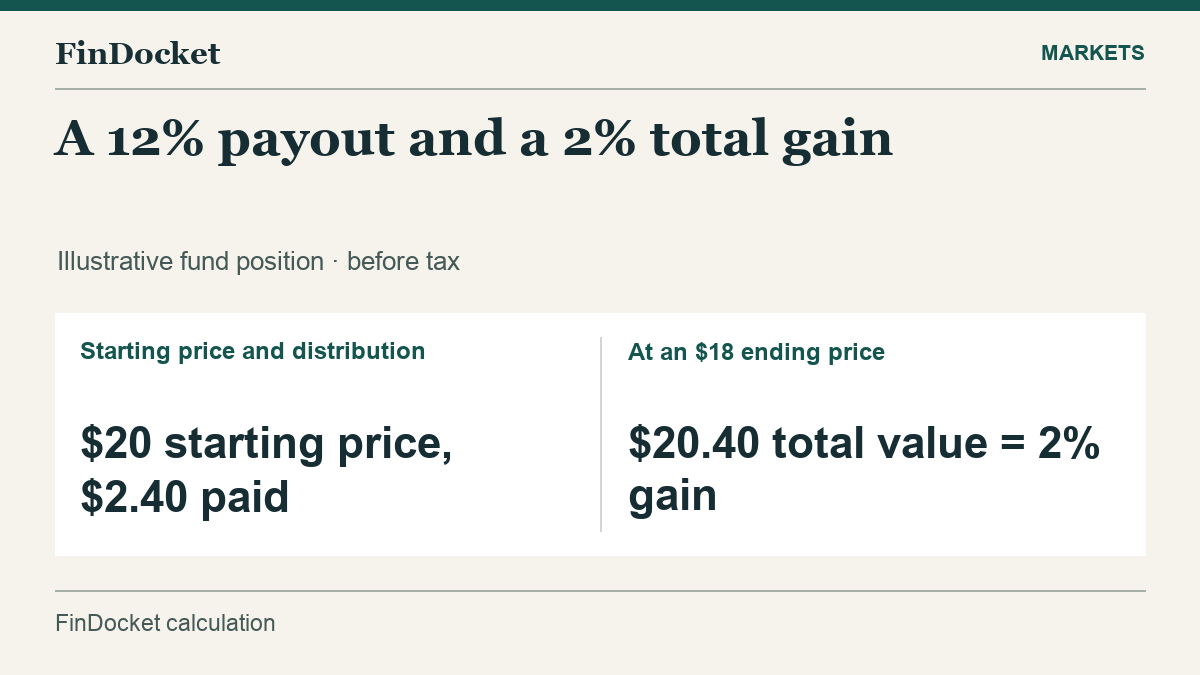
A monthly payout tells an investor how much cash left a fund. It cannot establish how much wealth the investor gained. Consider a hypothetical fund bought at $20 a share. It distributes $2.40 over a year and finishes at $18. The buyer who takes distributions as cash has $20.40 in value before tax. The cash received was 12% of the starting price, while the holding-period gain was 2%.
This distinction appears explicitly in fund disclosures. Global X says its QYLD distribution rate annualizes the most recent distribution using current net asset value. The issuer separately reports total return and warns that distributions may contain a return of capital. A covered-call strategy can generate option premiums while limiting participation in some upward market moves. The source and timing of cash matter as well as the amount.
The problem with comparing returns since launch
Two funds launched on different dates faced different interest rates, market shocks and underlying asset returns. A flat price since one launch date cannot support a ranking against a fund that began trading a year later. Market price and net asset value can also differ, particularly at the instant a comparison is made.
A more useful table uses common start and end dates, reinvested total returns on the same basis, fund expenses and the actual distribution history. For a reader spending the cash, show the ending value without reinvestment alongside the payments. That answers the practical question of how much income arrived and what was left to sell.