Markets · Analysis
Why a Nasdaq overnight order can disappear at 4 a.m.
The new overnight session has its own order cutoff and trade-date rules. A Sunday-night example shows what a customer can expect.
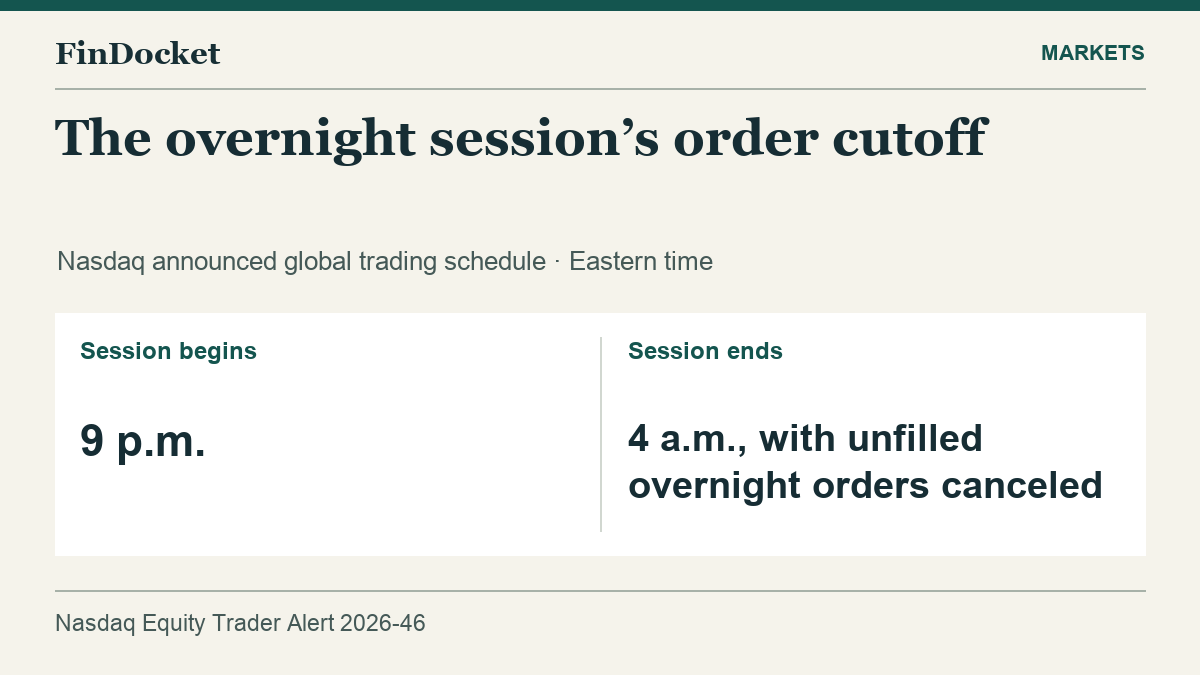
Nasdaq’s planned move toward 23-hour trading contains an important break for an investor leaving a limit order overnight. The exchange says any order still open at 4 a.m. Eastern will be canceled. A trader who wants to participate in the following session can enter another order. Seeing a security trade later at the chosen price would say little about an order that had already expired.
The new session is scheduled to begin December 6 and run from 9 p.m. until 4 a.m. Eastern. Suppose a trader enters an eligible buy order at 2 a.m. and the market never reaches the limit before the session ends. At 4 a.m. the exchange removes the instruction. A brokerage’s customer interface may express duration or handle subsequent sessions in its own way. The useful check is whether that broker accepts an overnight instruction and what it says happens to the unfilled balance at the boundary.
Which date belongs on the trade?
A second boundary arrives at midnight. Nasdaq says a trade executed between 9 p.m. and midnight receives the next trading day’s trade date. Executions from midnight through 8 p.m. receive the current day’s trade date. Settlement processing continues to follow that assigned date.
Those details matter when reconciling fills, cash and open orders. A Sunday-evening trade can appear with Monday’s date, while an unexecuted order submitted hours later can disappear before breakfast. The exchange notice supplies the session rules. The confirmation from the broker establishes what actually happened to a customer’s order.