Technology · Analysis
The cost of losing a chip market can arrive before a rival wins it
Nvidia’s H20 charge shows how inventory and purchasing obligations can lose value before domestic competitors report a single additional sale.
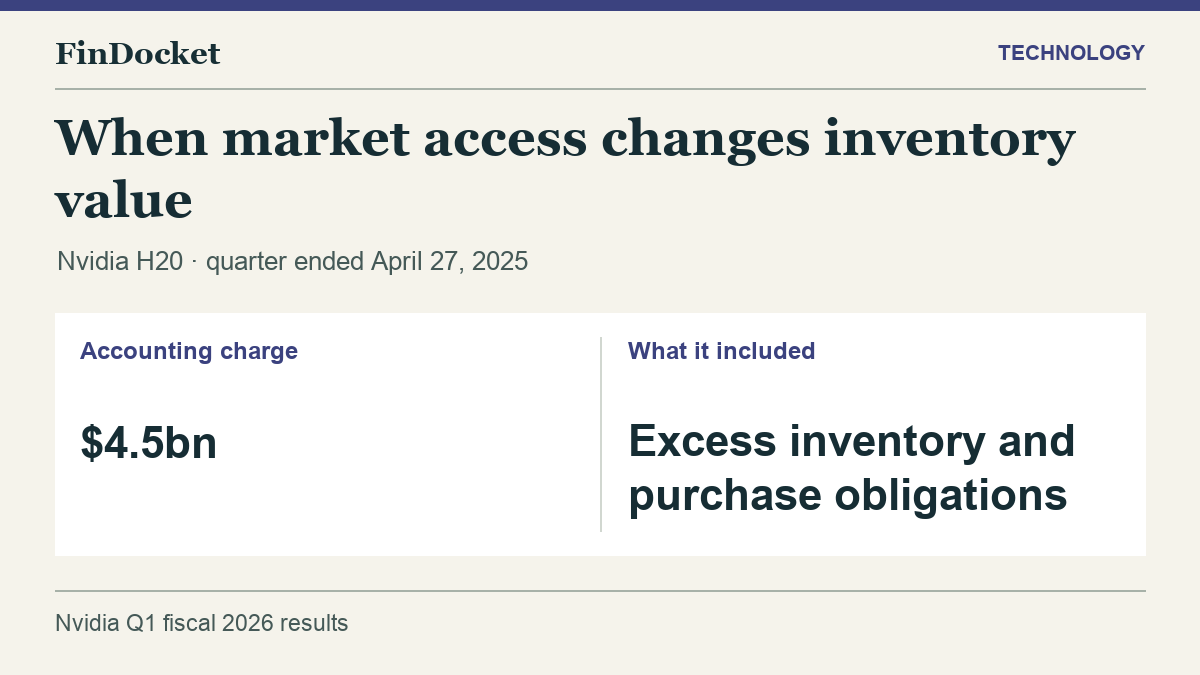
How quickly can the economics of a chip business change when market access becomes uncertain? An episode in Nvidia’s financial statements offers a measurable answer to one part of the question raised by China's efforts to build its own chip industry.
In the quarter ended April 27, 2025, Nvidia recorded a $4.5 billion charge tied to H20 inventory and purchase obligations after the US government imposed a license requirement. Purchase obligations matter because a company can have a financial commitment to a supplier before it has taken delivery of all the goods. A sudden change in their expected commercial value can therefore affect earnings even when some of the products have yet to reach a warehouse.
That accounting event tells us something precise about Nvidia. It tells us much less about who ultimately served the customers. An order delayed, a customer abandoning a project and a rival selling a domestic substitute each have different implications for future demand. The charge itself cannot distinguish them. Nor should the charge be added to a lost-sales estimate as if both measured cash already spent.
Evidence of domestic substitution would look different. It would include units actually delivered by competing vendors, the prices customers paid and repeat business after the first installations. Those measures can take longer to surface than a quarterly inventory charge. The supplier's income statement is often where the commercial cost becomes visible first.