Technology · Analysis
How a delivery delay can lift next year’s chip forecast
Forecast revisions across calendar years can combine new demand and delayed deliveries. Comparing completed racks on the same basis separates the effects.
A higher forecast for next year is easy to read as evidence that more customers want a product. It can also mean that this year's customers will receive theirs later. The distinction matters when a report cuts a near-term chip estimate and raises a later estimate for completed racks.
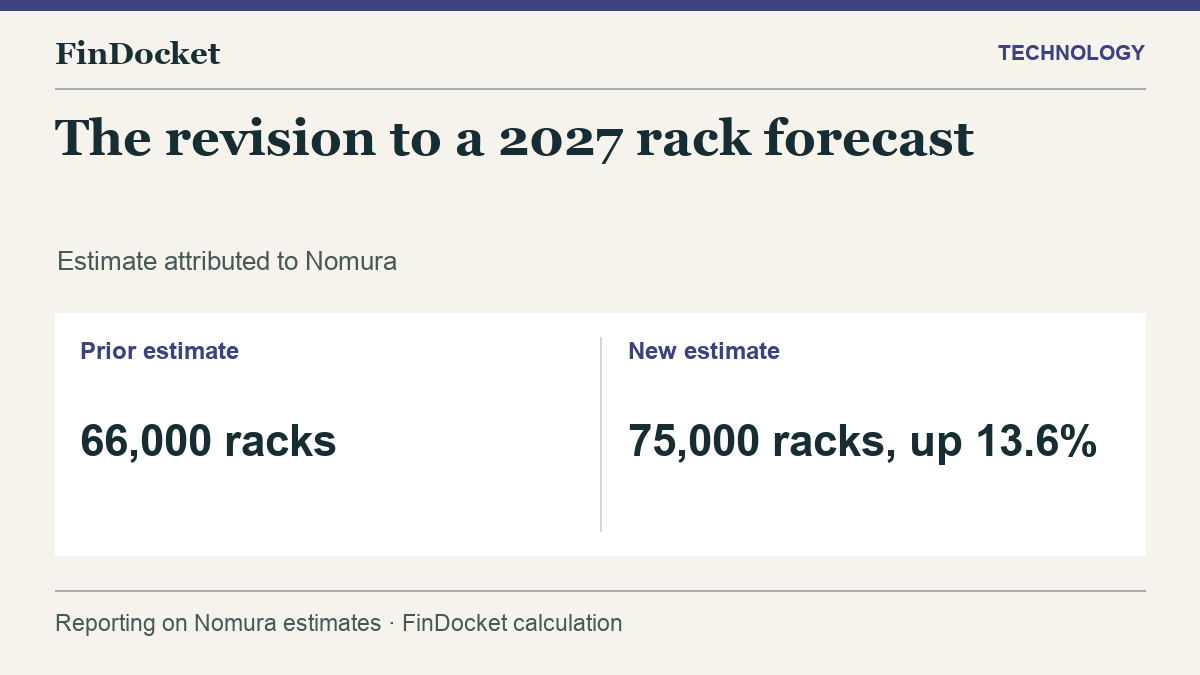
Figures attributed to Nomura take the 2027 rack forecast from 66,000 to 75,000. The increase is 9,000 racks, about 13.6% of the old estimate. If the entire difference were a shift from December to January, it would change the annual comparison while leaving the combined two-year number intact. If an additional customer ordered all 9,000, the same calendar-year revision would represent an increase in cumulative demand. These are endpoints for interpreting the forecast, not descriptions of what occurred.
The published discussion also uses chips for one part of the outlook and racks for another. Adding those changes together would require a consistent configuration, the number of chips per completed rack and an allowance for units at different stages of assembly. Mixing fiscal quarters and calendar years introduces another avoidable difference.
A useful update would show the old and new forecasts side by side for each quarter in completed racks. That would reveal how much of the revision moved across a boundary and how much survived across the full period. An annual headline alone cannot separate a bigger market from a later delivery truck.