Technology · Analysis
Sage’s AI Reach Expands, but Product Revenue Is Not AI Revenue
Sage’s FY2026 disclosures show broader AI availability, pricing and upsell momentum, plus a £100 million restructuring plan. The metrics measure different things.
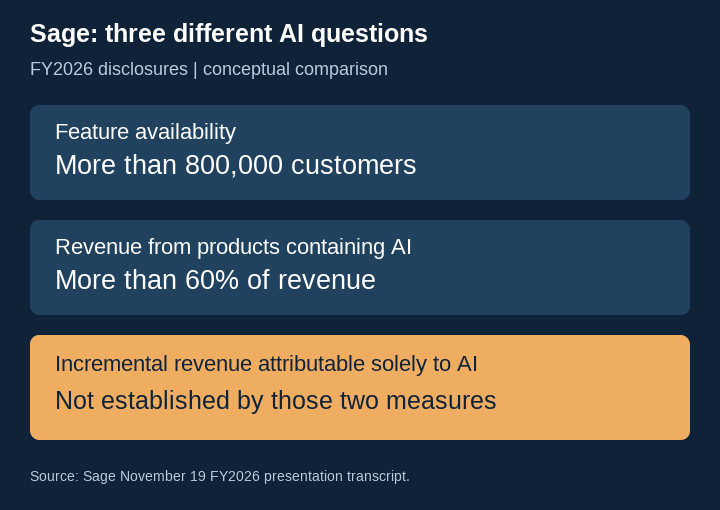
Sage’s November 19 results presentation says AI-powered features are available to more than 800,000 customers and that over 60% of revenue comes from products containing AI. Those disclosures establish distribution reach. They do not measure revenue generated solely by AI or the number of customers actively using each feature.
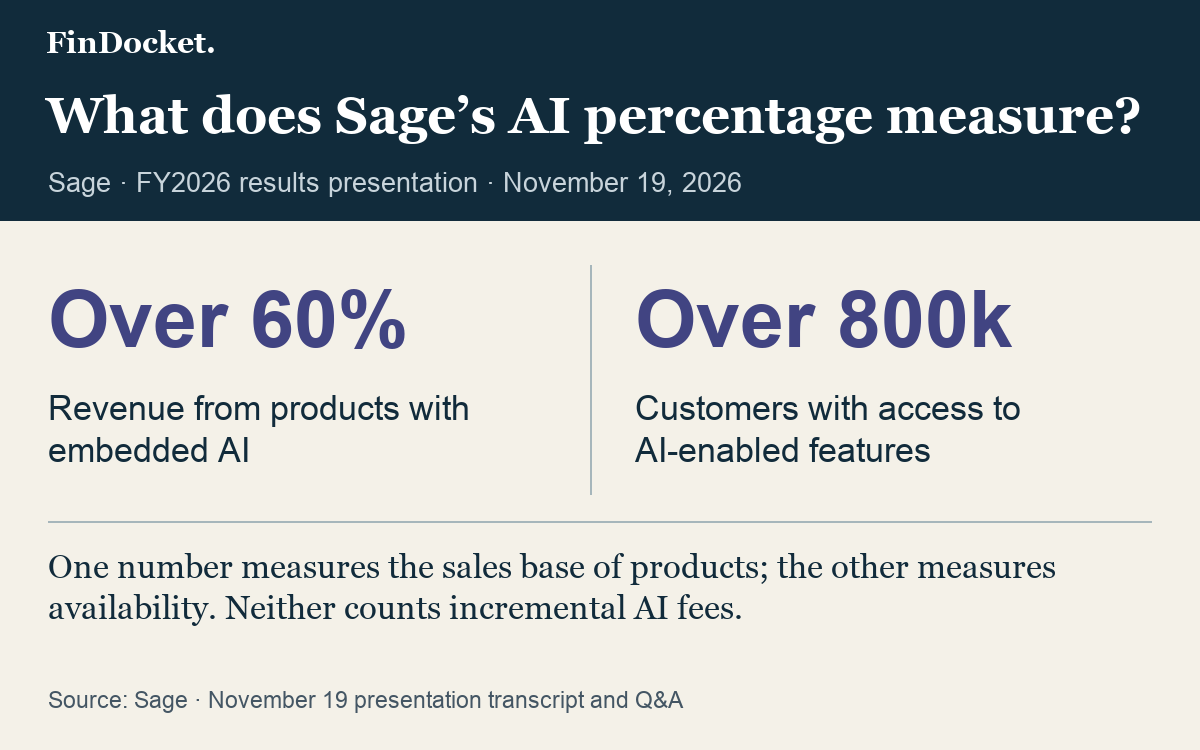
What does the AI revenue figure actually mean?
A subscription to an accounting product can include established ledger, reporting and payroll functions alongside newer AI capabilities. Classifying that subscription as revenue from a product containing AI does not allocate its price between those functions.
The distinction matters for valuation. Multiplying total revenue by the disclosed percentage and calling the result incremental AI revenue would attribute existing product value to a newer feature without a disclosed allocation method.
The Q&A offers more specific commercial evidence. The finance director describes pricing contributing around 6.5% within the ARR discussion, alongside stronger cross-sell and upsell. She links richer packages to more features and vertical-specific plans. These are overlapping commercial mechanisms, so they should not be added to an assumed separate AI growth rate.
What changed in the financial results?
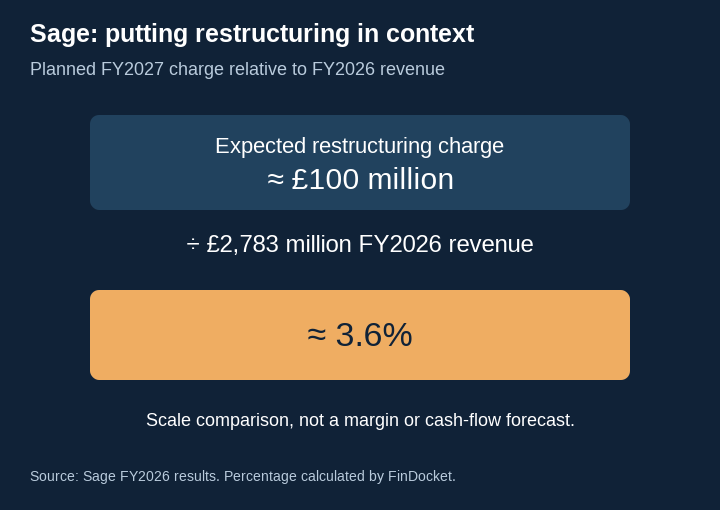
The release reports underlying revenue of £2,783 million and operating profit of £681 million, with a 24.5% margin. Annualised recurring revenue reached £2,884 million. Net revenue retention rose from 101% to 103%; Sage renamed the measure from renewal rate by value without changing its calculation.
July’s update had already shown 11% underlying revenue growth for the first nine months, with 12% growth in the third quarter. It also described expansion of AI capabilities across the cloud portfolio. The full-year story therefore builds on a trading trend already visible before the November announcement.
How much investment sits behind the strategy?
Sage expects a roughly £100 million non-underlying restructuring charge in FY2027 as it reduces management layers, consolidates technology capabilities and reshapes skills. The release says savings will be reinvested. Removing the charge from an underlying measure does not remove its economic cost.
The Q&A also distinguishes the £5 billion revenue ambition from timed guidance: management declines to assign a precise deadline. Investors should preserve that distinction when forecasting the path from current revenue to the stated ambition.
The next updates need to connect wider AI availability with measurable customer use, retention, package expansion and cash generation. The current disclosures show commercial momentum and a funded investment programme. They do not yet supply a standalone AI revenue stream that can be valued separately from the software carrying it.