Markets · Analysis
Why the same Treasury-bill ETF showed both 3.62% and 3.91%
One yield considers recent income over 30 days. Another looks back at distributions over 12 months. They answer different income questions.
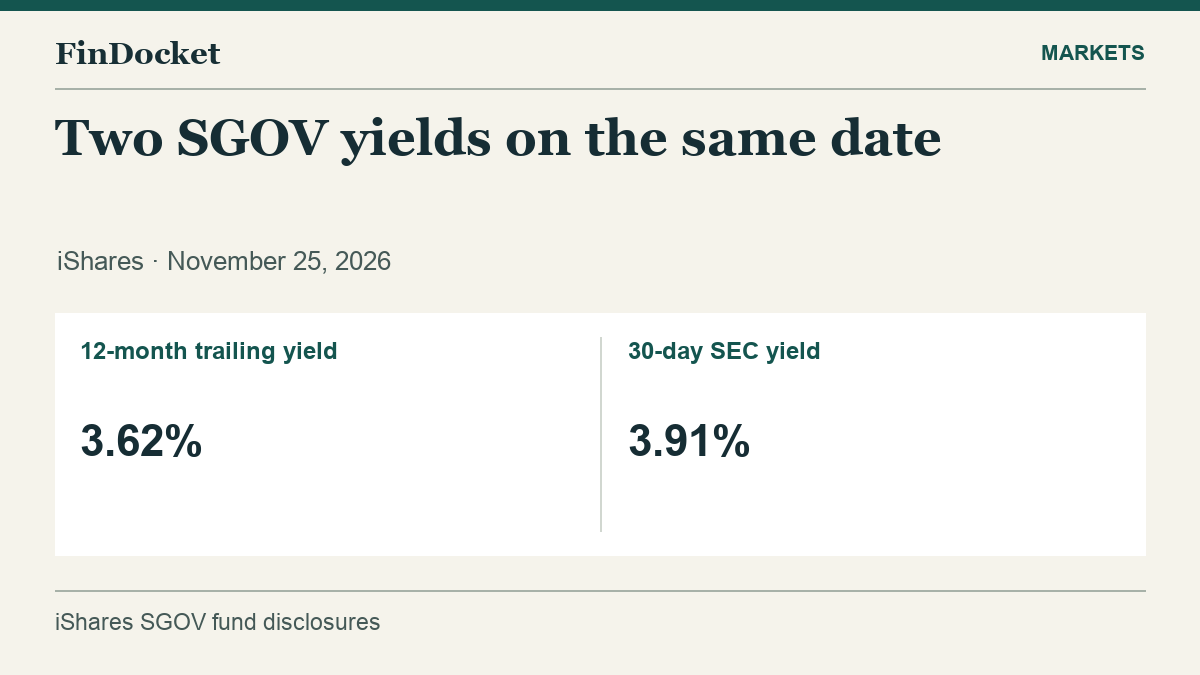
Two investors quoting different yields for the iShares 0–3 Month Treasury Bond ETF could both have read the same fund page correctly. On November 25, 2026, iShares displayed a 12-month trailing yield of 3.62% and a 30-day SEC yield of 3.91%. The difference was 0.29 percentage points, or 29 basis points.
The trailing figure looks back over a year of distributions. The SEC yield annualizes a standardized measure of recent fund income over a shorter window. Its purpose is to make comparisons across funds more consistent. Neither figure fixes the next twelve months of cash payments. Short bills mature and are replaced, so the portfolio’s earning rate can change as new issues enter the fund.
How large is the difference in dollars?
Multiplying the two quoted rates by $10,000 gives $362 and $391. The $29 gap shows the effect of using one annualized figure instead of the other. It does not identify a $29 payment owed to a shareholder. Actual results depend on purchase and sale prices, holding dates, future rates and distributions received.
The securities inside the fund are largely short Treasury obligations. The instrument an investor buys is an exchange-traded share. Someone needing a specific cash amount on a particular day must also consider trading hours, bid and ask prices and settlement. The issuer’s dated yield and portfolio information are a better starting point for that comparison than a single yield copied from a social post.