Markets · Analysis
How the S&P 500 can hold up on a bad day for most stocks
An equal-weight index helps isolate how much a handful of large companies can contribute when most stocks fall.
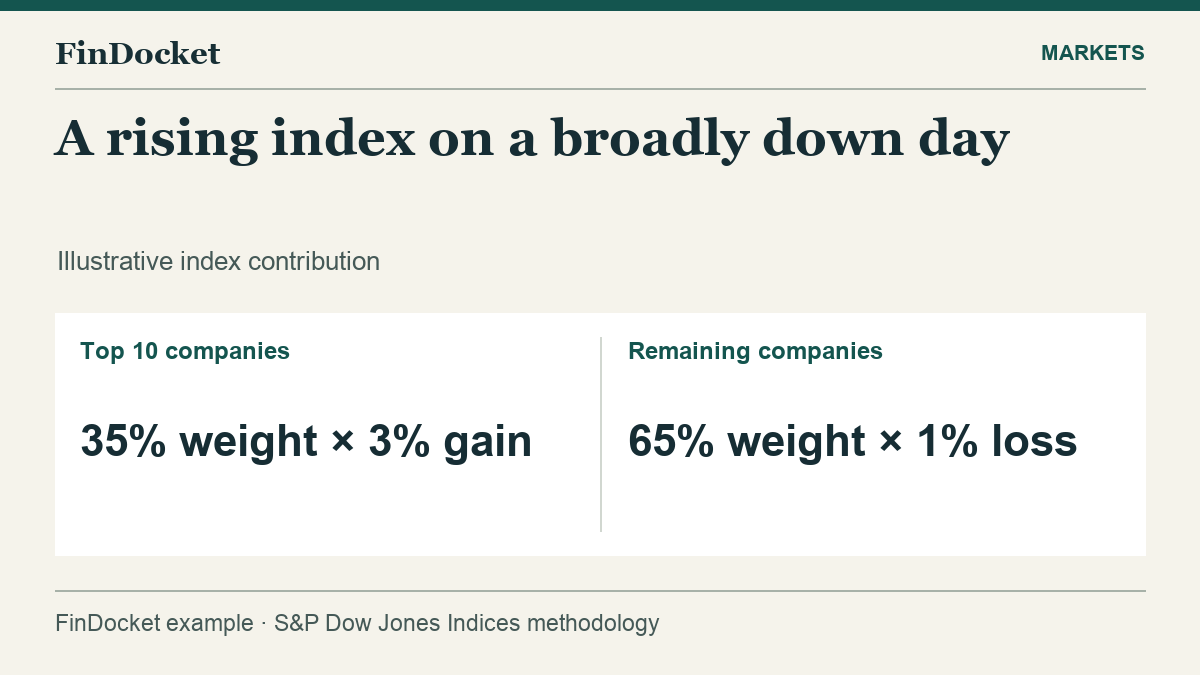
An investor watching Asian shares, silver and semiconductor stocks sell off asked what could possibly be holding up SPY. Before reaching for an explanation involving the economy, there is a simpler piece of evidence to collect. How much of the US index did the winners represent at the previous close?
Suppose the ten biggest companies together start the day with a 35% weight. They gain 3% while the remaining companies fall 1%. The first group contributes 1.05 percentage points and the second costs 0.65 points. The index finishes up 0.40% even though a remarkably broad group of companies lost value. Those weights and returns are an illustration. The actual attribution needs the starting weights and returns on the day in question.
S&P publishes a particularly clean cross-check. Its equal-weight version holds the same index companies and resets each company's weight to roughly 0.2% quarterly. Compare the two indexes over the same US session, using the same price or total-return convention. A wide gap puts a number on the effect of weighting. Comparing an Asian close with an American close adds a separate timing difference.
The comparison answers a narrower and more interesting question than whether the S&P is at the right level. If the largest companies are doing the lifting, their actual contribution can be calculated. A prediction of recession requires evidence about output, employment or spending in the economies concerned.