Explainers · Analysis
Two brokerage accounts can share one Brazilian deposit guarantee
A brokerage distributes a deposit certificate. The issuing financial group determines which Brazilian guarantee limit covers it.
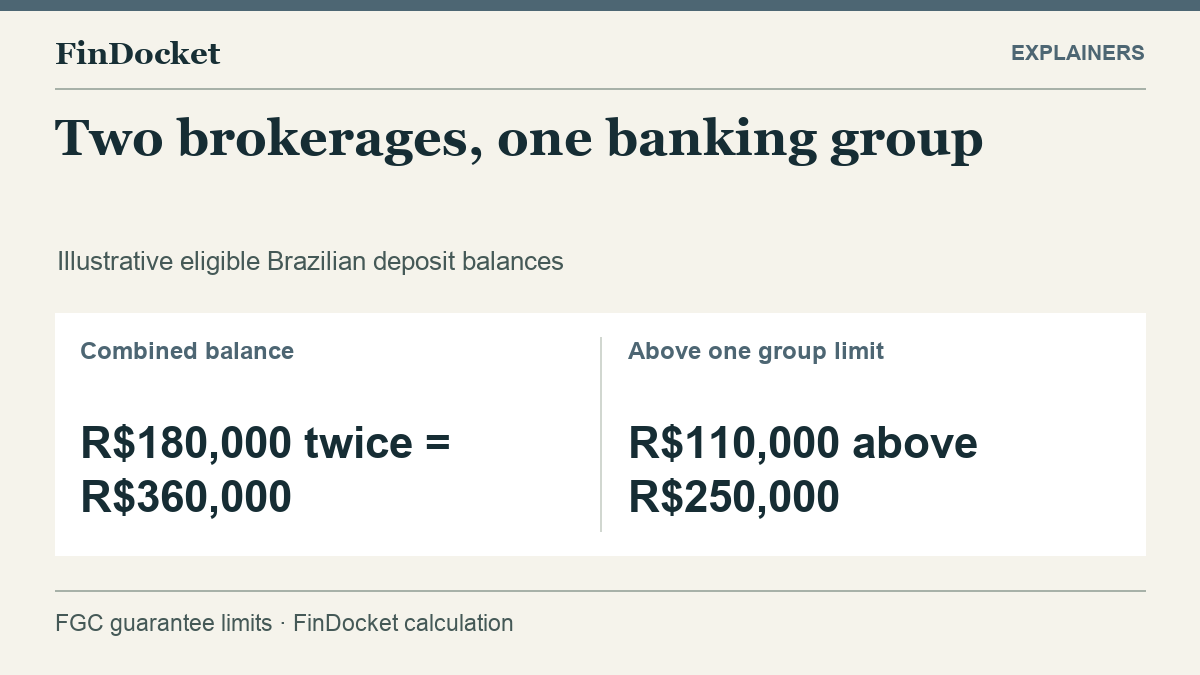
It is possible to split savings between two financial apps, receive two account statements and still hold a single bank risk. In Brazil, a brokerage can distribute a CDB, a bank deposit certificate issued by an entirely different institution. When the issuing bank fails, the name on the certificate determines which group limit applies.
Consider one individual holding two eligible balances of R$180,000. The accounts are at different brokerages, but both certificates were issued by banks in the same financial conglomerate. The balances sum to R$360,000. Against the FGC's ordinary R$250,000 group limit, R$110,000 sits above that limit. This assumes no other eligible balances and no earlier guarantee payouts affecting the four-year aggregate ceiling. Exposure above the guarantee can still be a creditor claim in liquidation, with the amount and timing of recovery uncertain.
The arithmetic changes if the issuers belong to separate eligible groups. Each R$180,000 position can then fit inside its group's individual limit, again subject to the overall payment ceiling. Counting brokerage logos would miss the difference in both directions.
Banco Master's case makes the paperwork worth understanding even for a reader whose bank is healthy. Start with the issuer named on each certificate, group affiliated issuers, then add the balances under the same depositor identity. That small change turns a list of places where investments were bought into a map of who actually owes the money.