Markets · Analysis
What an “overweight UAE” call actually asks an investor to own
At 8.6 times forecast earnings, a revision to bank profits or a different sector mix can materially change an apparent valuation discount.
An overweight call on United Arab Emirates equities is usually expressed relative to a benchmark. If a benchmark assigns a market 2% and a portfolio holds 3%, the manager is one percentage point overweight. The designation says something about relative exposure. It makes no standalone promise about the direction of world stock markets.
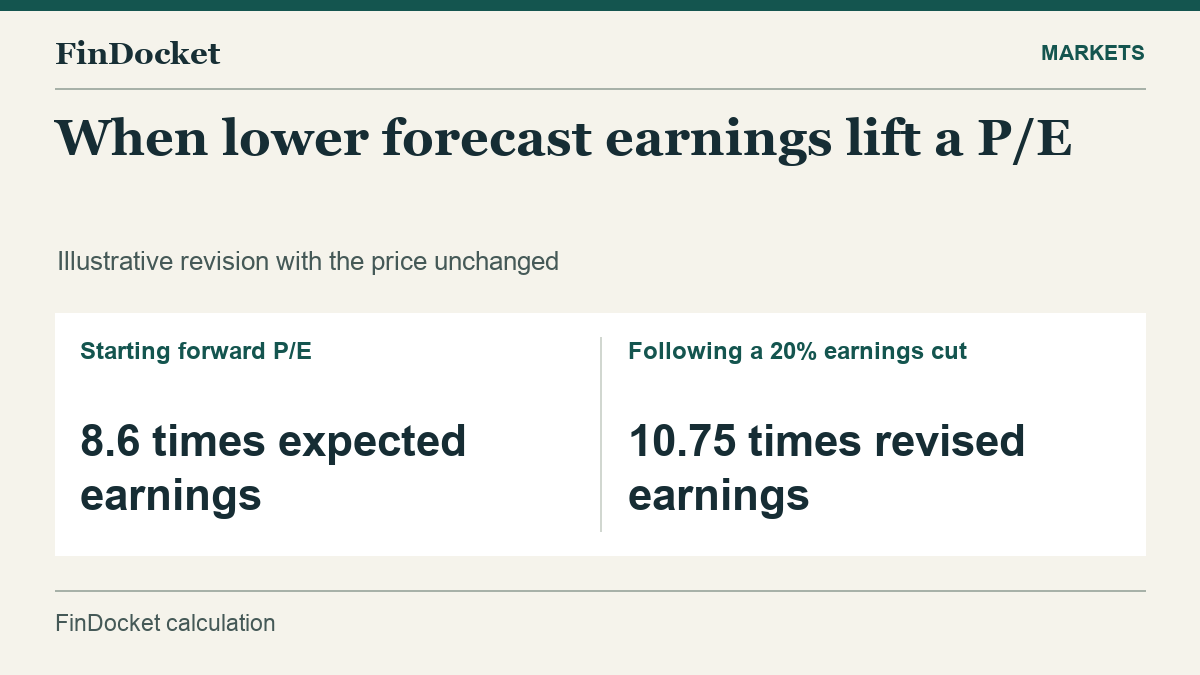
The quoted valuation of 8.6 times expected earnings is another relative statement. Inverting it gives an expected earnings yield of about 11.6%. Shareholders do not necessarily receive those earnings in cash. Companies can retain them, pay dividends, repurchase shares or use cash to manage liabilities. The denominator is also a forecast. If expected earnings fall 20% and prices hold steady, the forward multiple rises to 10.75.
Country index composition can explain some of a valuation discount. The iShares MSCI UAE ETF publishes its benchmark, holdings and sector exposures. Comparing a bank-heavy group of listed companies with a benchmark containing more software businesses mixes a country view with a sector view. A more revealing comparison would match UAE banks with regional banks on earnings assumptions, credit quality and returns on equity.
An investor assessing the original call can therefore ask three precise questions. Which benchmark sets the starting weight, how much earnings growth does the valuation assume, and how much of the proposed position is concentrated in the same sector? The answers say more about the actual trade than the adjective “overweight.”