Economy · Analysis
Uttar Pradesh’s economy looks different when divided by its population
The state’s 2024–25 output per person was about 53% of the national figure. Its growth rate and its size tell other parts of the story.
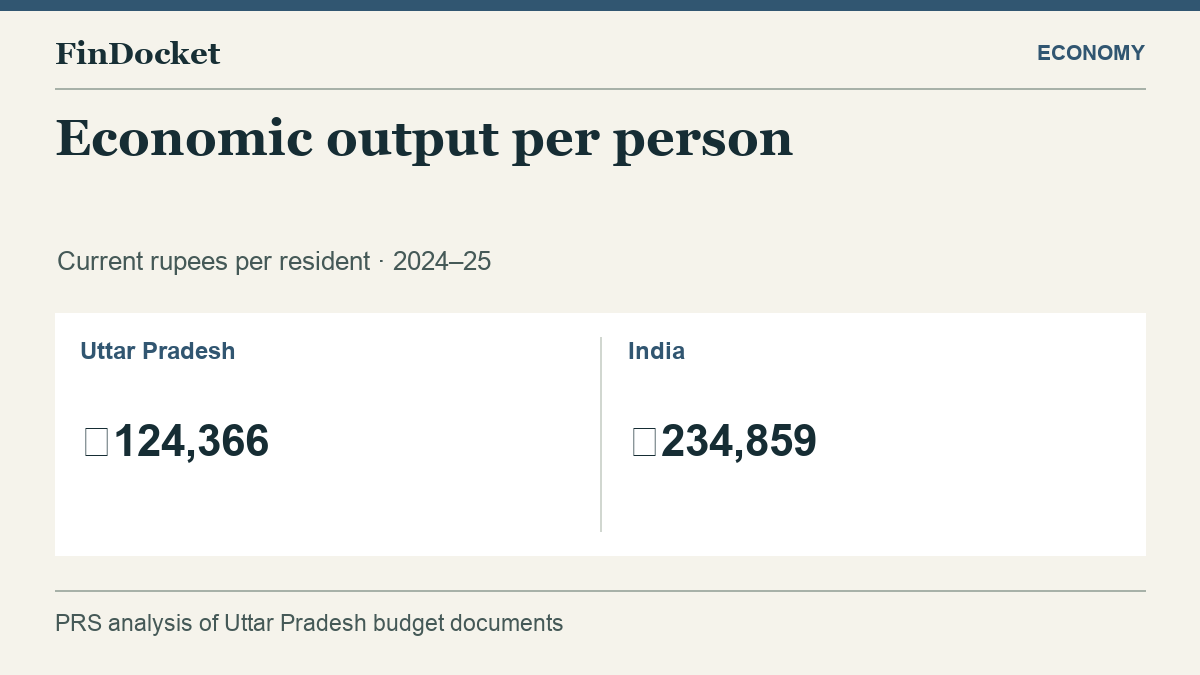
A large population gives Uttar Pradesh something that matters to investors in warehouses, grocers and power networks. Even a modest increase in purchases per resident can generate a large absolute increase in demand. That arithmetic also explains how a state can rank near the top on total output while its average resident lives in a much smaller economy per person.
PRS, using the state’s budget documents, puts nominal gross state domestic product per person at ₹124,366 in 2024–25. The comparable national figure was ₹234,859. Dividing one by the other gives about 53%. The state figure rose 11.6% over the preceding year, faster than the 9% national increase. Both figures use current prices, so part of each increase can come from inflation.
A second distinction matters when checking the figures against the state economic survey. Its per-capita net product measure deducts depreciation, the allowance for using up buildings, machinery and other assets. That explains why a reader can find a lower number in a document covering the same state and year. Household take-home income is another measure again.
For a company choosing where to build a distribution network, total output and population describe the size of the opportunity. For a reader assessing improvements in living standards, real per-person growth and the distribution of household spending give the ranking a much better companion.