Business · Analysis
What happens to advance ticket money when an airline suspends a route?
Akasa published different January suspension dates for two Saudi routes. Cash refunds and rebookings affect airline finances differently.
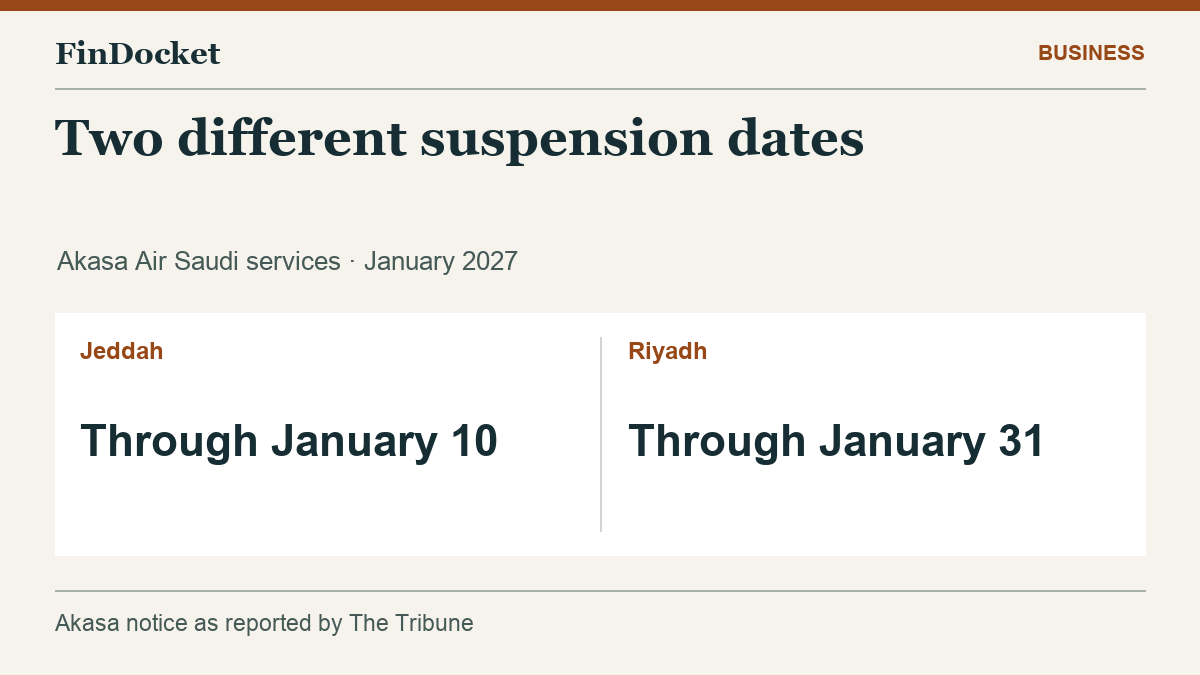
Akasa Air's notice carried two different dates. It extended the suspension of Jeddah service through January 10, 2027, and Riyadh service through January 31. A passenger deciding whether to rearrange a trip needs the city and flight date. A headline saying both routes are suspended until January leaves out three weeks of difference.
For an airline, an advance booking brings in cash before it provides transportation. The booking also creates an obligation to the traveler. A cancellation can turn that obligation into a cash refund, a replacement trip or another outcome determined by the ticket terms and the options the airline offers. The fare collected is consequently a poor measure of revenue lost when a timetable changes.
Imagine 100 passengers have each paid $200 for a canceled departure. The carrier collected $20,000. If half take cash refunds and half accept a later flight at the same fare, $10,000 leaves the business immediately in this simplified example. The other $10,000 still comes with an obligation to carry those passengers. The cost of the added seats and the ability to redeploy the aircraft are separate questions.
The carrier's announcement, as reproduced by The Tribune, is the starting point for the specific options available on these routes. Passengers should check the booking notice for their own itinerary, especially if connections were purchased separately. For analysts, the useful next figures are refunds paid, passengers rebooked and capacity reassigned.