Business · Analysis
When a UK Netflix viewer actually needs a TV Licence
In the UK, live programming and BBC iPlayer use affect household licensing requirements. The future of BBC funding is a separate policy question.
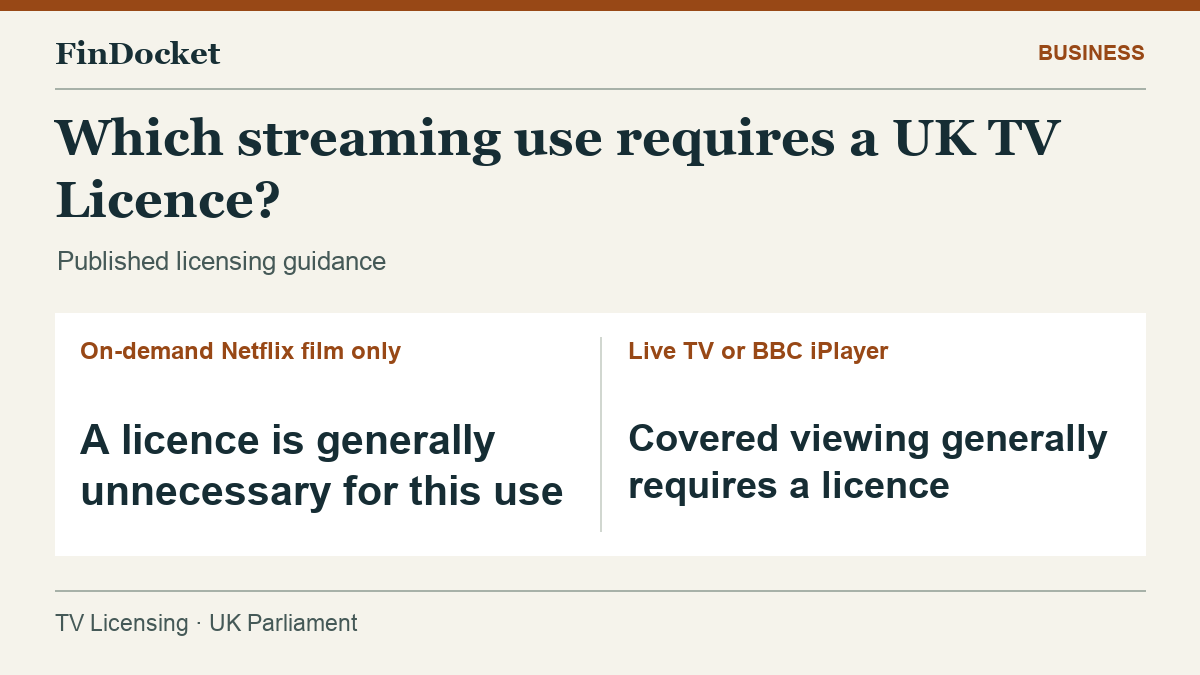
Two UK households can pay for exactly the same streaming service and face different TV Licence requirements. The practical distinction is what they watch. Under TV Licensing's published guidance, on-demand Netflix programming alone does not require a licence. Watching live television programming on a streaming service generally does. BBC iPlayer also requires a licence for covered use, including its on-demand programmes.
Consider one viewer who opens Netflix to watch a film from its catalogue, and another who uses a streaming service to watch a live televised sporting event. An account subscription by itself does not distinguish them. A family that watches on-demand films but also uses BBC iPlayer needs to include that use in its answer. The official guidance also addresses live viewing across devices, so the size of the screen is a poor shortcut.
The BBC Charter Review is a separate process about the organization’s remit, funding and future. A parliamentary committee can discuss changes and a government can consult on funding options without a new rule having entered force. To establish an actual change in household liability, identify the final measure, operative date and people or activities it covers.
That distinction matters for budgeting. A proposed funding model belongs in a discussion of future costs. The present question of whether a licence is required turns on what the household watches and the rules in force today.