Economy · Analysis
What China’s household consumption share can tell us
Comparing real spending growth with consumption’s share of GDP helps distinguish households buying less from other sectors growing faster.
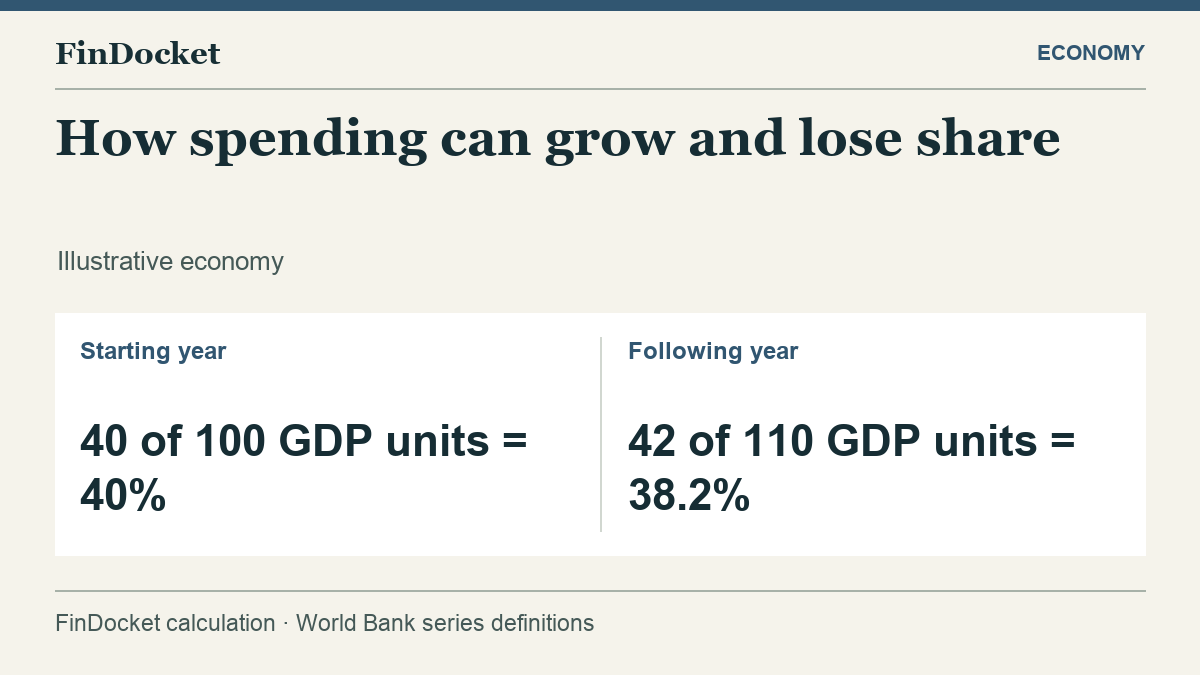
Two statements can describe the same economy. Households bought more this year, and households accounted for a smaller share of national output. The distinction matters in discussions about what China's growth delivers to its citizens. A smaller share often sounds like an outright fall in spending.
Take a simplified economy with output of 100 and household consumption of 40. A year later output reaches 110 while consumption reaches 42. Spending has risen 5%, yet its share has fallen to about 38.2%. The denominator grew faster. If prices also rose, some of the increase in spending bought the same goods at higher prices. A current-price share cannot tell the reader how much more people took home.
The World Bank publishes separate series for consumption as a percentage of GDP and the annual growth in inflation-adjusted consumption. Its household category includes nonprofit institutions serving households. Reading the two series together offers a way to test claims about rebalancing and material gains. Dividing a real aggregate by population gets closer to spending per person, though a national average can conceal large differences among households.
The political question raised by The Economist requires evidence on public expectations, satisfaction and institutions. Economic data can sharpen one piece of that inquiry. When someone says Chinese households have been left behind, ask whether that means a smaller share of output, less purchasing power per person or greater inequality. Each has a different empirical test.