Economy · Analysis
Why a proposed reactor and an operating reactor count differently in a fuel forecast
Operating capacity, construction and proposals have different probabilities and dates. Utility inventories also separate purchasing from consumption.
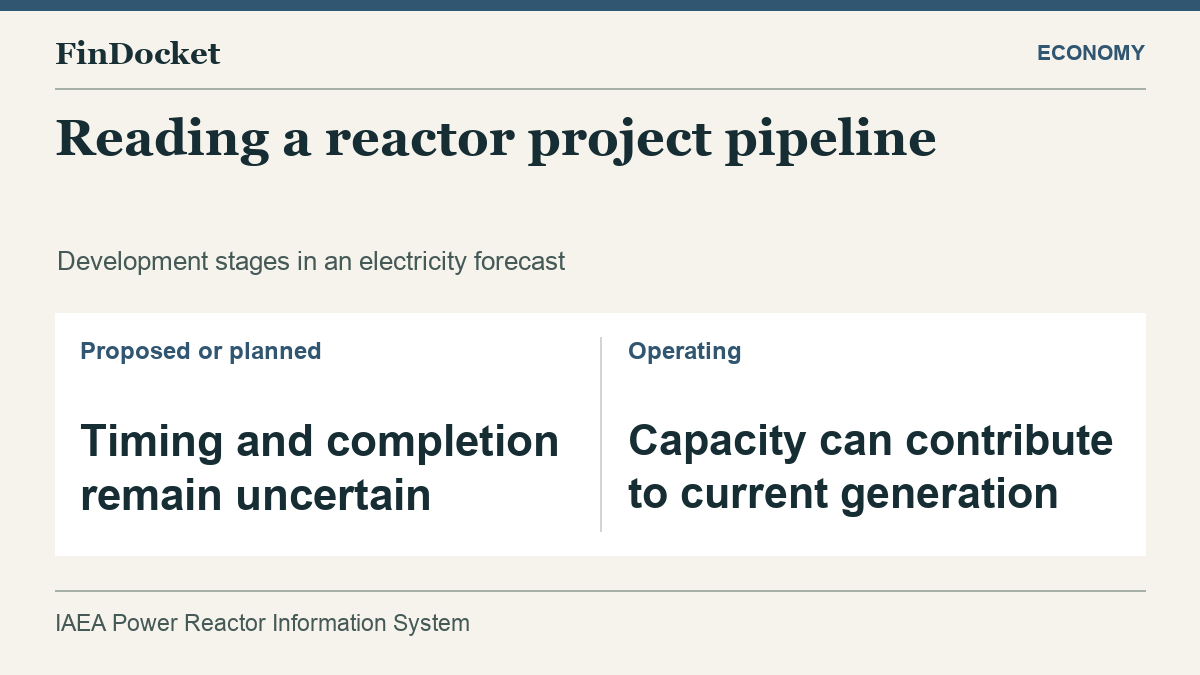
A post about China's electricity industry cites 222 nuclear reactors across construction, approval, planning and proposal categories. Those categories describe very different commitments. A project discussed for a future decade should receive a different weight in next year's commercial forecast from a plant already supplying electricity.
The International Atomic Energy Agency's Power Reactor Information System gives readers a way to check the operating and under-construction categories for a specific country. Proposals from other sources can then be recorded separately with their dates and definitions. Adding every project into one number hides timing, possible cancellation, overlap between lists and differences in planned generating capacity.
Consider ten hypothetical proposals of the same size. If only four eventually become operating plants and those open in different years, attributing ten operating plants' worth of demand to the next fiscal year overstates both the amount and its timing. A utility may also buy inventory ahead of use or draw down previously acquired inventory, so purchases in a single year need not rise in step with electricity generation.
The US Energy Information Administration's annual uranium marketing survey illustrates the distinction through separate data on purchasing, contracts and inventories. It describes US utilities and is a model for the categories to seek, not a numerical substitute for Chinese data. A useful commercial forecast would put signed contracts, dated construction milestones and prospective projects on distinct lines before estimating annual demand.