Business · Analysis
How to read Coinbase’s assurance about client assets
A technical assessment, a reserve snapshot and a customer agreement each answer a different part of a claim about assets held in custody.
Coinbase issued a statement about a rumored breakthrough and the cryptography used by major blockchains. Its assessment addresses a specific question about a publicly demonstrated technical capability. A customer trying to evaluate a broader claim that assets are safe has several other questions, each requiring different evidence.
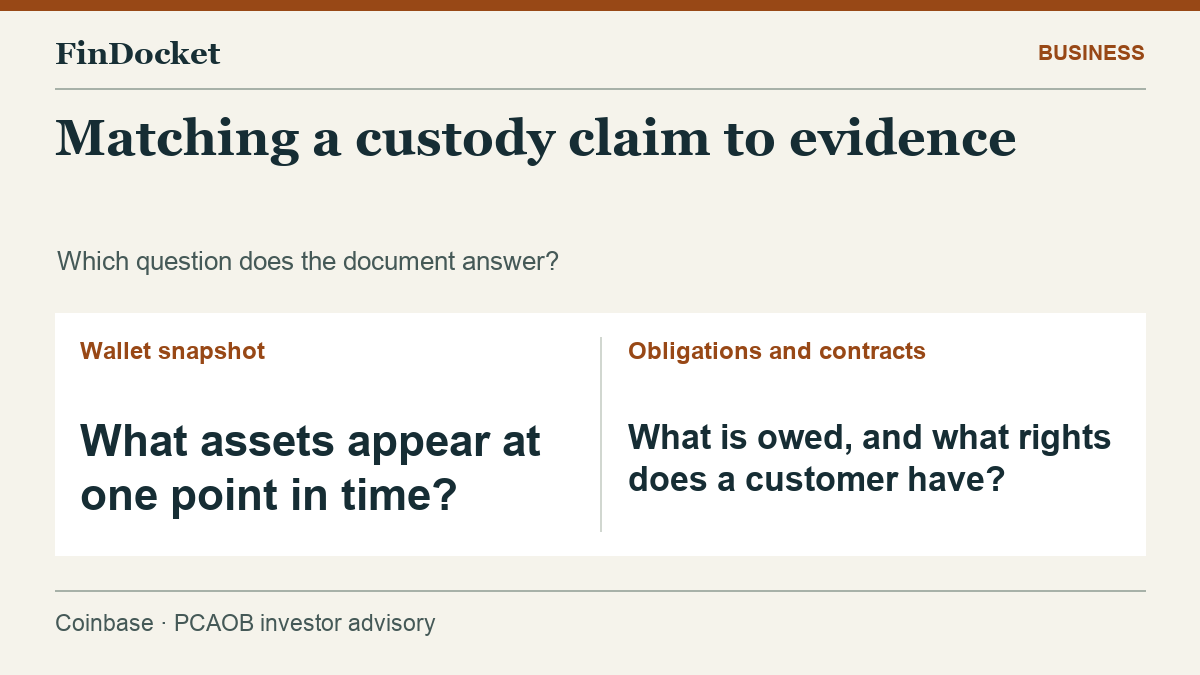
One is whether particular assets were held at a particular date. Another is whether those holdings were sufficient for all customer obligations. A third is what rights a customer has under the relevant custody agreement. A statement about the state of cryptography reaches none of those conclusions by itself.
The US Public Company Accounting Oversight Board has explained that proof-of-reserve reports can cover assets at a point in time, omit liabilities and provide a different level of assurance from a financial statement audit. A simple illustration shows why that matters. Two custodians can each show $100 million in assets. If one owes clients $80 million and the other owes $120 million, the identical asset figure describes very different coverage. Restrictions on using particular assets could change the picture again.
Read an assurance by underlining the verb, the date and the entity making the statement. Then match the question to the record. A company notice can document its own assessment. Financial statements, their notes and account terms are the relevant places to investigate balances, obligations and the customer’s legal relationship.