Business · Analysis
How a college football light show could pay for itself
At a sold-out football game, a six-figure light show has to earn its keep through something other than extra ticket volume.
The Washington Post reports that elaborate college football light shows typically cost more than $100,000. An athletic department can reasonably value a better experience for existing fans. If the claim is that the event pays for itself, however, the relevant income is what changed because of the show.
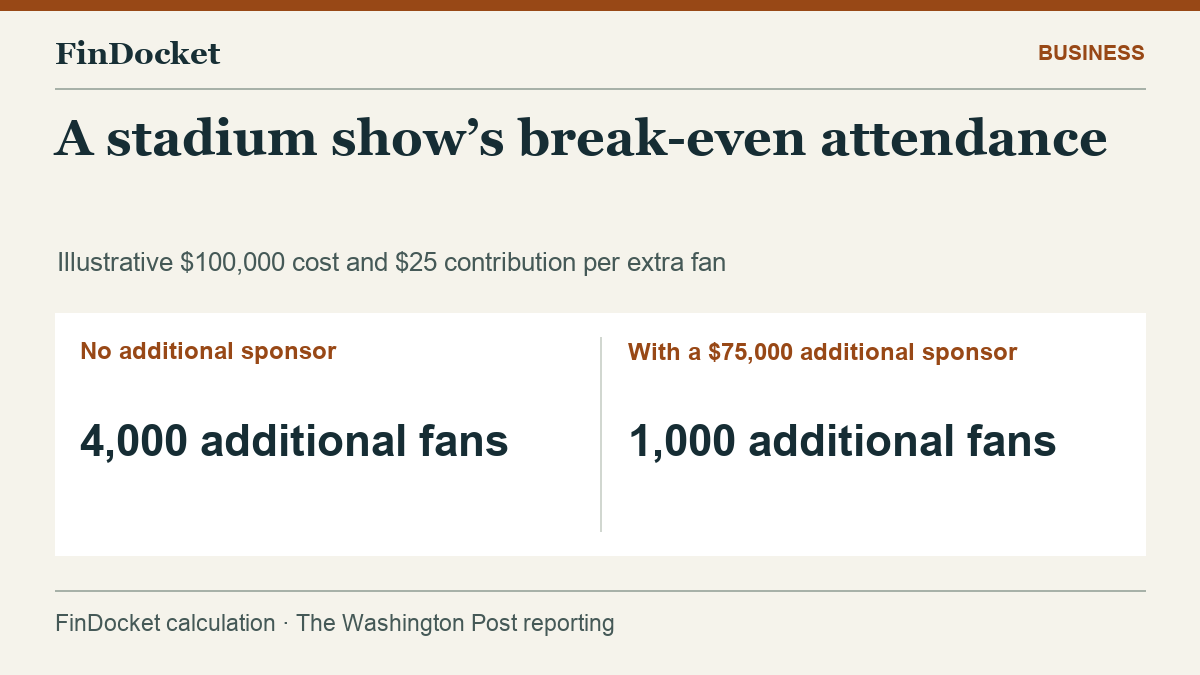
Use $100,000 as a round illustrative cost. Suppose each additional attendee contributes $25 after variable costs from ticket and concession income. The show would need 4,000 additional attendees to cover its cost without sponsorship. Gross concession sales would overstate the contribution because food, labor and the vendor's share also have to be paid. At an already sold-out game, additional ticket volume may be impossible, although extra spending inside the stadium could still matter.
Now suppose a sponsor pays an incremental $75,000 for exclusive presentation rights. The remaining $25,000 requires 1,000 extra fan contributions at the same rate. The word incremental does work here. If the sponsor would have spent that money on a different stadium advertisement anyway, the department has shifted existing revenue between products rather than earned the full amount anew.
Some benefits may arrive later through renewals or stronger sponsor relationships. Those claims can be assessed through matched games, renewal surveys or actual year-over-year contract pricing. A highlight reel proves the spectacle happened. The sponsorship contract and incremental contribution figures show who ultimately paid for it.