Economy · Analysis
Why crude oil in storage cannot fill an empty gasoline pump
Finished-fuel inventory and retail distribution can tighten even where crude is abundant. A station-level shortage needs a defined survey.
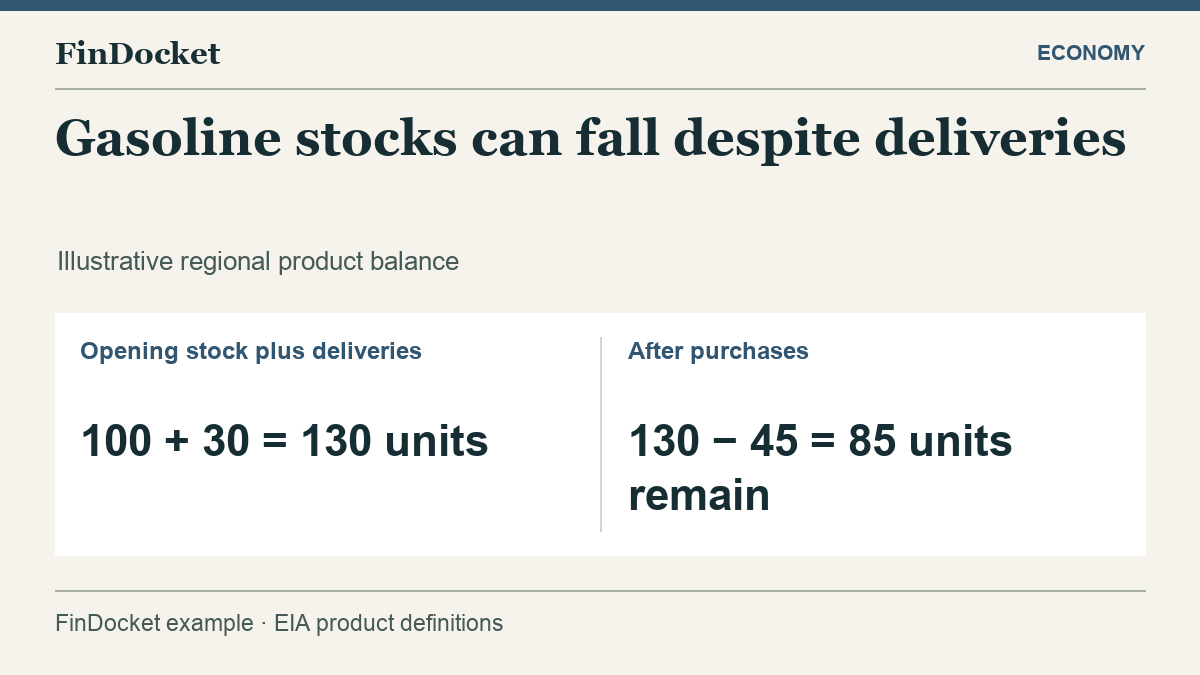
An oil-producing country can run short of retail gasoline. Crude oil, finished gasoline in a storage tank and fuel available to a driver are three distinct inventories. They occupy different places in the product balance. A large national crude number settles little about a particular filling station on a particular day.
A simplified local supply calculation starts with opening finished-fuel stocks, adds refinery deliveries and imports, then deducts outgoing shipments and purchases. Suppose a region begins the week with 100 units of gasoline, receives 30 and sells 45. It finishes with 85. A shortage can emerge in one town while national inventories still look comfortable if supplies and demand are unevenly distributed. The calculation illustrates the mechanism without estimating Russian stocks.
The US Energy Information Administration explains how supply statistics use movements into and out of the primary distribution system to estimate product supplied. It also defines refinery yield by the output of a particular product relative to inputs. These measurement principles clarify why a change in crude output cannot be translated one-for-one into a change in gasoline availability.
A claim that half of stations lack fuel needs a separate count. Identify the geography, survey dates, number of stations contacted, and whether “unavailable” refers to every grade or one product. A regional snapshot can be economically important without supporting a nationwide percentage. These are the measurements needed to judge the consumer impact.