Economy · Analysis
Does a growing data center automatically take power from households?
Annual national energy use cannot establish what happens to a household during the peak hours on its own local grid.
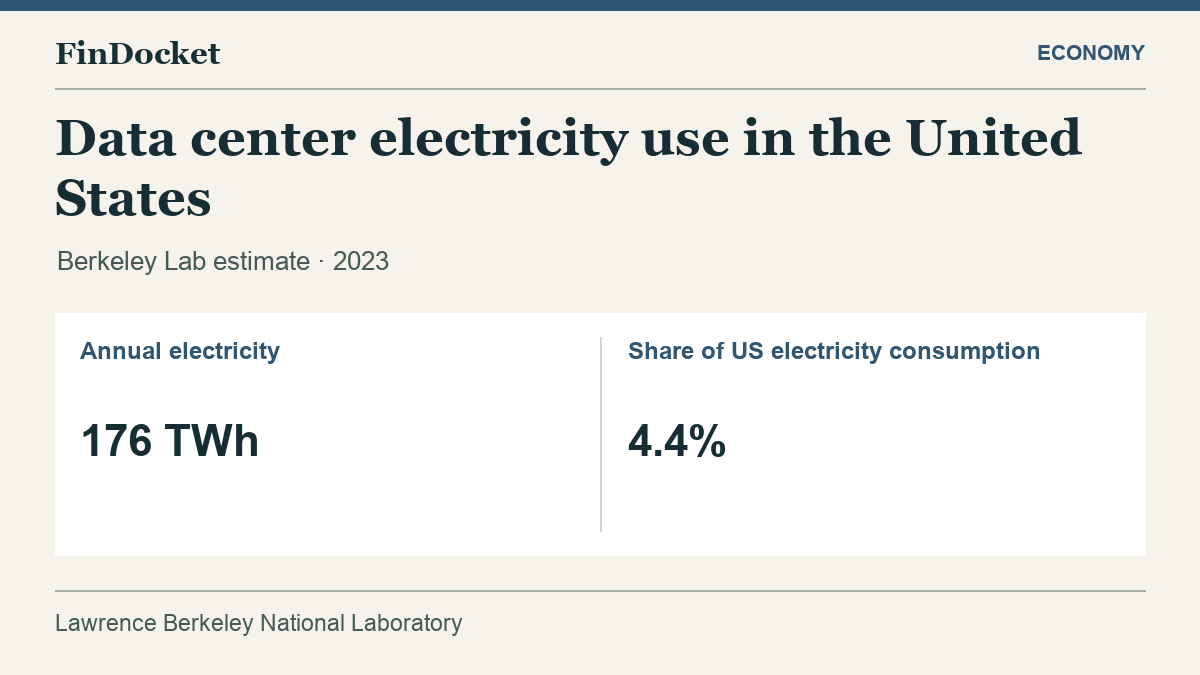
In its 2024 data center energy report, Lawrence Berkeley National Laboratory estimated US data center electricity use at 176 terawatt-hours in 2023. That was about 4.4% of US electricity consumption. The category includes many computing activities. Treating the entire figure as electricity for AI would overstate what the report measures.
The further inference that households must use less power whenever computing demand rises depends on an unstated assumption. It requires the relevant supply to be fixed. Over several years, generators can add capacity, grids can expand and customers can shift when they draw power. In the short run, a particular substation during a hot evening can be far more constrained than a national annual balance suggests.
A facility drawing 100 megawatts continuously would use 876,000 megawatt-hours over a 365-day year. If the local system has ample supply for most hours but very little at the evening peak, its reliability impact depends heavily on how it behaves during those few hours. An annual percentage cannot reveal that.
The household question also has a price dimension. Customers might continue receiving uninterrupted service yet face some of the cost of new infrastructure, depending on the utility’s rate design. To assess a particular project, look for peak-load forecasts, contracted service, grid investment and who pays the bill. Those records connect a national energy debate to an identifiable household consequence.