Business · Analysis
How to value a wine shop’s earthquake loss
A shop’s retail prices, replacement costs and insurance coverage produce different estimates of the same inventory loss.
Broken bottles on a shop floor make an earthquake’s damage visible. They do not establish how much cash the proprietor lost or how much an insurer will pay. For a wine retailer, shelf value, inventory cost and any covered claim are separate calculations. A public image of the damage supplies none of the policy terms needed for the third.
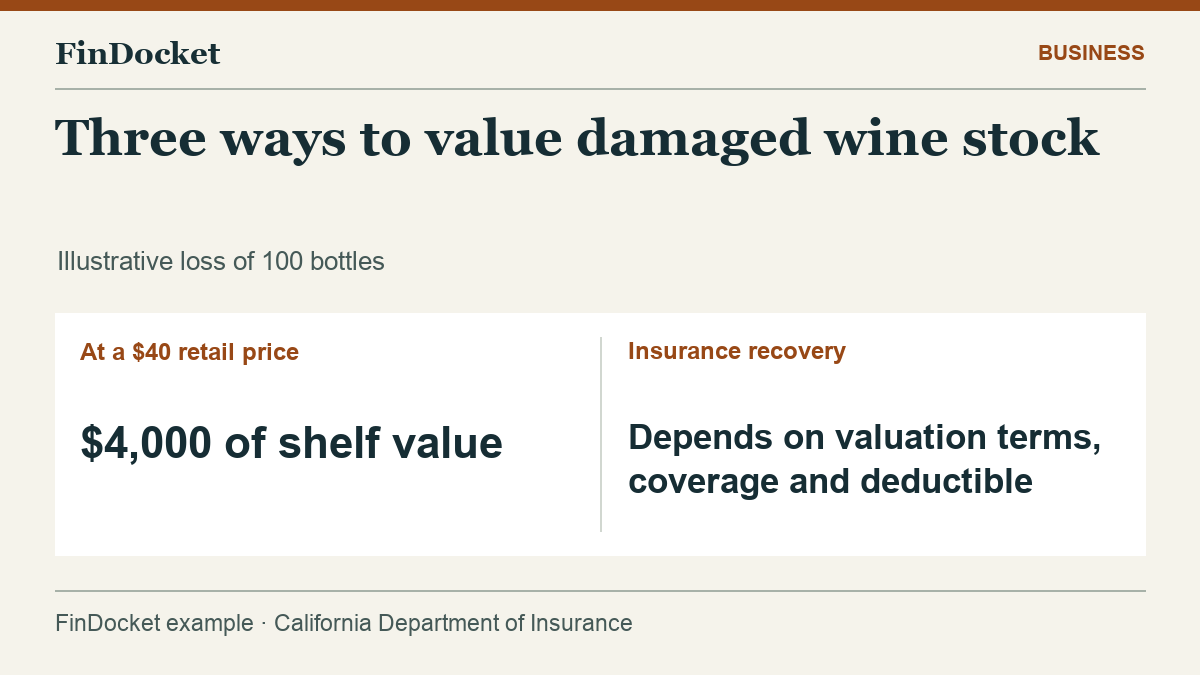
Imagine 100 bottles priced at $40 each that cost the store $24 each to replace. The missing stock represents $4,000 of potential retail sales and $2,400 of replacement purchases. The $1,600 difference is gross margin the store might have earned if it sold them all at the marked price. Adding $4,000 and $2,400 as two separate losses would double count the stock. If it can restock immediately and sell later, the realized lost margin might also be smaller.
What belongs in an insurance claim?
The first questions concern coverage for the cause of damage, coverage of business personal property, the valuation basis, limits and deductible. Lost business income is a separate issue. It depends on the applicable coverage, the period of interruption and the income and expenses the business can substantiate.
For the actual retailer, a defensible estimate begins with an inventory count, invoices, stock that can be salvaged and the insurance contract. Photos help document the breakage. Using retail value as shorthand may communicate the scale of a disaster, but it cannot establish the net effect on a business after restocking and any insurance recovery.