Business · Analysis
EMCOR Q3 2026: Two Construction Booms, Different Margins
EMCOR's Q3 SEC filing shows electrical and mechanical revenue surging at similar rates, but their profit conversion diverging as acquisitions and impairment matter.
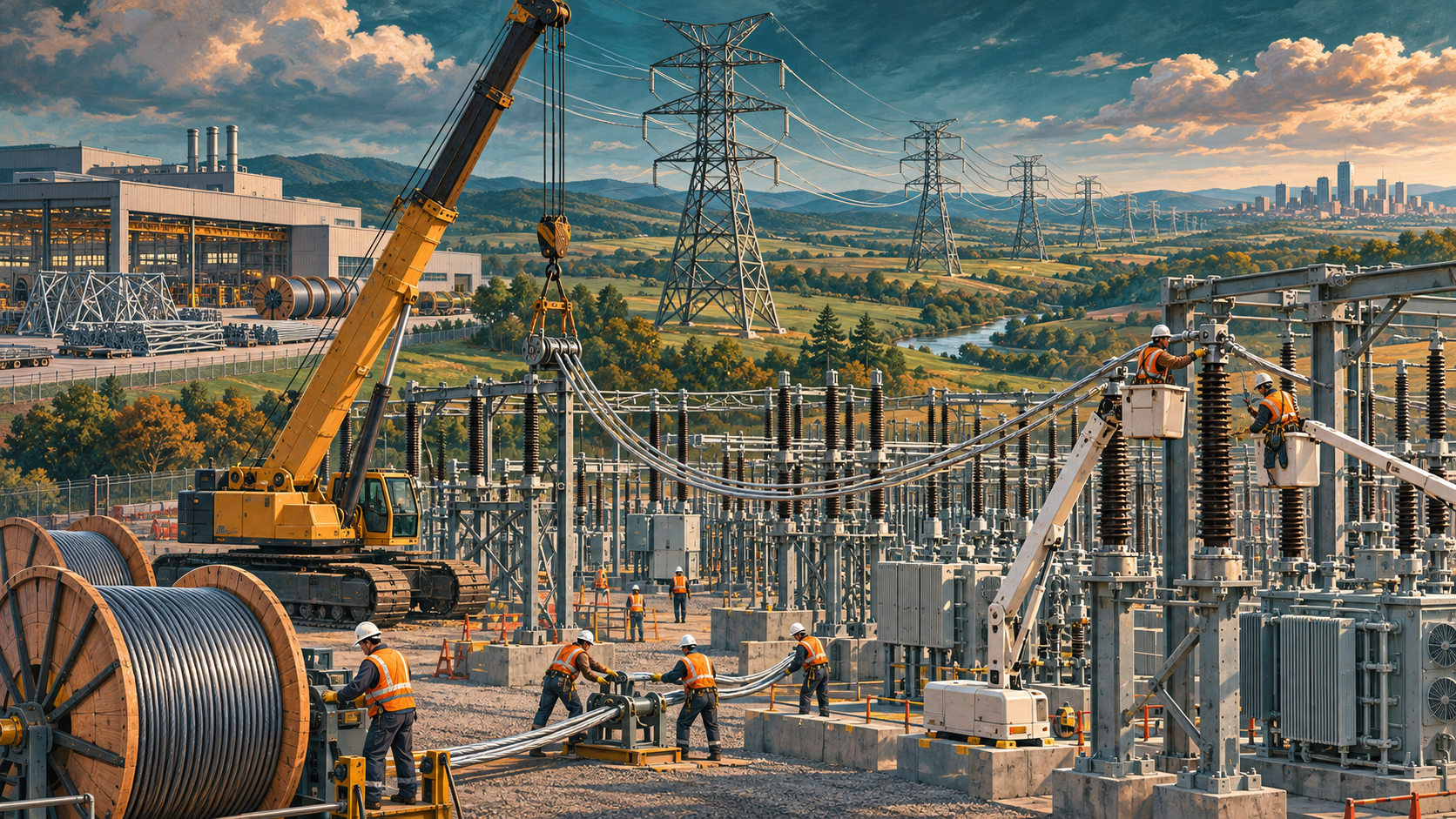
EMCOR Group's third-quarter 2026 results demonstrate that similar revenue growth can produce different profit outcomes. Electrical and mechanical construction both expanded rapidly, but electrical margins improved while mechanical margins declined.
That divergence is the most useful starting point for assessing the construction boom. Strong demand creates opportunity; project mix, execution and the cost structure determine how much of that opportunity becomes earnings.
What did EMCOR report in Q3 2026?
Revenue increased to $5.54 billion from $4.30 billion. Operating income was $545.8 million, compared with $405.7 million. Diluted EPS increased to $9.04 from $6.57. Excluding an intangible impairment, adjusted operating income was $579.8 million and adjusted EPS $9.60.
Reported operating profit increased approximately 35%, ahead of revenue growth of approximately 29%. The adjusted operating-profit increase was approximately 43%.
The difference between those profit growth rates reflects a specific adjustment, rather than a different volume of work performed. Investors should use the reconciliation to understand current execution while preserving the economic information carried by the impairment itself.
Management reports organic revenue growth of 25.5% after adjusting for acquisitions and the sale of the United Kingdom operation. That figure is particularly useful because the reported company changed on both sides of the comparison: businesses were acquired, and another operation was sold.
Electrical work converted growth into a higher margin
The earnings presentation shows electrical construction and facilities revenue of approximately $1.855 billion, up $569.7 million. Operating profit was approximately $247.0 million, up $101.8 million, and margin increased to 13.3% from 11.3%.
Dividing the profit increase by the revenue increase produces an incremental operating margin of approximately 17.9%. That is above the current segment's average margin, explaining why overall segment profitability improved as the business expanded.
This calculation measures the period-to-period change in the whole segment. It is not a bid margin on newly awarded projects. Acquisitions, project mix, execution and the timing of profit recognition can all influence the result.
The implication is still meaningful: the additional revenue brought proportionally more operating profit than the prior base. Growth did more than enlarge the segment; it improved its average earning rate.
Mechanical growth produced a different outcome
Mechanical construction and facilities revenue reached approximately $2.547 billion, an increase of $767.4 million. Operating profit increased approximately $78.9 million to $308.2 million. Margin declined to 12.1% from 12.9%.
The implied incremental operating margin is approximately 10.3%, below both the prior-year average margin and the current average. That relationship explains the margin decline despite strong absolute profit growth.
Mechanical revenue increased approximately 43%, while operating profit increased approximately 34%. Calling the segment weak solely because its margin fell would miss the substantial increase in profit dollars. Calling the economics identical to electrical construction because both revenue lines expanded near the same rate would miss the opposite margin directions.
For a contractor, both dollars and percentages matter. A lower-margin project can create attractive absolute profit and support valuable customer relationships. It can also consume more labor, working capital and execution capacity per dollar of earnings. The return depends on that full resource requirement.
The two segments account for most of the expansion
Together, the construction segments added approximately $1.337 billion of revenue and $180.7 million of operating profit, based on the presentation. Their combined incremental operating margin was approximately 13.5%.
Electrical supplied roughly 43% of the combined revenue increase but approximately 56% of the combined operating-profit increase. Mechanical supplied the larger revenue increment while contributing the smaller share of incremental profit.
That mix explains why a consolidated growth headline gives an incomplete picture of performance. The composition of the work influences earnings even when both major businesses are expanding at exceptional rates.
The next useful comparison is whether electrical's stronger conversion persists and whether mechanical's margin stabilizes as the new work progresses. Extrapolating either quarter's incremental margin indefinitely would turn a period-specific outcome into an unsupported structural assumption.
Acquisitions add revenue with their own accounting costs
The 10-Q identifies $313.3 million of incremental quarterly acquisition revenue and $21.0 million of operating income, net of $14.4 million of acquired intangible amortization.
The disclosed acquisition contribution therefore has a reported operating margin of approximately 6.7%. Adding back only the identified amortization would produce approximately $35.4 million, or 11.3% of the acquisition revenue.
That second calculation is a limited illustration, not a new company-reported adjusted measure or a complete return on acquired capital. It shows how amortization changes the comparison between an acquired business's operating contribution and the consolidated segment figures.
The purchase price remains economically relevant even when amortization is excluded. A successful acquisition needs to generate adequate cash relative to what EMCOR paid, not merely improve an adjusted margin presentation.
The impairment signals revised expectations in another business
The filing says the $34 million impairment followed lower long-term financial projections for a business within U.S. Building Services. It affected a trade name and customer relationships.
The charge is noncash in the current quarter. Its origin is nevertheless economic: management revised expectations for future performance and reduced the carrying value of associated assets.
It should therefore be separated from current construction execution without being discarded from the assessment of capital allocation. Strong electrical demand does not ensure that every business in a diversified contractor meets its original expectations.
What should investors follow next?
EMCOR's quarter shows substantial growth with different profit conversion across its two largest construction businesses. The more informative test is whether completed projects preserve attractive margins and convert recognized earnings into collected cash.
The company enters that test with remaining performance obligations of $18.57 billion, compared with $12.61 billion a year earlier. The opportunity is large. The shareholder outcome will depend on the economics of executing it: project selection, labor productivity, acquisition returns and the cash retained after the work is delivered.