Business · Analysis
EU’s PHEV Emissions Delay Gives Automakers Time, but Not a Free Pass
The European Commission proposes freezing the plug-in-hybrid utility factor until 2030 for qualifying models. Here is how the change could affect automaker compliance costs and PHEV strategy.
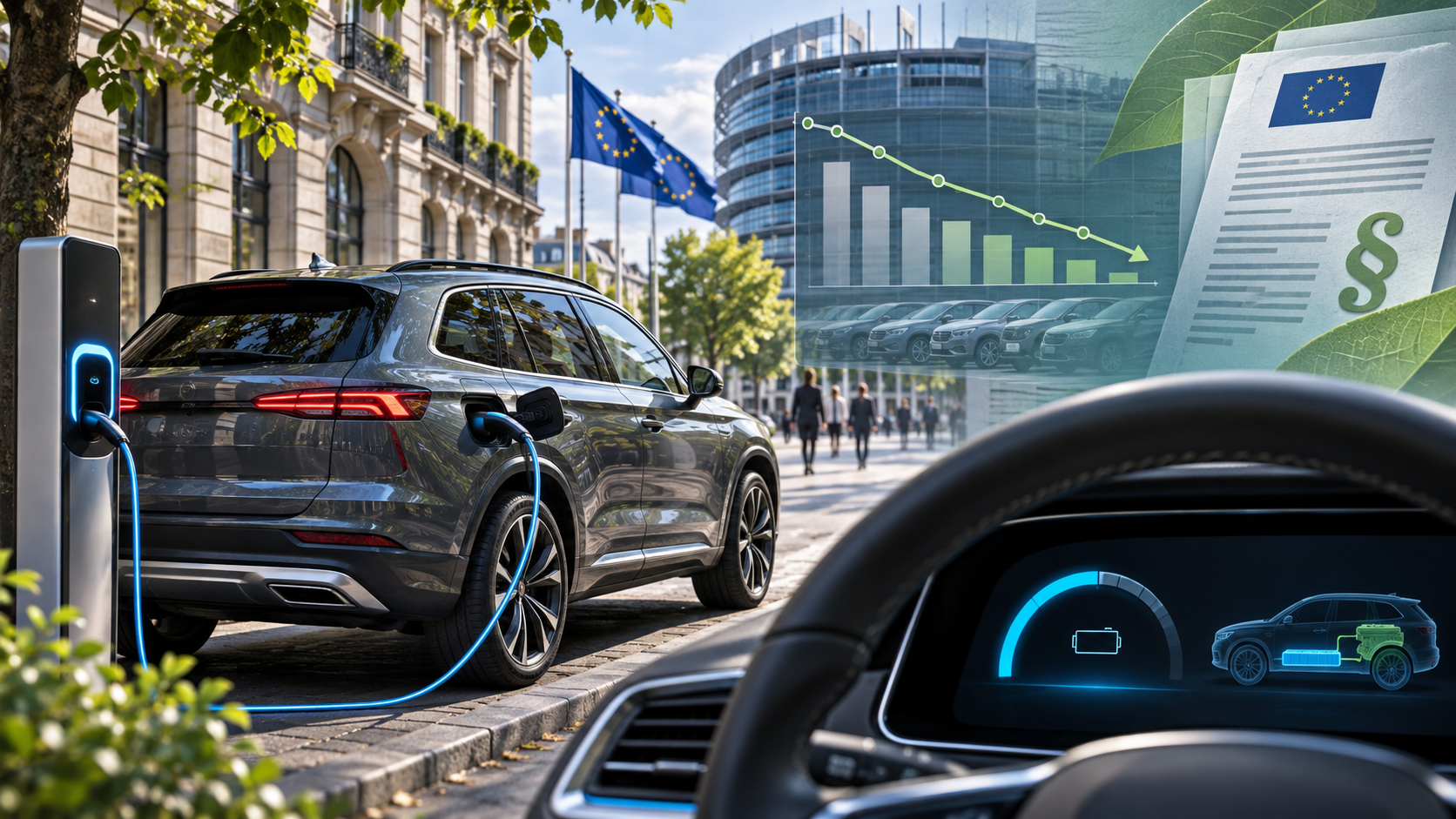
The European Commission has proposed delaying a tighter emissions calculation for certain plug-in hybrid vehicles (PHEVs) until 2030, giving automakers several more years before official ratings fully reflect lower real-world electric driving. The move is a near-term compliance benefit for qualifying models, but it does not remove the pressure to improve actual fuel economy or expand electric range. For investors, the proposal changes the timing of regulatory costs and the relative economics of hybrid and battery-electric product plans.
What is the EU changing for plug-in hybrids?
The Commission’s proposal would freeze the “utility factor” for qualifying PHEVs at the level used in 2025 until January 1, 2030. The utility factor estimates the proportion of a vehicle’s distance driven on electricity and feeds into its official CO₂ rating. The planned update, scheduled to start November 29, was designed to narrow the gap between laboratory estimates and road use, where owners often charge their cars less frequently than test assumptions imply.
The temporary freeze applies to vehicles with an electric range of at least 80 kilometers. The Commission says the measure would provide manufacturers with short-term flexibility to invest in improving these vehicles and encourage longer electric ranges. The proposal is not yet final: it must go through review by EU member states and the European Parliament, either of which could object. The Commission proposes applying it retroactively from November 29 to maintain continuity in type-approval calculations.
Why does the utility factor matter to automakers?
Official CO₂ ratings feed into fleet-average compliance calculations. If a PHEV is assumed to cover a larger share of its mileage electrically than it does in daily use, its rated emissions appear lower than the fuel it actually consumes would imply. A tighter utility factor raises the calculated emissions for affected models, making it harder for automakers to meet fleet targets without improving vehicles, selling more low-emission models, or using other compliance mechanisms.
Delaying the recalibration can reduce near-term pressure to redesign products or shift sales toward battery-electric models. It also gives manufacturers more time to add battery capacity, increase electric range, and improve charging behavior. The commercial benefit will vary by portfolio: companies with long-range PHEVs that qualify for the freeze may gain more flexibility than firms whose hybrid lineups fall outside the threshold.
What does the proposal mean for the EV transition?
The delay protects a larger role for PHEVs through the end of the decade, but it does not establish that plug-in hybrids deliver the emissions reductions assigned by test ratings. The Commission says utility factors will be updated regularly from 2030 using real-world vehicle performance. That makes in-use data a future compliance driver and keeps the incentive to build hybrids that travel farther on electricity.
This distinction matters when assessing automaker earnings. In the short run, a delayed emissions penalty can support PHEV sales and reduce the need for immediate fleet adjustments. Over a longer horizon, companies still face the cost of battery and software investment, tighter real-world standards from 2030, and competition from fully electric vehicles. A temporary regulatory reprieve can change cash-flow timing without resolving the underlying product challenge.
The proposal lands alongside separate EU measures on hybrid imports from China. Those safeguards address trade and import pressure, while the utility-factor proposal concerns how certain vehicles’ emissions are calculated. The two policies can interact in the market, but they have different legal scopes and should not be treated as the same intervention.
Key takeaway
The Commission’s proposed freeze would defer a tougher PHEV emissions calculation for qualifying models until 2030, offering automakers near-term planning flexibility. The long-term signal remains clear: future utility factors will increasingly reflect observed driving, so investment in electric range and charging performance still matters. Investors should watch the final approval process, vehicle eligibility, and automaker updates on PHEV mix and fleet-compliance spending.
Frequently asked questions
### What is the EU plug-in-hybrid utility factor?
It is an assumption used to estimate how much of a PHEV’s distance is driven on electric power. The factor influences the vehicle’s official CO₂ rating.
### Which plug-in hybrids would qualify for the proposed freeze?
The proposal covers qualifying PHEVs with an electric driving range of at least 80 kilometers.
### Is the delay already final?
No. The Commission has proposed the change and will submit it to EU member states and the European Parliament for review. Either can object.